culture
Who Owns Kashmir's Story?
By Irfana Shafi | Wed Jul 29 2026
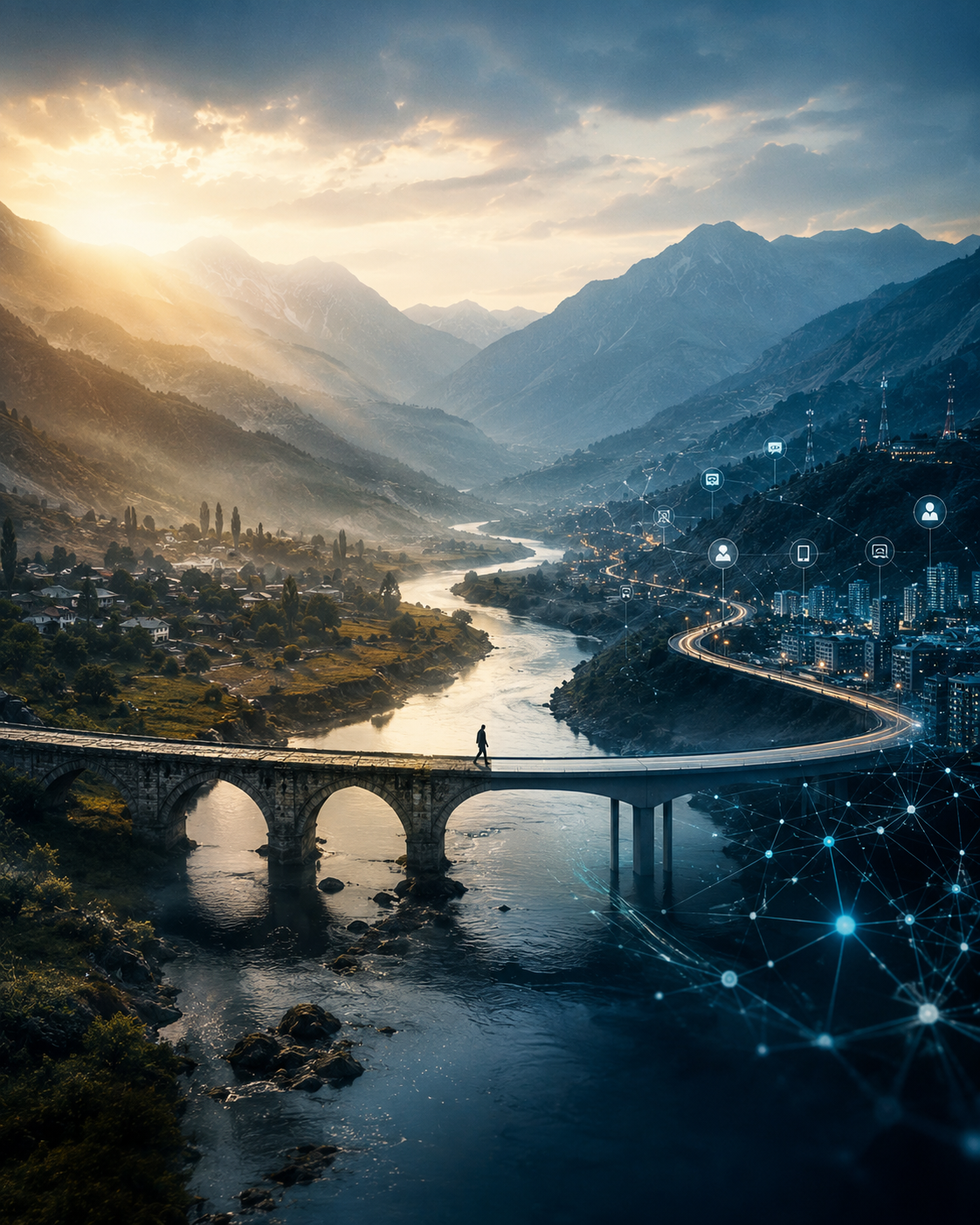
Kashmir's future will be influenced not only by diplomacy and security but also by the digital ecosystems that shape global understanding. As algorithms replace traditional gatekeepers, the challenge is no longer controlling information but earning trust in an age of competing narratives.
Part I: When the Story Escaped the State
Who owns Kashmir's story?
The answer was once straightforward. Governments issued official statements, newspapers interpreted events and diplomats framed international opinion. That order has quietly collapsed. Today, a student with a Smartphone, an influencer in another continent, a Diaspora activist, an anonymous social media account or an artificial intelligence system can shape global perceptions of Kashmir before any government has issued its first statement. The contest over Kashmir has entered a new era, where the most influential battlefield is not always the one marked on military maps, but the one hidden inside digital platforms and the algorithms that govern them. The consequences of this transformation are only beginning to be understood.
For decades, discussions on Kashmir revolved around territory, sovereignty and security. Military deployments, elections, constitutional developments, diplomatic exchanges and episodes of violence dominated public attention. Every major development was filtered through established institutions. Ministries briefed journalists. Editors determined headlines. Television channels framed the evening debate. International correspondents interpreted events for audiences thousands of kilometers away. Information travelled in one direction, from recognized institutions to the public. That architecture no longer exists.
The digital revolution has dismantled the monopoly once enjoyed by governments and traditional media. Information now moves horizontally rather than vertically. It travels instantly across continents, crossing political boundaries with little regard for geography or official authority. News is no longer simply reported; it is recorded, commented upon, edited, translated, challenged, amplified and republished by countless individuals within minutes of an event taking place. The distinction may appear technical. It is, in fact, strategic.
The first casualty of this transformation has not been truth, as the familiar saying suggests. It has been authority. The question is no longer who possesses information. Almost everyone does. The more important question is who succeeds in making their version of events credible enough to influence public understanding. This is where Kashmir occupies a unique position.
Few places in the world generate such intense emotional investment among people who have never visited them. Diplomats analyze it as a strategic imbroglio. Military planners study it as a security challenge. Historians approach it through competing interpretations of the past. Journalists focus on breaking developments. Human rights organizations document civilian experiences. Members of the Kashmiri Diaspora often see it through memory and identity. Social media users encounter it through fragments of video, photographs and commentary that rarely provide the whole picture. Each group tells a story. None tells the whole story.
For most of the twentieth century, these stories existed within relatively stable institutional frameworks. Newspapers competed with newspapers. Governments responded to governments. Academic journals debated academic journals. Even disagreement followed established conventions. The internet, however, dissolved those boundaries.
A university student in Srinagar, a researcher in London, a journalist in Washington and a member of the Kashmiri Diaspora in Toronto can now participate in the same conversation at the same moment. Geography no longer determines participation. Connectivity does. This has made the debate fragmented. It has also made it immeasurably more complex.
The abundance of voices has not necessarily produced greater clarity. Instead, it has multiplied interpretation. Every significant event now generates dozens of competing explanations before verified facts are fully assembled. Images circulate without context. Historical references are compressed into slogans. Thirty-second video clips become substitutes for years of political history. Emotional engagement often outruns careful analysis because digital platforms reward immediacy far more effectively than reflection.
This is not unique to Kashmir. It characterizes nearly every major international crisis today. Kashmir, however, presents an especially revealing case because the conflict has always been sustained as much by competing interpretations as by competing territorial claims. Politics in Kashmir has never been confined to the movement of soldiers or the decisions of governments. It has always involved history, memory, identity and symbolism. Digital technology has not created these dimensions; it has accelerated them. And the speed of that acceleration is remarkable.
Consider how political communication functioned only two decades ago. Governments announced policy through press conferences. Newspapers appeared the following morning. Television channels debated events throughout the day. Public opinion evolved gradually as information accumulated.
Today, the sequence has been reversed.
The first images often emerge from mobile phones carried by ordinary citizens. They appear online before television crews arrive. Reactions spread internationally before official confirmations are issued. Governments increasingly respond to conversations that have already begun rather than initiating them. The information cycle has become so compressed that institutions designed for a slower age frequently struggle to keep pace.
The implications extend well beyond journalism.
Foreign ministries now monitor digital platforms alongside diplomatic reporting. Intelligence agencies devote growing resources to open-source information. Armed forces around the world increasingly recognize information as an operational domain rather than merely a supporting activity. Election campaigns are influenced by online ecosystems. International reputations rise and fall through digital engagement. Public diplomacy, once dependent upon embassies and official broadcasters, now competes with creators whose audiences exceed those of many national media organizations. Power has become decentralized. Influence has become distributed. Authority has become contested. Nowhere is this more evident than in the evolution of the Kashmir discourse.
The phrase "battle of narratives" has become commonplace in discussions of the region. It appears in conferences, policy papers and television debates with almost ritual regularity. Yet the expression no longer captures the reality of the information landscape.
A battle suggests identifiable opponents. The digital world rarely offers such clarity. Instead of two competing narratives, there are hundreds. Governments produce official accounts. Journalists publish investigations. Academic researchers contribute historical context. Civil society organizations document specific concerns. Diaspora communities interpret developments through personal memory. Political activists mobilize support. Independent creators package complex issues into short videos. Artificial intelligence summarizes thousands of pages into a few paragraphs. Recommendation systems quietly decide which version reaches which audience.
The contest is no longer linear. It is ecological. Every participant influences every other participant. A video recorded in one neighborhood may shape discussion in another continent. A speech delivered in Parliament may receive less attention than a sixty-second online clip. A detailed policy report may struggle for visibility against an emotionally compelling photograph. The rules governing influence have changed because the architecture governing attention has changed.
Attention has become the most valuable currency in the digital age. This is where algorithms enter the story. Most users imagine they choose the information they consume. In reality, information increasingly chooses them. Recommendation systems built by technology companies determine which posts appear first, which videos continue playing automatically, which topics trend and which disappear almost unnoticed. These systems are designed to maximize engagement, not necessarily understanding. They reward material that keeps users watching, reacting and sharing. Accuracy is important, but attention is profitable. This distinction matters profoundly for conflicts like Kashmir. Events no longer compete solely on the basis of factual significance. They compete for visibility.
An incident that generates emotional engagement may travel farther than one carrying greater strategic importance. Dramatic visuals often outperform nuanced explanations. Outrage spreads more rapidly than context. Complexity struggles against brevity because digital platforms are built to reward speed. This does not mean that facts have become irrelevant. It means that facts now operate within an environment where visibility often determines influence. That reality presents a challenge for every participant in the Kashmir discourse. Governments cannot rely solely on official communication.
Journalists cannot assume professional reporting will automatically reach the largest audience. Researchers cannot expect detailed scholarship to compete with instant commentary. Citizens themselves must increasingly distinguish between information that is merely persuasive and information that is genuinely reliable. The contest has therefore moved beyond competing narratives. It has become a contest over credibility itself.
In earlier decades, credibility was largely inherited through institutions. Newspapers earned it over generations. Universities built it through scholarship. Governments derived it from constitutional authority. Today, credibility must be earned repeatedly in a crowded information marketplace where every claim is immediately tested, challenged and compared against countless alternatives. The result is a profound redistribution of communicative power. No single institution now possesses uncontested authority over Kashmir's story. That story is constantly rewritten, revised and renegotiated across thousands of digital conversations unfolding simultaneously around the world. The question is no longer who speaks first. The question is who is believed.
That distinction may ultimately become as important to the future of Kashmir as any political discourse or diplomatic initiative, because in the digital age, perception does not merely reflect reality. Increasingly, it helps shape it.
Part II: The Invisible Editors
If the twentieth century belonged to editors, the twenty first belongs to algorithms. That sentence would have sounded absurd only fifteen years ago. Editors decided what appeared on the front page, producers chose which stories led the evening bulletin and publishers determined which voices deserved public attention. Those decisions were often criticized, sometimes celebrated, but they were visible. Readers knew who had made them.
Today's editors rarely have names.
They are mathematical systems operating silently behind digital platforms, analyzing billions of interactions every day and deciding, within fractions of a second, what each individual user is most likely to watch, read or share. They do not ask whether a piece of information is strategically significant or historically important. Their primary objective is simpler and commercially more valuable. They seek to maximize attention. This quiet shift has altered the politics of information more profoundly than many governments have yet acknowledged.
Kashmir offers an unusually revealing example. Every major development in the region now exists in two forms. The first is the event itself. The second is the digital life that event acquires after it is uploaded, shared, edited, commented upon and recommended to millions of users. Increasingly, these two realities evolve independently of one another. An event may be modest in its immediate consequences yet dominate international discussion because it performs well within digital ecosystems. Conversely, developments carrying considerable long term significance may receive comparatively little attention because they lack dramatic imagery or emotional immediacy.
The digital world does not always reward importance. It rewards engagement. That distinction explains why certain stories about Kashmir travel extraordinary distances while others disappear almost unnoticed.
The architecture of social media encourages compression. Long historical arguments become short captions. Constitutional debates become thirty second videos. Strategic assessments are distilled into infographics designed for rapid consumption. Every platform develops its own grammar, rewarding brevity, certainty and emotional clarity over complexity and ambiguity. Yet Kashmir has never been a subject that fits comfortably into simplified narratives. Its history is layered, its politics contested and its realities often contradictory. Digital platforms nevertheless encourage users to think in binaries. Victim or aggressor. Truth or propaganda. Freedom or occupation. Nationalism or separatism. Such framing generates engagement because it offers emotional certainty. It rarely produces understanding. This is not simply a technological problem. It is also a psychological one.
Human beings have always preferred stories that confirm what they already believe. Digital platforms magnify this tendency. Recommendation systems observe individual behavior and gradually construct personalized information environments. A user who consistently engages with one interpretation of Kashmir is increasingly shown similar material. Over time, alternative perspectives become less visible, not necessarily because they have disappeared, but because the algorithm has concluded they are less likely to retain the user's attention.
The result is not censorship in the traditional sense. It is curation. Invisible, continuous and highly personalized. Two people living in the same city, searching for information about the same event, may encounter entirely different digital worlds. Their timelines, recommendations and suggested videos may reinforce completely different understandings of reality. The difference lies not in the event itself but in the architecture through which it is presented.
The consequences for public discourse are considerable.
Traditional journalism sought, at least in principle, to establish a common set of facts from which disagreement could begin. Digital ecosystems increasingly encourage fragmented audiences, each consuming different evidence, different interpretations and different emotional cues. Consensus becomes more difficult because citizens are no longer debating from the same informational foundation. Kashmir illustrates this fragmentation with remarkable clarity.
A single development may simultaneously generate official government briefings, local reporting, independent commentary, international media coverage, Diaspora activism, think-tank analysis, satellite imagery, citizen journalism and countless social media reactions. None of these sources exists in isolation. Each influences the visibility of the others. Algorithms observe this interaction and accelerate whichever material generates the strongest engagement. Attention becomes self reinforcing. Visibility creates further visibility. Emotion amplifies emotion.
The old information hierarchy has dissolved into a network where influence often depends less upon institutional authority than upon digital performance. This transformation has also altered the role of the individual. For much of modern history, ordinary citizens were primarily consumers of political information. Today they are also producers.
Every Smartphone is simultaneously a camera, a publishing house, a broadcasting station and an archive. Every user possesses the ability to document events, offer interpretation and reach audiences that would once have been accessible only to established media organizations.
This democratization of communication has expanded public participation in undeniable ways. Voices that were previously marginalized now possess unprecedented opportunities to contribute to public debate. Local communities can document their own experiences rather than relying entirely upon outside observers. Independent researchers publish findings directly. Young journalists establish audiences without institutional backing. Citizens challenge inaccurate reporting in real time. These developments represent genuine advances in public communication.
However, democratization should not be confused with equal influence. The digital economy rewards those who understand its incentives.
Professional content creators study audience behaviour with remarkable sophistication. They know which headlines attract attention, which thumbnails encourage clicks, which emotional tones encourage sharing and which controversies sustain engagement. The objective is not always persuasion. Frequently it is simply visibility. The distinction matters because visibility itself has become a form of power. Influencers occupy a particularly interesting position within this new environment.
Unlike journalists, they are rarely constrained by editorial institutions. Unlike governments, they are not expected to speak with diplomatic precision. Unlike academics, they are not required to produce exhaustive evidence. Their authority rests upon personality, consistency and audience loyalty rather than formal credentials. Some contribute valuable analysis. Others simplify extraordinarily complex issues into emotionally compelling narratives. Many operate somewhere between those two extremes. Regardless of quality, their influence is increasingly difficult to ignore.
For younger audiences, especially those who consume information primarily through short form video platforms, digital creators often function as the first point of contact with international affairs. Long before readers encounter policy papers or scholarly books, they may have formed durable impressions through creators whose expertise varies enormously. Kashmir has become part of this phenomenon.
A dispute once interpreted primarily through diplomatic correspondence and newspaper editorials is now explained through podcasts, Instagram reels, YouTube documentaries, live streams and visual explainers designed for audiences whose attention spans are measured in seconds rather than minutes.
The medium shapes the message. Complexity becomes expensive. Certainty becomes profitable.
The Kashmiri diaspora represents another influential participant in this evolving information ecosystem.
Historically, diaspora communities contributed to political discussion through advocacy organizations, cultural associations and occasional public campaigns. Digital communication has transformed both their reach and their immediacy. Distance no longer imposes the limitations it once did. Individuals living in London, Toronto, Dubai, New York or Melbourne participate almost instantly in conversations unfolding within Kashmir itself.
This transnational conversation has expanded the global visibility of the region. It has also internationalized disagreement. Geography no longer determines participation. Connectivity does. Artificial intelligence introduces yet another layer of complexity. For the first time, information is not merely being transmitted or recommended by machines. It is increasingly being produced by them.
AI systems summarise reports, translate documents, generate images, write commentary, create audio, edit video and answer questions in natural language. These capabilities hold enormous promise for education, research and accessibility. They also create new challenges for societies attempting to distinguish authentic material from synthetic content. The significance extends beyond misinformation.
Artificial intelligence influences not only what is created but also how knowledge is organized. Millions of users increasingly rely on AI systems to explain complicated political issues rather than consulting original documents. The quality of those explanations depends upon training data, design choices, available sources and the user's own questions. The implications for contested subjects such as Kashmir are profound. Future generations may first encounter the region not through books or classrooms but through conversations with artificial intelligence.
Who, then, shapes those conversations? Which sources become authoritative? Which historical interpretations receive greater visibility? Which voices remain absent? These are no longer hypothetical questions. They are emerging policy questions.
The debate over Kashmir has therefore entered a phase where influence depends upon far more than persuasive writing or diplomatic skill. It depends upon understanding digital architectures that remain largely invisible to ordinary users. Recommendation systems, search engines, platform policies, creator economies, translation tools and artificial intelligence collectively determine how information moves through society. None of these actors was elected. Few are publicly accountable in the conventional political sense. Together they exercise extraordinary influence over global perception. Perhaps that is the defining paradox of the digital age. The most powerful editors in the world no longer work inside newspaper buildings. Many work inside computer servers. Most people never notice them. Still they quietly decide which version of Kashmir millions of people are most likely to encounter. That silent power may prove to be one of the most consequential strategic developments of the twenty first century.
Part III: Narrative Sovereignty in an Age of Algorithms
For centuries, states measured power through familiar instruments. Armies defended borders, diplomacy secured alliances, economies financed national ambition and institutions projected political authority. The information age has not diminished the importance of these pillars. It has added another, one that is less visible but increasingly decisive: the ability to sustain credibility in a world where information moves faster than governments, where perception often precedes evidence and where attention has become the most fiercely contested strategic resource.
This is where the discussion about Kashmir must move beyond the familiar phrase "the battle of narratives."
The digital ecosystem has transformed the nature of that contest. The challenge is no longer to produce a persuasive narrative alone. Every actor is already producing one. Governments issue statements, journalists publish investigations, researchers write analyses, think tanks produce reports, citizens upload videos, influencers offer commentary and artificial intelligence generates explanations within seconds. The real question is no longer who speaks. The real question is who is trusted. Trust has quietly become the most valuable strategic asset of the information age.
This is why the idea of narrative sovereignty deserves greater attention.
Narrative sovereignty should not be confused with information control. Nor does it imply the elimination of competing viewpoints. Such ambitions belong to an earlier communications environment that no longer exists. Information now travels across borders almost instantaneously, carried by platforms that operate beyond the authority of any single government. Attempts to monopolize public conversation usually produce diminishing returns because audiences possess more alternatives than ever before.
Narrative sovereignty means something different.
It is the ability of a state, an institution or even a society to maintain sufficient credibility that its account of events remains influential despite the existence of countless competing voices. It rests not on censorship but on confidence, not on volume but on consistency, not on repetition but on evidence. The distinction is fundamental. A message may reach millions of people and still fail to persuade them. Another message may reach fewer people but become more influential because it is regarded as reliable.
In previous decades, governments often assumed that communication was largely a matter of dissemination. Information was produced, distributed and expected to shape opinion. Contemporary audiences behave differently. They compare sources, verify claims, search for alternative interpretations and frequently encounter contradictory information before reaching any conclusion. Authority is no longer presumed simply because information originates from an official institution. It must be earned repeatedly.
The evolution demands institutional adaptation. Governments accustomed to communicating through carefully structured press releases now operate within an environment that rewards speed without sacrificing credibility. Delayed communication creates informational vacuums that others quickly fill. Yet excessive haste risks inaccuracies that can damage long-term trust. Balancing responsiveness with reliability has become one of the defining challenges of modern governance.
The same challenge confronts journalism.
Professional reporting has never been under greater pressure.
Digital platforms reward immediacy, but journalism derives its authority from verification. The temptation to publish first competes constantly with the obligation to publish accurately. This tension is especially acute in conflict regions, where incomplete information often circulates before reporters have gained full access to events. The value of journalism therefore lies not in matching the speed of social media but in providing something social media frequently cannot: context. Context explains why an event occurred rather than merely recording that it occurred.
It distinguishes structural change from temporary disruption. It separates verified evidence from speculation. In an environment saturated with information, these functions become more rather than less important. The same principle applies to scholarship.
Universities and research institutions often appear slow compared with the pace of digital debate. Academic studies require time, evidence and careful review. This deliberate approach represents one of their greatest strengths. Serious scholarship provides historical perspective that instantaneous commentary rarely possesses. It reminds societies that complex political conflicts cannot be understood solely through the events of a single week or a single news cycle. Kashmir requires precisely this balance. Immediate reporting remains indispensable. So does long-term analysis.
The digital age often encourages the illusion that every event is unprecedented. History suggests otherwise. Political developments become more intelligible when viewed as part of longer institutional and social processes. Strategic patience, an increasingly rare quality within digital culture, remains essential for understanding regions shaped by decades rather than days.
Civil society also occupies a changing role. Community organizations, researchers, educators and independent experts increasingly contribute to public understanding by documenting local realities, challenging misinformation and expanding public debate. Their influence depends less upon formal authority than upon demonstrated credibility. In fragmented information environments, trusted intermediaries become indispensable because they help audiences navigate competing claims. None of these actors, however, can succeed independently. Narrative sovereignty is ultimately cumulative. It emerges when institutions reinforce rather than undermine one another. Reliable journalism strengthens informed citizenship. Serious scholarship enriches public debate. Transparent governance builds confidence. Responsible civic engagement broadens participation.
Together they create an information environment capable of resisting manipulation without suppressing legitimate disagreement. This lesson carries particular relevance for Kashmir.
The region has often been described as a battlefield of competing narratives. Increasingly, it should be understood as a test case for democratic communication itself. How does a society maintain informed public discussion when information moves at unprecedented speed? How should governments respond when every policy decision is instantly interpreted through competing ideological frameworks? How can journalism preserve public trust in an age of algorithmic amplification? How should educational institutions prepare citizens to distinguish persuasive content from reliable knowledge? These questions extend far beyond Kashmir. They confront democracies across the world.
Perhaps the most striking feature of the digital age is that no participant enjoys complete control. Governments influence but do not dominate. Journalists investigate but do not monopolize. Influencers persuade but do not determine. Artificial intelligence organizes information but does not possess independent judgment. Algorithms recommend content but cannot create public trust on their own. Power has become distributed. Responsibility has become shared. This reality should encourage a measure of humility.
The ambition to "win" the narrative may itself belong to an earlier era. Digital ecosystems are too decentralized, audiences too diverse and technologies too dynamic for any single actor to maintain permanent informational dominance. Attempts to overwhelm public debate with volume alone rarely produce lasting credibility. Repetition may attract attention for a time. It cannot substitute indefinitely for consistency, transparency and evidence. The future therefore belongs not to those who shout the loudest but to those who are believed when it matters most. The developments in Pakistan Administered Kashmir actually provide an insight as to how the narrative constructed over decades through noise and repetition cannot substitute for transparency and accountability. Credibility accumulates slowly.
It is strengthened by accuracy during moments of uncertainty, by transparency when mistakes occur and by a willingness to engage with complexity rather than reduce it to slogans. In the long run, trust proves more durable than virality. This observation carries strategic significance. Military capability protects territorial sovereignty. Economic strength sustains national resilience. Institutional credibility increasingly underpins narrative sovereignty. The three are becoming inseparable. A nation that communicates effectively while maintaining public confidence possesses a strategic advantage that cannot be measured solely through conventional indicators of power.
Kashmir will remain the subject of political disagreement, diplomatic engagement and strategic competition for years to come. That reality is unlikely to change. What has changed is the environment in which those disagreements unfold.
The next generation will not encounter Kashmir first through newspaper editorials or government archives. Many will discover it through search engines, recommendation feeds, podcasts, AI assistants, short-form videos and digital conversations that cross continents in seconds. Their first impressions will often be shaped long before they consult a book or a policy paper.
The opening question of this article therefore deserves one final answer.
Who owns Kashmir's story? No government does. No journalist does. No influencer, platform or artificial intelligence system does.
Kashmir's story now belongs to a conversation in which countless voices compete to explain a place the political landscapes. The influence of each voice depends less on its ability to dominate the conversation than on its capacity to contribute something increasingly rare in the digital age: evidence, perspective and trust. That is both the challenge and the opportunity of the twenty first century.
The future of Kashmir will continue to be shaped by diplomacy, security, constitutional politics and economic development. But the future of how Kashmir is understood will be shaped elsewhere as well-in search engines that rank information, algorithms that recommend content, classrooms that teach critical thinking, newsrooms that verify facts, research institutions that preserve historical context and citizens who choose whether to share certainty or seek understanding. The maps of Kashmir may remain unchanged for years. The map of influence already has.
Related Articles
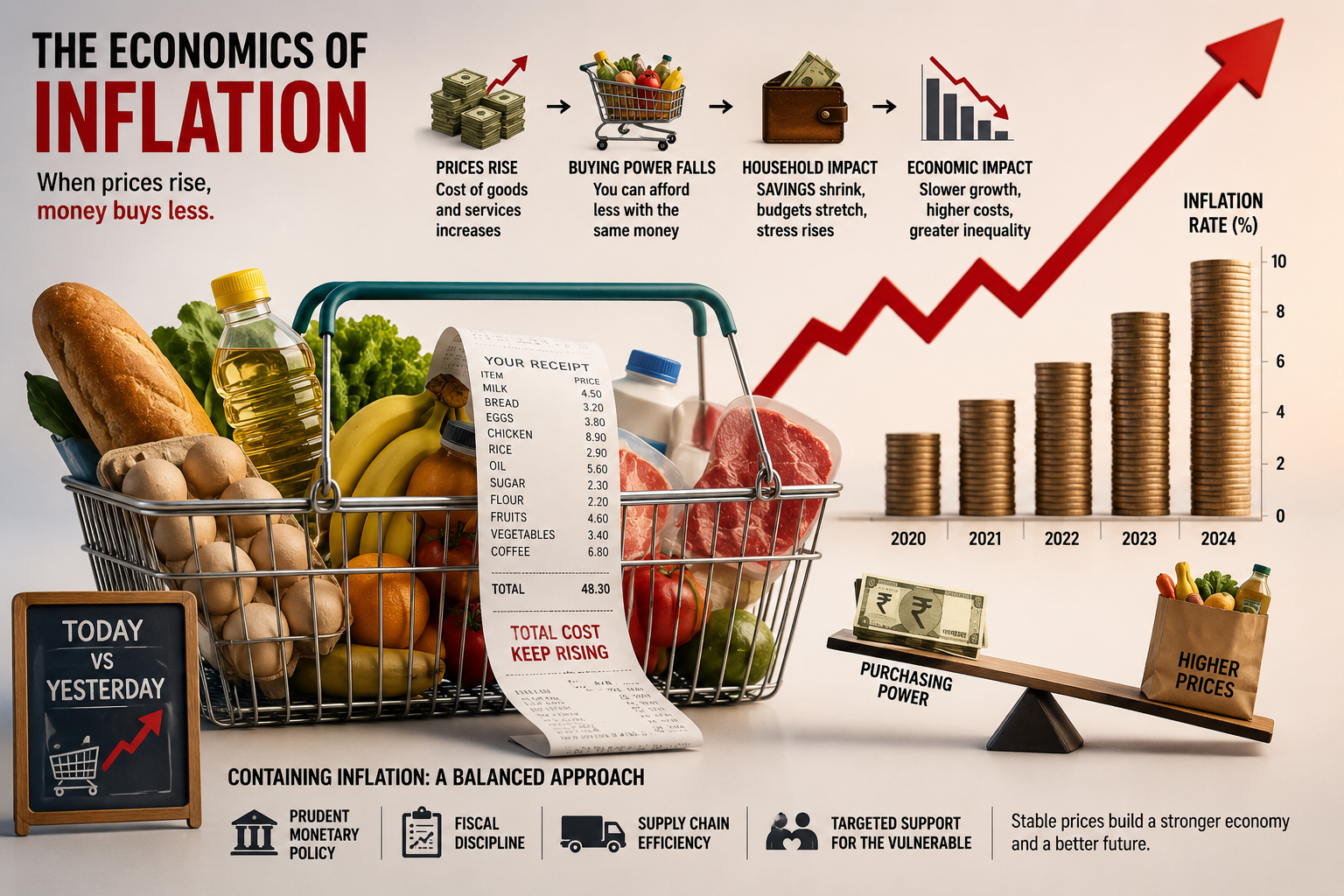
Economics of Inflation Crusade
Dr Mehraj Ud Din Shah
Inflation is swiftly unfolding macroeconomic fallout across the various sectors, wiping out income, savings, investment, demand, and employment, thereby giving a rude shock to the countries. The existing Inflationary phenomenon is intensively destabilizing the budget plans and regular consumption patterns of the majority of consumers across the globe, including in India.
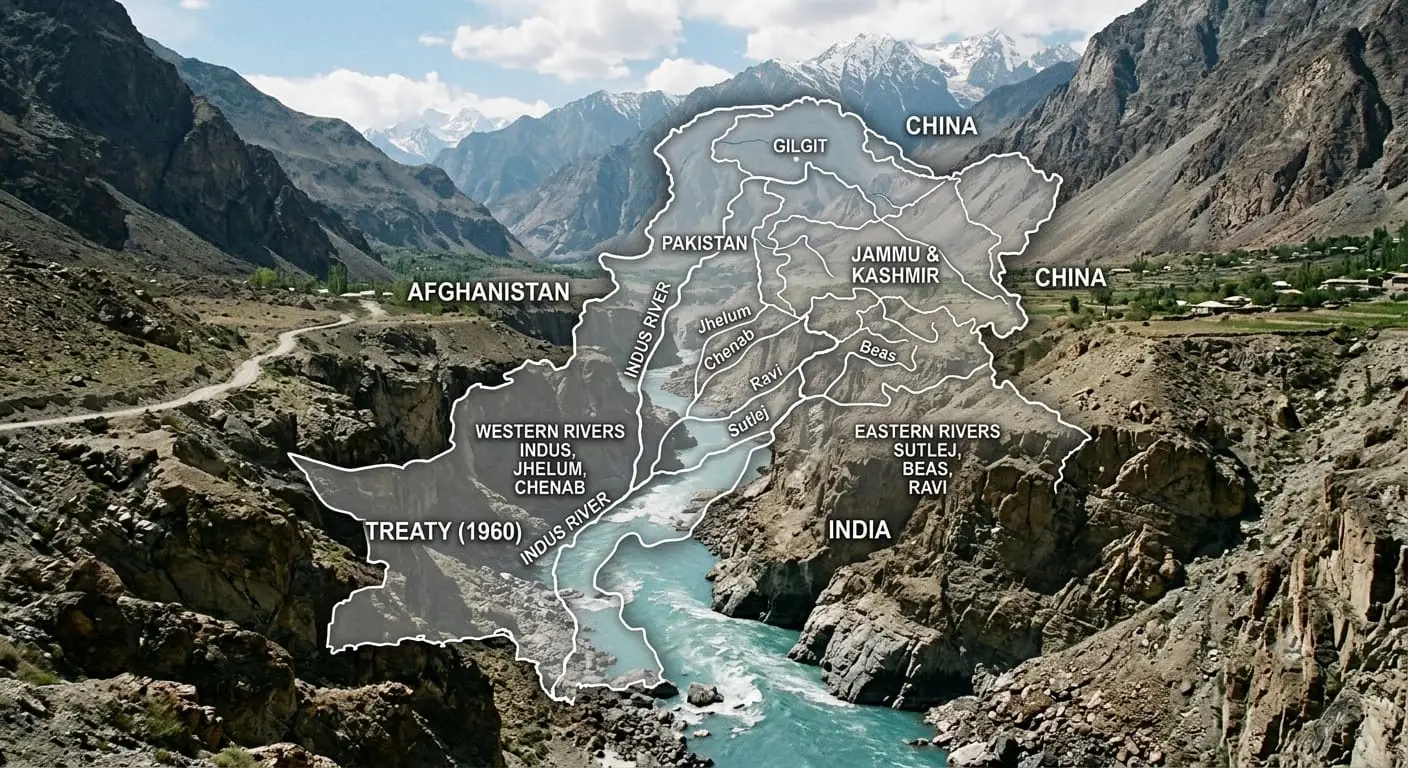
India Kept the Indus Waters Treaty Alive — Until It Became an Unbearable Burden
Kushvinder Vohra
For decades, the Indus Waters Treaty (IWT) has been celebrated globally as one of the world’s most successful international water-sharing agreements. It survived wars, military stand-offs, and prolonged hostility between India and Pakistan. Yet one fundamental question has rarely been examined honestly: what actually kept the Treaty alive for over six decades?

The Other Kashmir
Sohail Bhat
Every conflict has two histories. One is recorded in military maps, diplomatic exchanges and official communiqués. The other unfolds in the everyday lives of ordinary people, where politics is experienced through schools, hospitals, employment, courts and the responsiveness of public institutions.
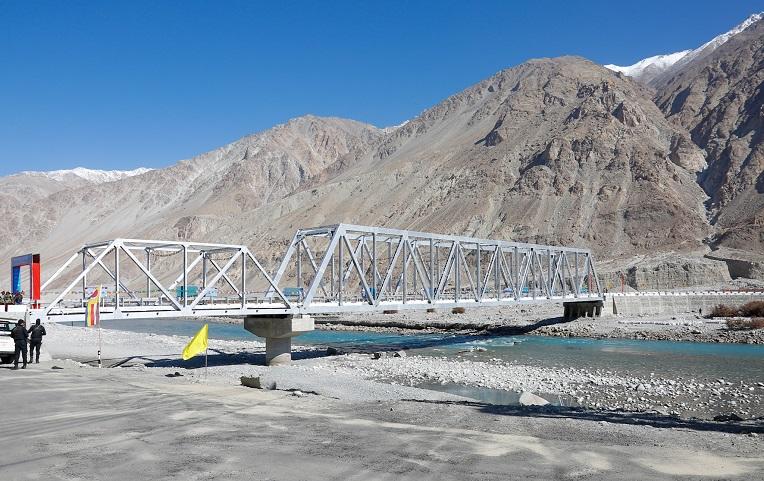
The Invisible Border
Bashir Assad
How the Line of Control Is Being Redefined by Infrastructure, Technology and Economics
Economics of Jobless Growth in India
Dr Mehraj Ud din Shah
India's economic growth has been impressive, but growth alone is insufficient if it fails to create productive employment.
Shri Amarnath Ji Yatra: Where Faith Meets the Spirit of India
Mohammad Zaid Malik
Every summer, as the Himalayan winter loosens its grip and the snow begins to retreat from the high-altitude passes of Kashmir, a remarkable human movement begins to unfold. It is not driven by trade, tourism, or migration. It is driven by faith.