politics
The Other Kashmir
By Sohail Bhat | Wed Jul 29 2026
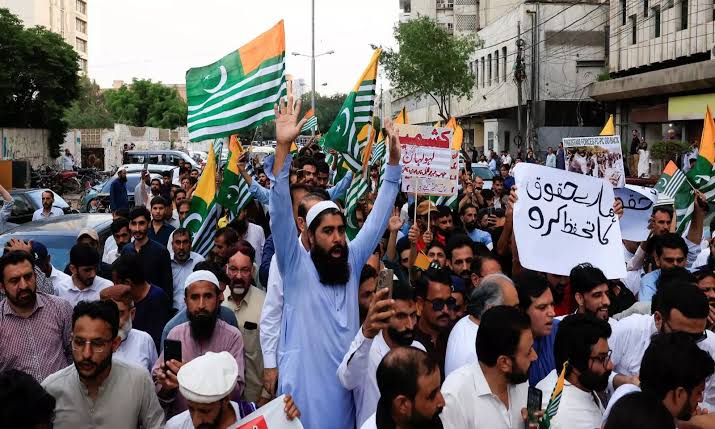
Every conflict has two histories. One is recorded in military maps, diplomatic exchanges and official communiqués. The other unfolds in the everyday lives of ordinary people, where politics is experienced through schools, hospitals, employment, courts and the responsiveness of public institutions. For decades, Pakistan Administered Kashmir has been viewed largely through the first lens. International debate has focused on territorial claims, ceasefire violations and the strategic contest between India and Pakistan. Far less attention has been paid to the society itself.
The most consequential change taking place across the Line of Control today is not confined to the streets where recent protests drew headlines. It lies in a quieter transformation, as an increasingly informed and connected society begins to question not only economic hardship but also the quality of governance, the distribution of authority and the relationship between the citizen and the state.
Political change rarely begins with crowds. By the time thousands gather in public squares, the foundations of dissent have often been laid over years of private conversations, growing expectations and accumulated frustrations. It takes shape around family dining tables, in university classrooms, in lawyers' offices, in traders' associations and in the routine encounters between citizens and government institutions. Before people challenge governments in public, they begin by asking simple questions in private. Why are important decisions taken elsewhere? Why do public services fail to keep pace with expectations? Why do opportunities appear unevenly distributed? Why do institutions so often seem remote from the people they are meant to serve?
Those questions have become increasingly difficult to ignore in Pakistan Administered Kashmir.
When Kashmir Central examined the wave of public protests in its July edition, the focus was on the political moment itself. The demonstrations, the economic pressures behind them and the unprecedented scale of public mobilization deserved careful attention because they marked an important chapter in the region's recent history. But protests, however dramatic, are rarely the whole story. They are usually the visible expression of something that has been building beneath the surface for years. This article begins where the previous one ended.
It is less interested in the slogans raised during demonstrations than in the lives of the people who raised them. It asks a different set of questions. What has everyday governance meant for those living in Pakistan Administered Kashmir? How have young people, professionals, traders and ordinary families come to view the institutions around them? Why has the language of rights begun to feature more prominently in public discourse? Above all, why has the demand for dignity emerged alongside demands for economic relief and political representation?
These questions deserve attention because Pakistan Administered Kashmir has long occupied an unusual place in discussions about the wider Kashmir conflict. It is frequently referred to in diplomatic exchanges between India and Pakistan, occasionally mentioned in international reports and almost always viewed through the prism of geopolitics. What is often missing is a sustained examination of the society itself.
The recent protests were only the visible expression of a deeper transformation. As expectations rise and questions of governance become more pronounced, Pakistan Administered Kashmir is entering a new phase of political and social awakening that deserves far greater international attention.Territories do not possess aspirations. People do.
The distinction matters.
Political maps can remain unchanged for decades while societies transform almost beyond recognition. New generations inherit old disputes but do not necessarily inherit the same priorities. The concerns of a university graduate searching for employment are not identical to those of his grandparents. A young entrepreneur trying to build a business measures progress differently from someone whose political memory was shaped by events half a century ago. Time changes expectations, and expectations eventually reshape politics. That change is visible across Pakistan Administered Kashmir.
Walk through its towns today and one notices a society that is younger, better connected and considerably more aware of the world beyond its mountains than any generation before it. Satellite television, affordable smart phones and social media have compressed distances that geography once imposed. News travels in minutes. Comparisons are instant. A student in Muzaffarabad can watch parliamentary debates in London, university lectures from New Delhi, election campaigns in Europe and economic reforms in the Gulf, all before the day is over. Whether those comparisons are fair is almost beside the point. They shape expectations, and expectations have a way of unsettling political certainties.
That is perhaps the most important story unfolding in Pakistan Administered Kashmir today.
The debate is no longer confined to questions of identity or territory. Increasingly, it revolves around the quality of governance. Citizens discuss roads and hospitals with the same intensity that previous generations reserved for constitutional questions. Young people worry about employment, higher education and economic mobility. Traders speak of markets, regulations and purchasing power. Lawyers debate institutional authority and legal accountability. Journalists navigate an increasingly complicated information environment. None of these concerns exists in isolation. Together, they reveal a society that is becoming more demanding of the institutions that govern it.
History offers many examples of such moments.
Political systems rarely come under sustained public scrutiny simply because people become dissatisfied. They come under scrutiny when societies become more confident, more educated and more willing to articulate expectations. Education changes the vocabulary of public debate. Digital connectivity changes its speed. Economic pressures sharpen its urgency. Together they create citizens who ask not merely whether they are being governed, but how they are being governed.
That distinction is subtle but profoundly important.
For much of the past seven decades, Pakistan Administered Kashmir occupied a relatively quiet corner of international attention. The Valley across the Line of Control dominated headlines. Diplomatic exchanges revolved around New Delhi and Islamabad. International organizations focused on broader developments within the dispute. Meanwhile, the internal evolution of Pakistan Administered Kashmir attracted comparatively little sustained scholarly or journalistic attention. It existed in the margins of the conversation, acknowledged but seldom examined in depth. The consequence of that neglect is that many assumptions about the region have remained frozen in time.
Societies, however, do not remain frozen.
The child born in Muzaffarabad in 2005 has grown up in a world profoundly different from that experienced by his parents. He has known digital communication rather than isolation, social media rather than state controlled narratives alone, and global economic aspirations rather than purely local horizons. His understanding of governance is shaped not only by local experience but by constant exposure to how governments function elsewhere. He evaluates public institutions against standards that previous generations rarely encountered. This does not automatically produce political unrest. It produces something far more enduring. It produces expectations. And once expectations become part of public consciousness, they are difficult to reverse.
That is why the recent political mobilization in Pakistan Administered Kashmir deserves to be understood as more than a series of protests. Demonstrations eventually end. Crowds disperse. Markets reopen. Governments make announcements. But the expectations that brought people onto the streets do not disappear with equal ease. They remain, quietly influencing how citizens judge institutions, how they discuss politics within their families and how they imagine the future of the place they call home.
The story of Pakistan Administered Kashmir, therefore, is no longer simply about a disputed territory caught between competing national narratives. It is increasingly about a society discovering its own voice. That voice is not uniform. It speaks through students seeking opportunity, lawyers demanding institutional accountability, traders worried about economic uncertainty, journalists attempting to widen public debate and ordinary citizens who expect governance to be measured not merely by authority but by fairness, transparency and responsiveness.
The search for dignity begins there. Not in slogans or speeches, but in the ordinary conviction that government should be close enough to hear its people and confident enough to answer them.
Related Articles
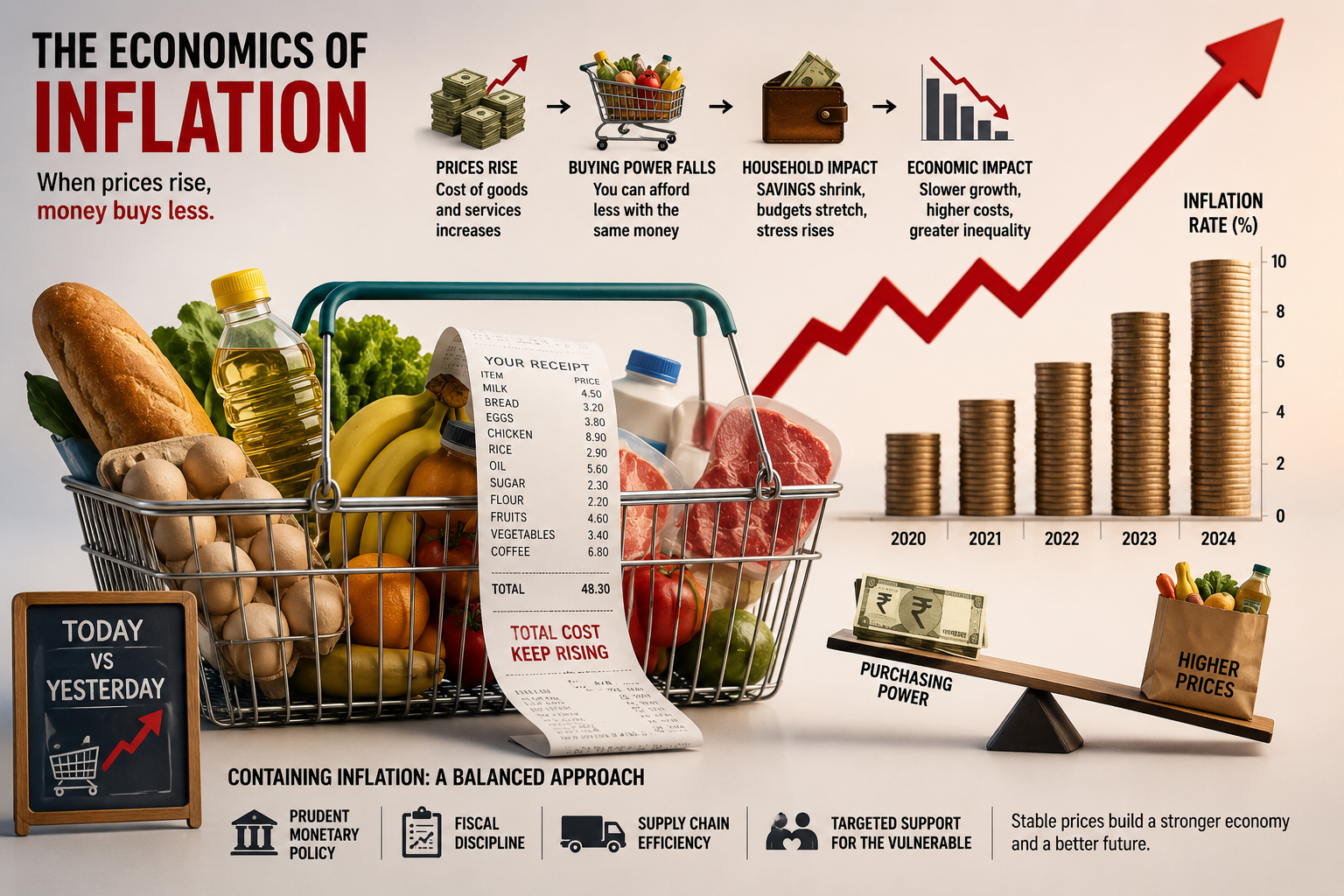
Economics of Inflation Crusade
Dr Mehraj Ud Din Shah
Inflation is swiftly unfolding macroeconomic fallout across the various sectors, wiping out income, savings, investment, demand, and employment, thereby giving a rude shock to the countries. The existing Inflationary phenomenon is intensively destabilizing the budget plans and regular consumption patterns of the majority of consumers across the globe, including in India.
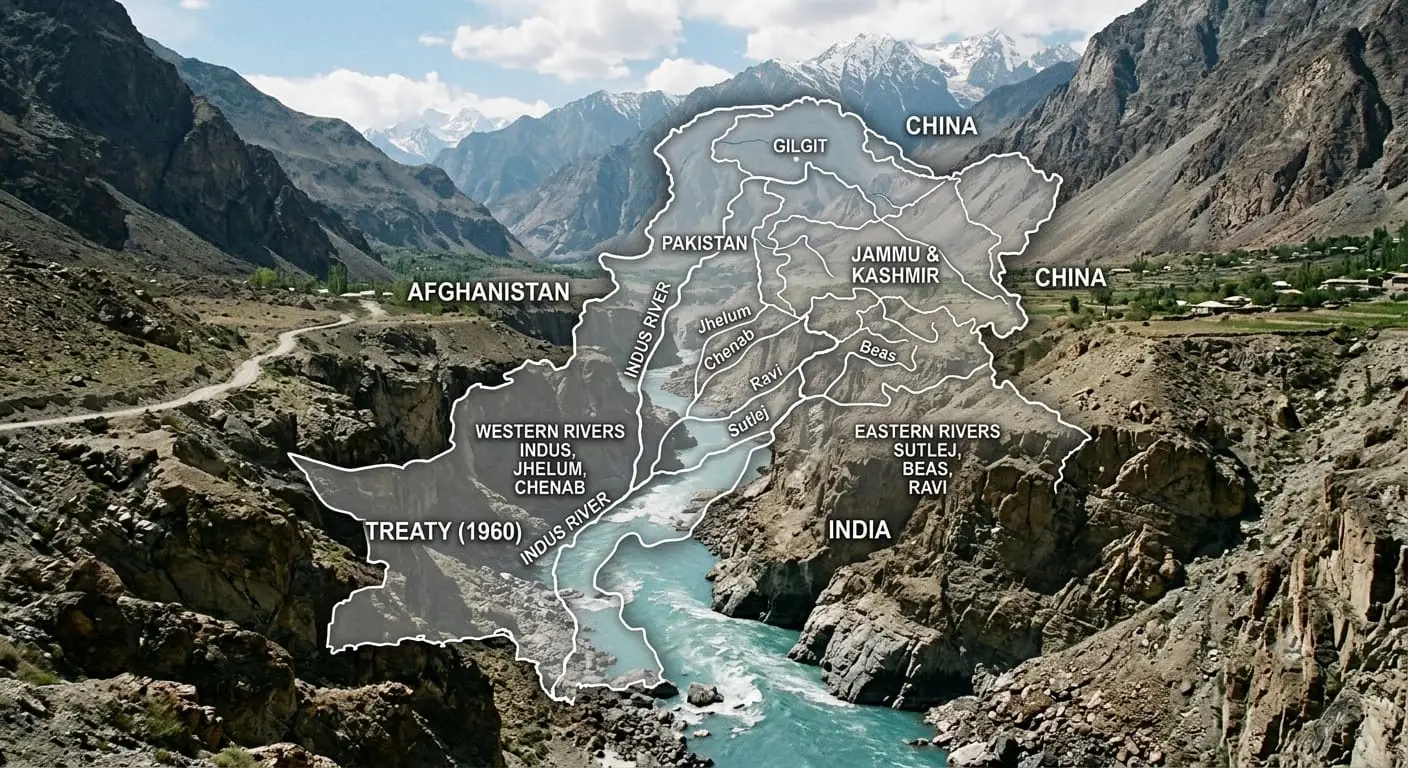
India Kept the Indus Waters Treaty Alive — Until It Became an Unbearable Burden
Kushvinder Vohra
For decades, the Indus Waters Treaty (IWT) has been celebrated globally as one of the world’s most successful international water-sharing agreements. It survived wars, military stand-offs, and prolonged hostility between India and Pakistan. Yet one fundamental question has rarely been examined honestly: what actually kept the Treaty alive for over six decades?

Who Owns Kashmir's Story?
Irfana Shafi
The answer was once straightforward. Governments issued official statements, newspapers interpreted events and diplomats framed international opinion. That order has quietly collapsed. Today, a student with a Smartphone, an influencer in another continent, a Diaspora activist, an anonymous social media account or an artificial intelligence system can shape global perceptions of Kashmir before any government has issued its first statement.
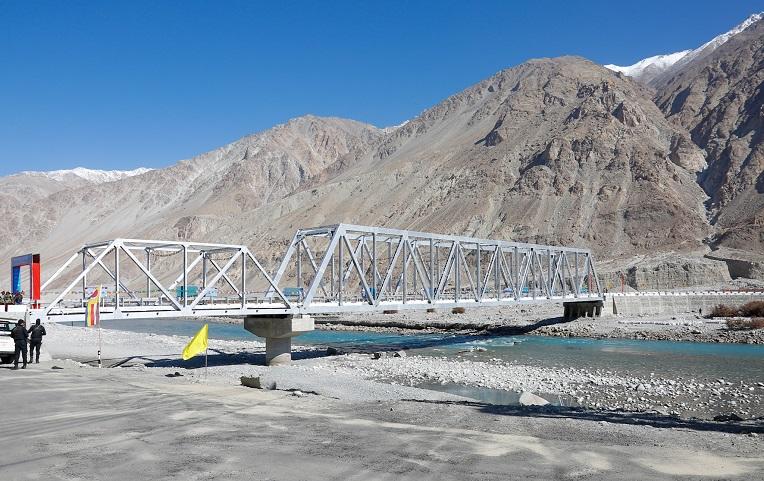
The Invisible Border
Bashir Assad
How the Line of Control Is Being Redefined by Infrastructure, Technology and Economics
The Protest That Won’t Go Away
Rafi Ahmad Mir
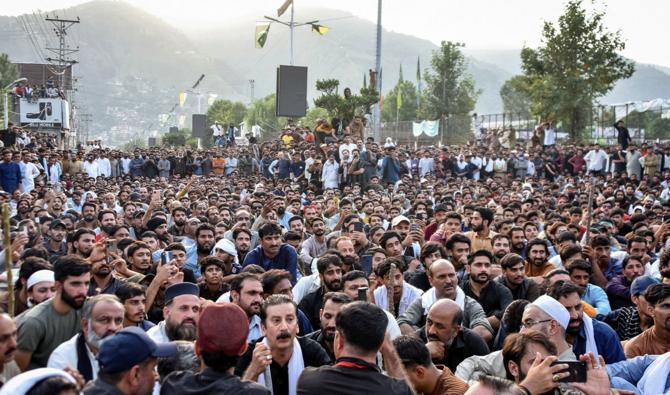
Pakistan-administered Kashmir and the limits of political management
WHO OWNS KASHMIR’S WATER?
Sohail Bhat
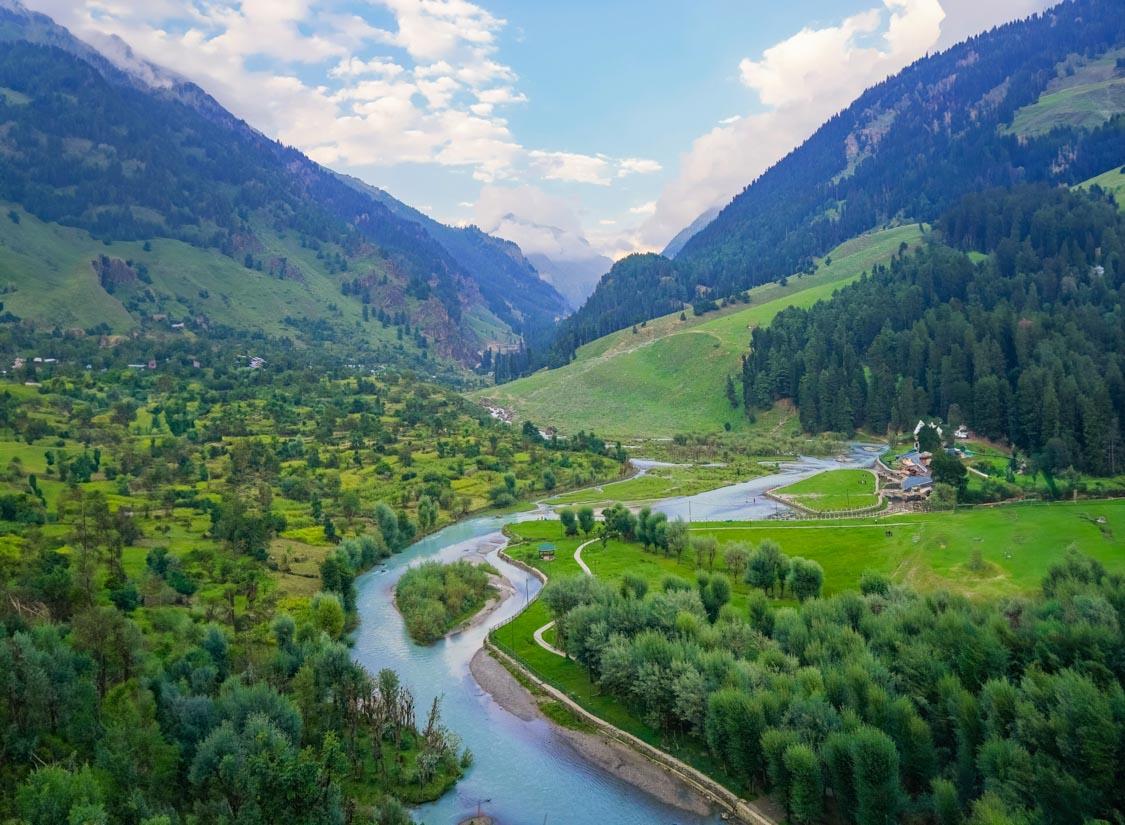
The rivers of Kashmir have always been more than scenery. They have carried people, shaped settlements, fed fields, powered machines and remained at the centre of one of South Asia’s enduring conflicts. As the old arrangements around water enter uncertain territory, a more immediate question is emerging inside Kashmir itself: who benefits from the water that flows through it?