politics
The Government Has a Mandate. Does It Have the State to Deliver?
By Rukhsana Waheed | Wed Oct 07 2026
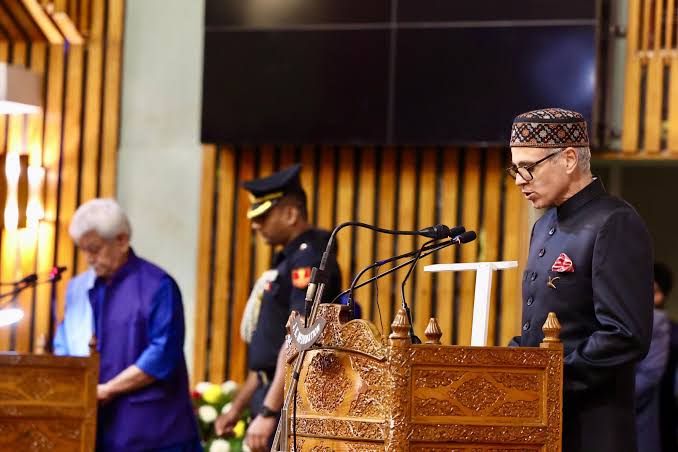
For the first time in many years, Jammu and Kashmir has a government that derives its authority from a directly elected Legislative Assembly and is expected to answer, at least politically, to the people who elected it. That change is important. But elections can restore political representation much faster than they can restore the capacity of a government to govern.
This is the more difficult question confronting Jammu and Kashmir now.
The National Conference-led government came to office in October 2024 after an election that carried significance far beyond the ordinary transfer of power. The Assembly election was the first since 2014 and the first after the constitutional and administrative changes of 2019.
The result restored an elected political executive to the Union Territory, but not the institutional circumstances of the earlier state. The Assembly operates within the framework created by the Jammu and Kashmir Reorganisation Act, while important areas including public order and police remain outside the elected government's legislative and administrative control.
That distinction is central to understanding the politics of the present government.
The electorate voted for a government, but the government did not inherit the full apparatus of the state that existed before 2019. It inherited a Union Territory with a different constitutional architecture, a bureaucracy accustomed to operating under a much stronger administrative command structure and an economy whose dependence on public expenditure remains considerable.
The political expectation, however, remained much larger than the institutional space.
That gap is now beginning to define the politics of Jammu and Kashmir.
The autumn session of the Legislative Assembly, beginning on September 21, is expected to bring this tension into sharper focus. Opposition parties have indicated that unemployment, outsourcing, regularisation of daily wagers, reservation and governance will be among the principal issues they intend to raise.
These are not merely opposition talking points. They represent the everyday concerns through which the public is likely to judge the meaning of elected government.
For years, politics in Kashmir was dominated by questions of identity, constitutional status, security and political legitimacy. Those questions have not disappeared. But another set of expectations has now moved closer to the centre of public life. Young people want employment. Contractual and daily-wage workers want security. Businesses want predictable administration. Households are concerned about electricity costs. Local communities want functioning institutions. Citizens increasingly expect an elected government to solve problems that previously might have been attributed to the larger political dispute.
This is where governing becomes substantially more difficult than campaigning.
An election allows political parties to speak in the language of aspiration. Government requires them to work in the language of budgets, rules, recruitment procedures, departmental capacity and institutional constraints.
Jammu and Kashmir's financial position makes that transition particularly difficult. The 2026-27 budget document itself acknowledges fiscal stress caused by high committed expenditure and limited own-revenue capacity. PRS Legislative Research notes that J&K's own tax revenue for 2026-27 is estimated at ₹20,700 crore, only about one per cent higher than the revised estimate for the previous year.
That matters because almost every major political promise eventually encounters the same question: who will pay for it?
Employment is the clearest example.
For a generation of educated young Kashmiris, government employment has remained more than a career preference. It has represented stability, social status and economic security in an environment where the private sector has not generated sufficient opportunities of comparable scale. Yet a government cannot simply create permanent public employment in proportion to the number of young people entering the labour market. The wage bill, pension liabilities, recruitment rules and fiscal constraints impose limits that political rhetoric cannot remove.
This creates an uncomfortable political arithmetic.
The more the government promises public employment, the more the expectation rises. The more it relies on outsourcing and contractual arrangements to contain costs, the more it faces criticism from precisely those young people who expect the elected government to provide stable employment.
The controversy over outsourcing is therefore not simply a labour issue. It is a question about what kind of economy the government wants to build.
If essential public services increasingly depend upon workers employed through contractors, the state may reduce some immediate fiscal and administrative burdens, but it also creates a workforce with weaker employment security. If every outsourced position is converted into a permanent government job, the government may satisfy one demand while creating a financial commitment that becomes difficult to sustain.
Neither position can be resolved through slogans.
The problem is made more complicated by the large population of daily wagers and other categories of workers who have spent years performing functions for government departments without enjoying the security associated with regular employment. Their demand for regularisation is understandable, but regularisation on a large scale has implications for recruitment policy, expenditure and administrative structure.
The government therefore finds itself between two pressures: the political demand for employment security and the economic requirement to keep expenditure within manageable limits.
This is precisely where an elected government must demonstrate something more difficult than political sympathy. It must develop a credible employment policy that distinguishes between legitimate regularisation, creation of new posts, private-sector employment, entrepreneurship, skill development and the expansion of productive sectors.
Otherwise, every employment announcement risks becoming another instalment in an expectation cycle that the government cannot ultimately satisfy.
Electricity provides another illustration of the same problem.
The recent increase in electricity tariffs has already become politically contentious. The Joint Electricity Regulatory Commission approved a 6.83 per cent increase effective September 1, prompting opposition parties to protest. Chief Minister Omar Abdullah defended the decision by distinguishing between his earlier promise of free electricity for eligible households and a promise to keep tariffs permanently unchanged.
The controversy reveals a larger difficulty.
Jammu and Kashmir has historically treated electricity not merely as an economic commodity but as a political entitlement. Yet the electricity sector also carries substantial financial pressures. A government that wants to provide reliable power, maintain infrastructure and improve supply cannot indefinitely avoid the question of cost recovery.
The political problem is that the citizen encounters the electricity bill immediately, while the structural reforms that may improve the sector take much longer.
This is the point at which public expectations and governmental capacity collide.
The same tension can be seen in local governance.
Jammu and Kashmir's elected Assembly has returned, but the democratic chain cannot be considered complete simply because an Assembly exists. Local government is where citizens encounter the state most directly. Roads, drainage, sanitation, water supply, waste management, building permissions and neighbourhood infrastructure are overwhelmingly local concerns.
The government is now moving towards municipal elections, with reports indicating that preparations are advancing through the reservation process and electoral formalities. Panchayat electoral-roll revision is also under way for the 2026 cycle.
The restoration of these institutions therefore matters not merely as an electoral event but as a test of whether political participation can be pushed downward from the Assembly to the neighbourhood and village.
The larger question is whether Jammu and Kashmir can develop a political culture in which citizens no longer encounter government primarily through the bureaucracy, police or political intermediaries, but through institutions that are genuinely accountable at the local level.
That transition will take time.
It will also require the elected government to accept that political control and administrative control are not the same thing.
The bureaucracy has its own institutional memory, procedures and hierarchies. Governments come and go; officials remain. A minister may announce a policy in a press conference, but implementation travels through files, financial approvals, recruitment rules, tenders and departmental procedures.
This is one reason why the language of government performance needs to become more sophisticated.
Not every delay is necessarily evidence of administrative failure. Not every announcement is evidence of achievement. Some policies require legislative approval, some require financial resources, some depend upon the Union government and others require changes within the administrative machinery itself.
Jammu and Kashmir's present government therefore faces an unusual dual challenge. It must establish its political authority while simultaneously learning to operate within a constitutional arrangement in which its authority is significant but incomplete.
That distinction has consequences far beyond the Assembly. The Chief Minister has recently intervened in national and constitutional debates as well. His advice to Ladakh's political representatives to insist upon written assurances from the Centre rather than relying on verbal commitments illustrates the continuing importance of the relationship between the Union Territory government, the Union government and the wider constitutional framework.
For the J&K government, this relationship is unavoidable. It cannot govern effectively by treating New Delhi merely as an external political force, because the Union government retains substantial powers over the institutional structure within which Jammu and Kashmir operates. At the same time, the elected government cannot afford to become merely an administrative extension of the Centre, because its political legitimacy derives from an electorate with its own expectations and grievances.
The space between these two realities is where the real politics of the next few years will be played out. The opposition, too, faces a different test.
It is relatively easy to expose the government's limitations. It is much harder to offer alternative policies that survive contact with the fiscal and constitutional realities of Jammu and Kashmir. If unemployment is the central problem, what employment model can realistically absorb the young workforce? If outsourcing is objectionable, what alternative employment structure is financially sustainable? If electricity tariffs are unacceptable, how should the power sector's losses and infrastructure requirements be financed? If local governance has been delayed, what administrative reforms should accompany the elections? These are the questions that can take politics beyond accusation. The government will face similar scrutiny from its own supporters.
The restoration of an elected government created expectations that went beyond the formal exercise of voting. For many people, elections represented the possibility that decisions affecting their lives would once again be mediated through representatives who could be questioned, criticized and eventually removed through the ballot box.
That expectation is politically significant. It means that the government's performance will increasingly be measured against tangible outcomes rather than simply against the circumstances from which it emerged.
The old argument that Jammu and Kashmir's political environment is exceptionally difficult will remain valid. But it cannot become a permanent substitute for performance. At the same time, critics of the government cannot ignore the structural limitations within which it operates.
Both realities have to be acknowledged. Perhaps the most important change in Jammu and Kashmir's political landscape is therefore not the return of elections itself but the emergence of a new political test.
For decades, the central question was who represented Kashmir. The question now increasingly is what that representation can deliver. That is a much harder question because it cannot be answered through speeches about identity, history or constitutional principle alone. It requires functioning departments, credible recruitment systems, financially sustainable welfare programs, reliable electricity, better infrastructure, responsive local institutions and an economy capable of generating opportunities beyond the public sector. The government has a mandate. The more difficult task is to convert that mandate into administrative capacity.
And there is another complication. A government can inherit institutions, but it cannot inherit public patience indefinitely. If citizens begin to believe that elections have changed the political vocabulary without substantially changing the everyday experience of governance, disappointment will eventually become political capital for somebody else. Conversely, if the government succeeds in demonstrating that even within the limitations of the Union Territory framework it can improve public services, create credible economic opportunities and make institutions more responsive, the meaning of elected government itself will begin to acquire greater substance.
That is why the coming phase deserves to be watched less through the familiar prism of political confrontation and more through the quieter indicators of administrative performance.
The Assembly session will generate headlines. The more consequential story will unfold outside it: in recruitment offices, government departments, electricity counters, municipal wards, villages, businesses and among the young people waiting for their first serious opportunity.
That is where the promise of political restoration will eventually be tested. Jammu and Kashmir has recovered an elected government. The unfinished question is whether it can now recover the capacity to make that government matter in the daily life of its people.
Related Articles
Jammu and Kashmir Police: From a Force Under Siege to the Frontline of Counter-Terrorism
Muhammad Zaid Malik (KPS)
The history of the Jammu and Kashmir Police since the outbreak of terrorism is, in many ways, the history of an institution that was forced to reinvent itself while operating under fire. In the late 1980s, the force was essentially a conventional civil police organisation.

Detailed Concept Note
Dr Mehraj Ud Din Shah
Industry 5.0 Adoption: Strategic Transformation and Critical Challenges
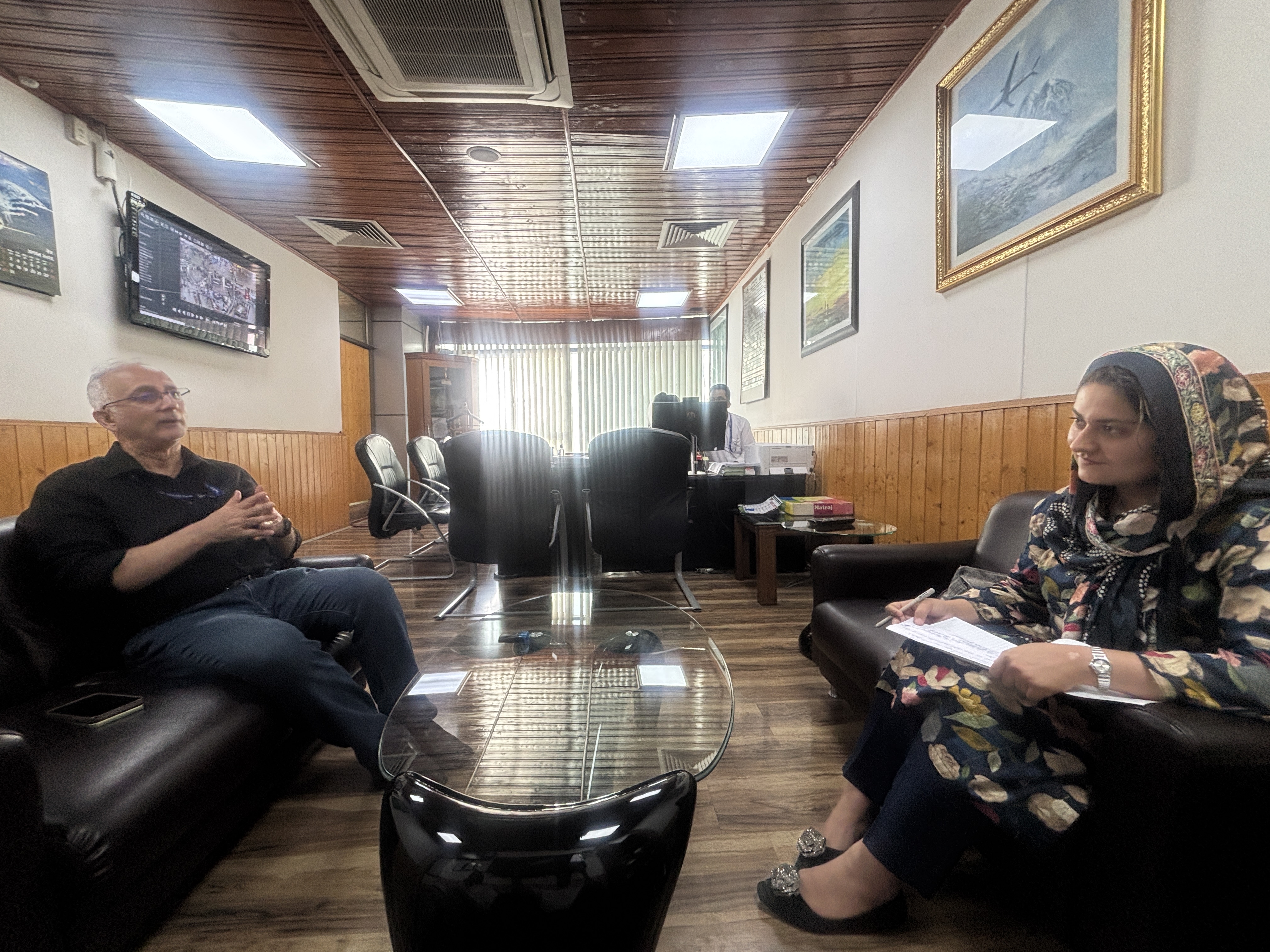
Srinagar Airport's ₹1,677-Crore Expansion: Building for the Next Decade
Kashmir Central Desk
In an interaction with Insha Sofi for Kashmir Central, the Director of Srinagar International Airport, Mr. Javed Anjum discusses the four-year expansion programme, the new terminal, increased passenger capacity, apron expansion, city connectivity and the challenge of transforming the airport while keeping it fully operational.
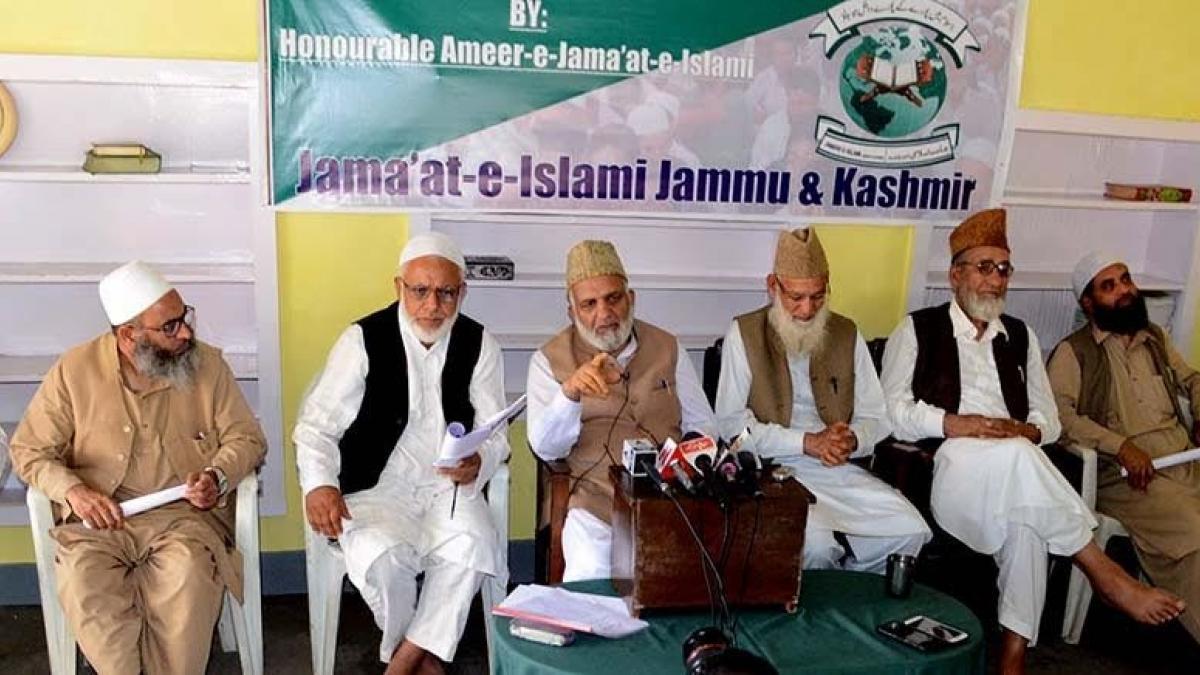
Jamaat’s Old Problem: The Politics of Compromise and Denial
Bashir Assad
The latest rupture within the banned Jamaat-e-Islami Jammu and Kashmir is being presented, understandably, as a dispute between the organization’s old guard and the group of its former functionaries who moved into electoral politics through the Justice and Development Front.
Beyond the Pomp: The Logistical Strain of the 3-Tier Local Governance Promise
Bashir Assad
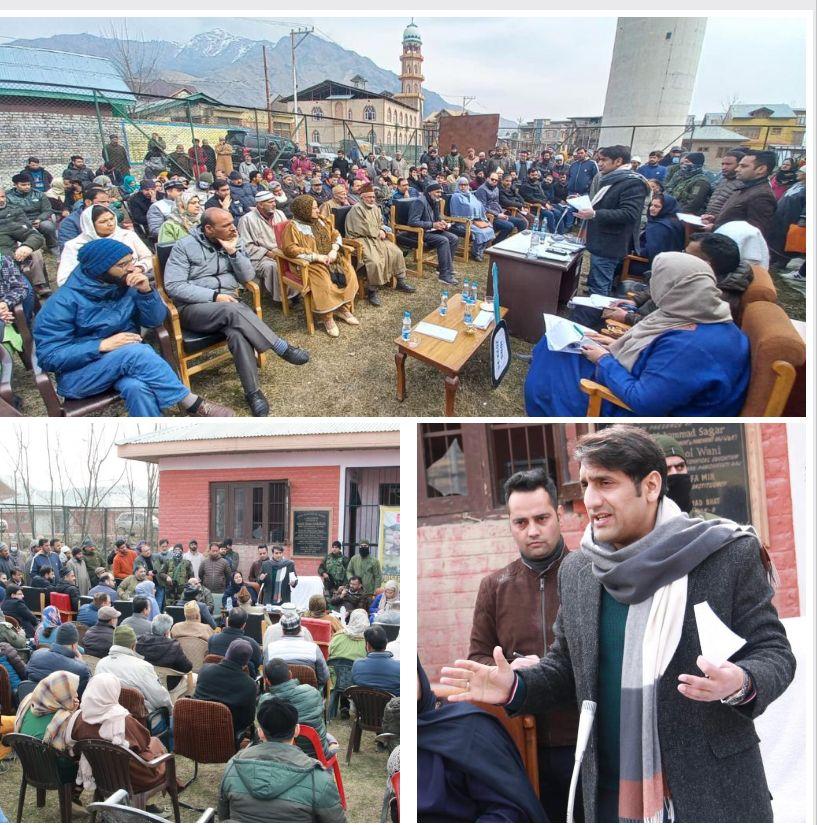
For twenty-eight thousand former Panchayat members across the fractured valleys and rugged highlands of Jammu and Kashmir, democracy has long been an exercise in prolonged anticipation. Following the highly publicized Assembly elections that finally restored a regional legislative assembly, the focus has abruptly shifted from the grand statecraft of the civil secretariat to the unpaved alleys of rural development.
The Protest That Won’t Go Away
Rafi Ahmad Mir
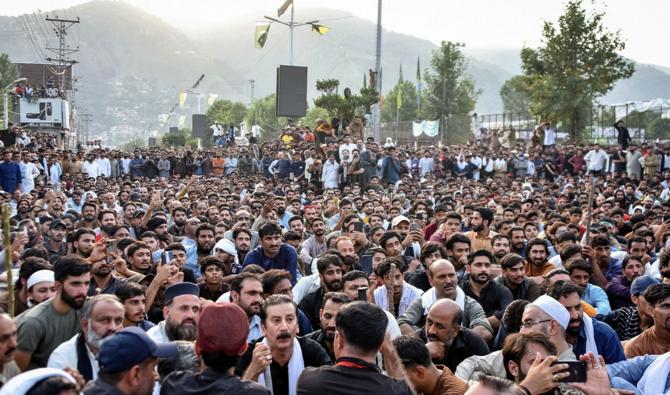
Pakistan-administered Kashmir and the limits of political management