society
Waiting for a Vacancy Education, Aspiration and the Politics of Waiting in Kashmir
By Suhail Bhat | Sat Jul 04 2026
The Generation That Never Arrived
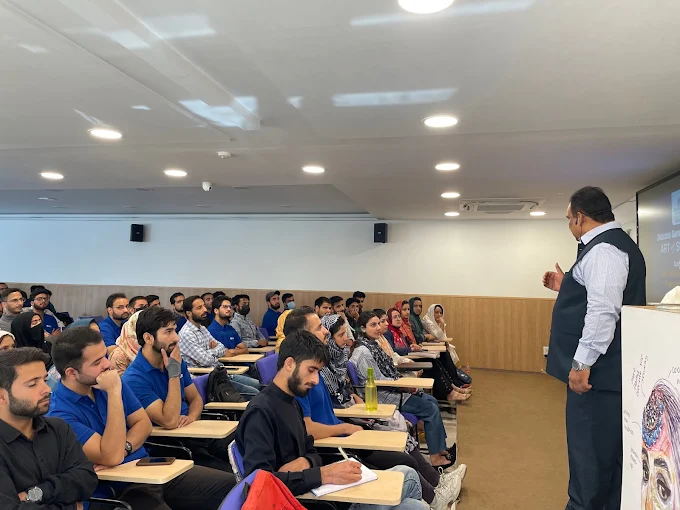
At six o'clock on a cold winter morning, long before the markets of Srinagar begin to stir and before office-goers emerge onto the roads, hundreds of young men and women can already be seen standing outside examination centres. Some clutch transparent folders containing admit cards and identity documents. Others revise handwritten notes one final time beneath streetlights. Parents wait nearby in parked vehicles, offering last-minute words of encouragement. Tea vendors move through the crowd. Conversations revolve around cut-off marks, vacancies, previous papers, coaching centres, and rumours circulating through Telegram groups.
For a few hours, the future appears concentrated within the walls of a school building converted into an examination centre. The candidates entering those gates are not merely competing for jobs. Many are competing for adulthood itself.
Some have been preparing for two years. Others for five. Many for longer. They carry degrees, postgraduate qualifications, professional certificates, and the accumulated expectations of entire families. Yet despite years of education, countless examinations, and enormous personal sacrifice, they remain suspended between aspiration and achievement.
The scene has become so familiar across Kashmir that it scarcely attracts attention anymore. Yet it represents one of the most profound social transformations unfolding in the region today.
It is a story about a generation that did everything society asked of it, only to discover that the path between education and opportunity had become longer, narrower, and far less certain than anyone anticipated. It is the story of Kashmir's Exam Generation.
For decades, education was presented as the most reliable route to social mobility, economic security, and personal advancement. Parents invested their savings in schooling. Families endured financial hardship to send children to colleges and universities. Teachers repeated a promise that seemed both simple and credible: study hard, earn qualifications, and opportunities would follow. For previous generations, that promise largely held true. For today's generation, it increasingly does not.
Across Kashmir, thousands of educated young people find themselves trapped in an extended cycle of preparation, examinations, recruitment delays, litigation, waiting lists, and uncertainty. Their lives are organised around vacancies that may or may not materialise, appointments that may or may not arrive, and opportunities that seem perpetually just beyond reach. This is not simply a story about unemployment. It is a story about suspended adulthood.
It is a story about a generation that did everything society asked of it, only to discover that the path between education and opportunity had become longer, narrower, and far less certain than anyone anticipated. It is the story of Kashmir's Exam Generation.
The Promise That Shaped a Society
Few institutions command greater respect in Kashmiri society than education. For much of the twentieth century, education represented both aspiration and escape. It offered a pathway out of poverty, a means of social advancement, and a source of dignity in a region frequently marked by economic constraints and political uncertainty.
In villages scattered across the Valley, families often invested in education at considerable personal cost. Agricultural income was diverted toward school fees. Jewellery was sold to finance university studies. Parents with limited formal education viewed their children's academic success as the culmination of sacrifices extending across decades.
Education became more than learning. It became hope institutionalized. A familiar sequence emerged: school, university, employment, marriage, stability. For many families, this sequence evolved into an unwritten social contract. Academic effort would be rewarded. Qualifications would generate opportunity. The future would justify the sacrifice.
The remarkable expansion of educational access during the last three decades strengthened these expectations. Universities grew. Colleges multiplied. Enrolments increased dramatically. More young Kashmiris entered higher education than ever before.
By most conventional indicators, this should have been a success story. Instead, it generated an unexpected contradiction. As educational attainment expanded, the labour market failed to expand at the same pace. The result was not simply unemployment. It was the mass production of aspiration without the parallel production of opportunity.
Why the Government Job Became the Ultimate Dream
To understand contemporary Kashmir, one must understand the extraordinary symbolic power of government employment. In many parts of the world, young graduates pursue careers across a wide range of sectors. In Kashmir, however, government employment has historically occupied a unique position. A government job offers something increasingly rare: certainty. Regular salaries, institutional protection, pension benefits, social prestige, and long-term stability make public-sector employment exceptionally attractive.
In a region where private enterprise remains relatively limited and economic volatility remains common, such stability acquires enormous value. Consequently, government employment ceased to be merely one career option among many. It became the benchmark against which all other opportunities were measured. Parents encouraged it. Relatives admired it. Society rewarded it.
Over time, the government employee became a cultural symbol of achievement. A teacher represented respectability. A civil servant represented success. An officer represented arrival. Entire generations grew up internalizing these assumptions. The examination hall therefore became something more than an administrative mechanism. It became the gateway to social legitimacy.
The Rise of the Coaching Republic
The most visible consequence of this transformation is the emergence of an enormous coaching economy. Across Srinagar and other urban centres, coaching institutes have become among the most influential educational institutions in contemporary Kashmir.
Their advertisements dominate public spaces. Their success stories circulate on social media. Their classrooms are filled with aspirants preparing for civil services, banking examinations, police recruitment, teaching positions, administrative services, and countless other posts. Entire local economies now revolve around examination preparation. Hostels accommodate students from distant districts. Photocopy shops reproduce study material. Bookstores stock competitive guides. Libraries operate at full capacity. Online educators attract thousands of followers.
The coaching industry has become one of the fastest-growing sectors associated with youth aspiration. Its growth reflects a striking paradox. The shortage of jobs has itself generated employment. An entire economy now exists around preparing people for opportunities that remain limited. In many respects, Kashmir has become a society preparing for examinations.
Living in Permanent Preparation
Preparation is supposed to be temporary. For many young Kashmiris, it has become permanent. An examination notification appears. Candidates intensify preparation. Months pass. The examination is conducted. Results are delayed. Legal challenges emerge. Recruitment procedures become contested. Another notification appears. The cycle begins again. Years disappear within this repetitive sequence. What begins as a one-year plan gradually extends into three years. Three years become five. Five become seven.
Many aspirants eventually realize that they have spent a significant portion of their twenties preparing for a future that remains uncertain. The most difficult aspect of this experience is not hard work. It is the inability to predict when the waiting will end. Life becomes organized around events that remain outside individual control. The next notification. The next examination. The next result. The next vacancy. The next possibility. The future becomes perpetually deferred.
Portraits from the Waiting Room
Behind every recruitment statistic lies a personal story. Across Kashmir, thousands of young people inhabit remarkably similar biographies. A postgraduate from Kupwara spends six years preparing for various examinations while watching former classmates build careers elsewhere.
A woman from Anantnag postpones marriage because she remains convinced that one more recruitment cycle may finally produce success. A graduate from Baramulla appears in examination after examination, qualifying repeatedly but never securing final selection.
Their circumstances differ. Their experience does not. All inhabit a condition of prolonged anticipation. All continue investing faith in a promise whose fulfillment remains uncertain. Their lives illustrate a striking sociological reality. Waiting has become one of the most common shared experiences among educated youth in Kashmir.
The Hidden Economics of Waiting
The costs of unemployment are usually measured in lost income. The costs of waiting are much larger. Years spent preparing represent years not spent acquiring professional experience. They represent delayed earnings, delayed independence, delayed investment, and delayed confidence. Families absorb substantial financial burdens. Coaching fees accumulate. Accommodation costs rise. Examination fees multiply. Transportation expenses increase. Study materials require constant updating. For households with modest incomes, these expenditures represent significant sacrifices. The deeper cost, however, remains invisible-Time.
The most productive years of youth are increasingly consumed by uncertainty. Aspirants invest thousands of hours in preparation while remaining excluded from meaningful participation in the economy. The opportunity cost is enormous.
Delayed Adulthood
Perhaps the most profound consequence of examination culture lies beyond economics. It concerns adulthood itself. Traditionally, education marked the transition into adult life. Today, employment performs that function. As employment becomes delayed, adulthood itself becomes postponed. Marriage is deferred. Independent households are delayed. Financial autonomy remains elusive. Major life decisions become conditional upon recruitment outcomes. Many young people describe feeling trapped between adolescence and adulthood. They possess qualifications associated with maturity but lack the economic independence traditionally associated with adult status. The result is a prolonged period of social limbo. An entire generation finds itself waiting not merely for employment but for life to begin.
Families and the Burden of Hope
The Exam Generation is sustained by family sacrifice. Behind every aspirant stands a network of emotional and financial support. Parents invest savings accumulated over decades. Siblings contribute income. Households adjust priorities. Family expectations become intertwined with examination outcomes. A government appointment therefore represents far more than individual success. It validates collective sacrifice. It confirms that years of investment were worthwhile. Failure, by contrast, is rarely experienced individually. Entire families share the disappointment.
This collective dimension helps explain the emotional intensity surrounding recruitment processes. The examination hall has become one of the few places where the aspirations of entire households converge.
The Psychology of Uncertainty
The emotional consequences of prolonged preparation are difficult to quantify. Hope and disappointment alternate continuously. Each recruitment notification generates optimism. Each delay generates anxiety. Each result generates anticipation or frustration. The cycle repeats endlessly. Unlike conventional employment, examination success depends upon numerous factors beyond individual effort. Competition intensifies. Vacancies fluctuate. Policies change. Procedures evolve. Consequently, uncertainty becomes a permanent feature of everyday life. The challenge is not merely failing. It is never knowing whether success remains one attempt away or permanently out of reach.
Digital technology has transformed examination culture. Telegram channels, WhatsApp groups, YouTube educators, and online mentoring platforms ensure that aspirants remain connected to recruitment discussions twenty-four hours a day. Notifications arrive constantly. Rumours circulate rapidly. Success stories spread instantly. The result is a culture of perpetual comparison.
Every achievement becomes visible. Every delay becomes public. Every vacancy becomes a collective obsession. Social media has expanded access to information. It has also intensified pressure. The examination experience no longer ends when students leave the classroom. It follows them everywhere.
Kashmir and the Manufacturing of Aspiration
Kashmir's Exam Generation is not an isolated phenomenon. Across large parts of Asia, Africa, and the Middle East, educational expansion has outpaced job creation. Governments successfully produced graduates. Economies failed to produce sufficient opportunities. The result has been the emergence of educated populations confronting persistent uncertainty.
What makes Kashmir distinctive is not merely the intensity of dependence upon public employment. It is the extent to which society periodically constructs symbolic figures around whom an entire generation organizes its aspirations.
In the decade preceding the abrogation of Article 370, a section of Kashmiri youth witnessed the emergence of local militant commanders who, through a combination of political circumstances, social media visibility, and public fascination, acquired an influence that extended beyond the sphere of militancy itself. For many vulnerable and disoriented young people confronting unemployment, uncertainty, and a crisis of direction, these figures became symbols of purpose, identity, and recognition. Their appeal was often less about ideology than about visibility in a society where many felt invisible.
The post-2019 period witnessed a very different phenomenon. As militancy declined and competitive examinations increasingly became the principal pathway to social mobility, public institutions, coaching centres, and social media platforms began celebrating successful candidates with unprecedented intensity. Civil service toppers, administrative officers, and examination rank-holders emerged as the new public heroes. Their photographs dominated newspaper pages, social media feeds, coaching advertisements, and public discussions. Success stories were amplified not merely to celebrate achievement but also to offer alternative role models for a generation searching for direction.
The intention behind this shift was understandable. It sought to replace the romanticization of conflict with the romanticization of achievement. Yet the unintended consequences deserve attention.
Just as the earlier glorification of militant figures created unrealistic expectations among some sections of youth, the contemporary celebration of exceptional examination success has occasionally produced its own distortions. A handful of extraordinary success stories are repeatedly presented as representative outcomes, while the vastly larger population of aspirants who never secure such positions remains largely invisible.
The result is a new hierarchy of aspiration. Thousands of young people internalize the belief that success in a competitive examination is not merely a career achievement but the primary measure of personal worth and social validation. When success remains elusive, disappointment is often experienced not as a professional setback but as a personal failure.
The consequences are increasingly visible. Coaching centres are filled with candidates who measure their self-worth against a tiny number of highly publicized success stories. Social media constantly reinforces the impression that perseverance inevitably leads to triumph, even though the mathematics of competitive recruitment makes such outcomes statistically impossible for the overwhelming majority of applicants. As years pass without success, frustration often transforms into anxiety, self-doubt, depression, and a growing sense of inadequacy. The burden is particularly heavy because failure is no longer experienced privately; it unfolds in a public culture that relentlessly celebrates the winners.
In this sense, Kashmir's examination culture reflects a broader transformation in the politics of aspiration. The heroes have changed, the symbols have changed, and the pathways have changed. What remains constant is a society in which large numbers of young people continue searching for recognition, dignity, and a meaningful place in the future.
The challenge, therefore, is not simply unemployment. It is the concentration of collective hope into a very narrow set of socially celebrated outcomes. When an entire generation is encouraged to pursue the same destination, the inevitable consequence is that many will find themselves waiting outside a door that only a few can ultimately enter.
Kashmir therefore represents a particularly concentrated expression of a broader global trend. Across many societies, educational expansion has created aspirations faster than economies can create opportunities. Yet few places illustrate the emotional and social consequences of that imbalance as vividly as Kashmir, where the examination hall has become not merely a site of recruitment, but a theatre of hope, recognition, and increasingly, disappointment
The Sociology of Waiting
Waiting is often treated as an inconvenience. In reality, it is a powerful social force. Waiting shapes behaviour. It influences decisions. It reorganizes lives. For Kashmir's educated youth, waiting has become institutionalized. People wait for notifications. They wait for examinations. They wait for results. They wait for appointments. They wait for certainty. The expectation that opportunity may arrive tomorrow encourages the postponement of alternative choices today. Businesses are not started. Migration plans are delayed. Other careers remain unexplored. Waiting becomes self-perpetuating. It transforms from a temporary condition into a permanent social reality.
One of the most significant consequences of educational expansion is credential inflation. As more people acquire degrees, degrees themselves lose their scarcity. Qualifications that once guaranteed distinction become commonplace. Candidates accumulate additional credentials to remain competitive. Master's degrees follow bachelor's degrees. Professional certifications follow master's degrees. Preparation becomes endless. The irony is profound. Kashmir has become more educated than ever before. Yet educational achievement increasingly coexists with economic insecurity. The value of education remains immense. The certainty once associated with educational success does not.
The greatest challenge posed by the Exam Generation is not unemployment alone. It is the gradual erosion of belief. Modern societies depend upon confidence in merit. Citizens must believe that effort can produce reward. Students must believe that education has meaning. Families must believe that sacrifice is worthwhile. When these assumptions weaken, social trust begins to erode. The consequences are subtle but significant. Cynicism replaces optimism. Doubt replaces confidence. Institutions struggle to retain credibility. The challenge therefore extends far beyond recruitment. It concerns the broader relationship between society and opportunity.
Every era leaves its mark upon the people who come of age within it. Some generations are shaped by conflict. Others by migration, economic transformation, or technological change. For many young Kashmiris, the defining experience of their generation may ultimately be waiting. Waiting for a vacancy. Waiting for a result. Waiting for an appointment order. Waiting for financial independence. Waiting for adulthood. Waiting for the future.
Kashmir's Exam Generation is among the most educated in the region's history. It is ambitious, resilient, and deeply invested in the promise of upward mobility through education. Yet it remains caught within a widening gap between aspiration and opportunity.
The significance of this phenomenon extends far beyond employment statistics. It touches family structures, mental health, migration patterns, social trust, marriage, identity, and the very meaning of education itself.
The examination hall has become one of the defining institutions of contemporary Kashmir—not because it guarantees opportunity, but because it concentrates hope. And hope, perhaps more than anything else, is what continues to bring thousands of young people back to those examination centres every year, carrying admit cards in their hands and entire futures on their shoulders, convinced that this time the waiting may finally end.
Related Articles

The Decade of Connectivity How Roads, Railways and Digital Networks Are Reshaping Kashmir
Yawar Yousef/Yasir Lone
For much of its modern history, Kashmir has been discussed through the language of conflict, diplomacy, security, and constitutional politics. Governments changed, policies evolved, and public debates shifted, yet the dominant narratives surrounding the region remained remarkably consistent.
Kashmir and the New Asian Geopolitics How China’s Rise is Reshaping the Strategic Environment
KC Desk
For much of the twentieth century, the Kashmir region was understood through a relatively stable analytical framework. It was a territorial and political conflict between India and Pakistan, shaped by Partition, sustained by competing claims of sovereignty, and periodically intensified by military confrontation.
Economics of Global Tariff War
Dr Mehraj Ud Din Shah
A significant tariff war was looming around the globe in late 2025 and early 2026. Its headwinds were sure to slip many nations into economic stagnation, including the US.
Shri Amarnath Ji Yatra: Where Faith Meets the Spirit of India
Mohammad Zaid Malik
Every summer, as the Himalayan winter loosens its grip and the snow begins to retreat from the high-altitude passes of Kashmir, a remarkable human movement begins to unfold. It is not driven by trade, tourism, or migration. It is driven by faith.

The Unheard Kashmir — Governance, Dependency and the Crisis of Representation in Pakistan Administered Kashmir
Bashir Assad
For nearly eight decades, the Himalayan region of Kashmir has occupied a unique place in international politics. It has generated wars, shaped national identities, influenced military doctrines, and drawn the sustained attention of diplomats, scholars, and policymakers across the world.
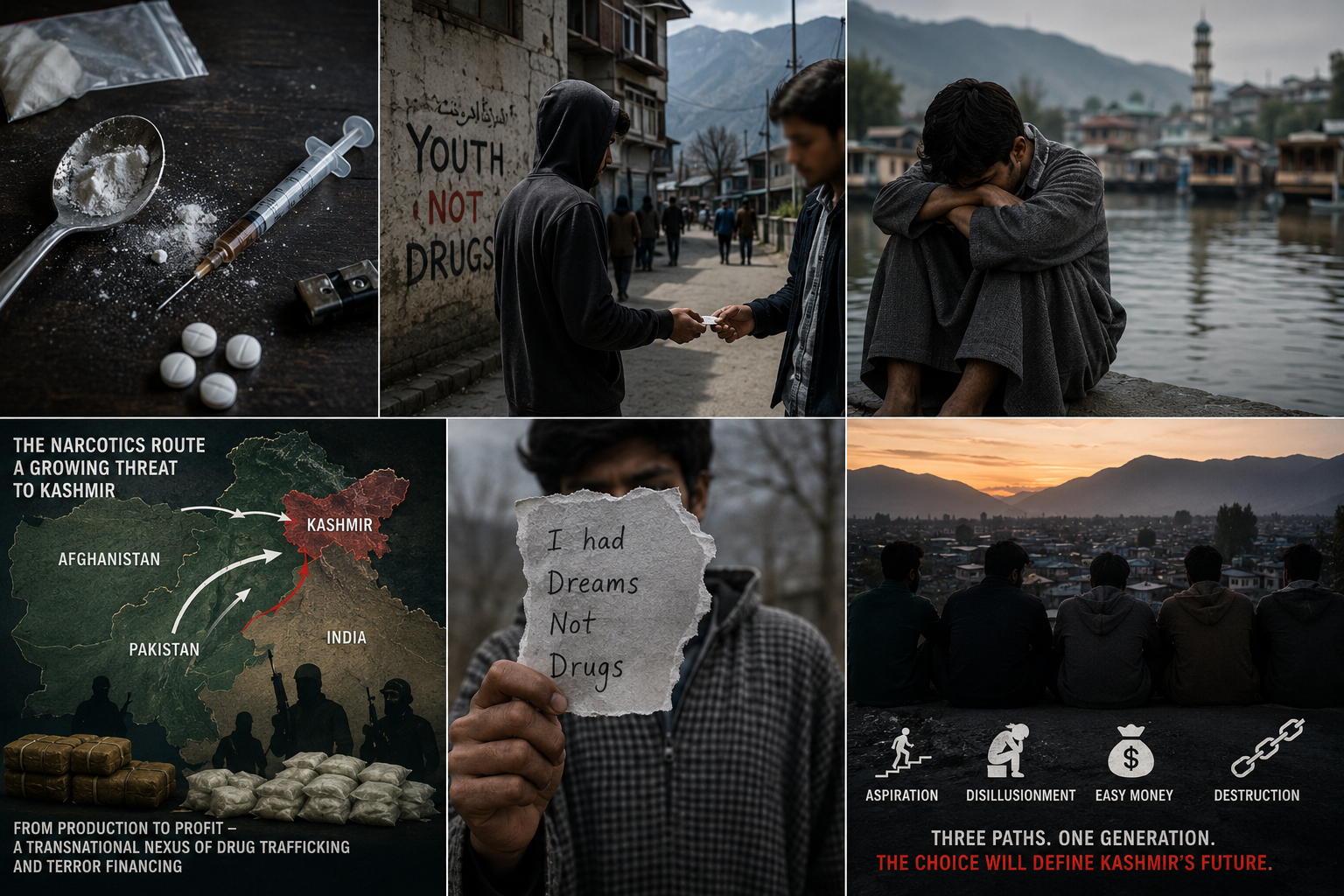
The New Economy of Despair Drugs, Easy Money, and The Fragmentation of Kashmiri Youth
Sohail Bhat
The contemporary Kashmiri social landscape is increasingly being shaped by two parallel and deeply contradictory realities. On one side stands a visibly aspirational generation attempting to reposition itself through education, entrepreneurship, digital culture, tourism, technology, competitive examinations, and new forms of professional mobility....