security
Kashmir and the New Asian Geopolitics How China’s Rise is Reshaping the Strategic Environment
By KC Desk | Sat Jul 04 2026
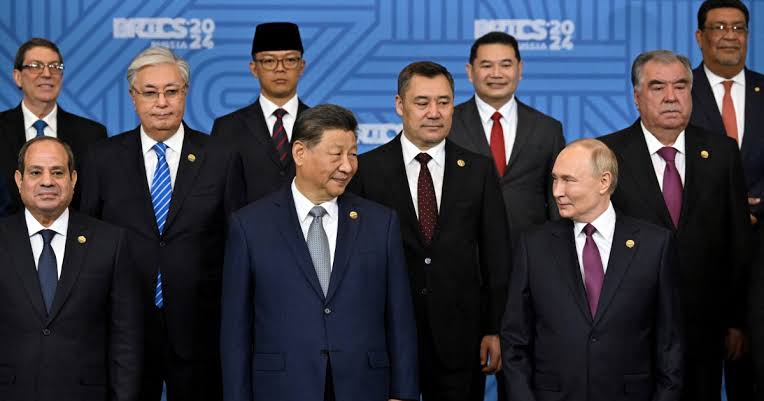
For much of the twentieth century, the Kashmir region was understood through a relatively stable analytical framework. It was a territorial and political conflict between India and Pakistan, shaped by Partition, sustained by competing claims of sovereignty, and periodically intensified by military confrontation. Diplomatic engagement, academic analysis, and international commentary largely operated within this bilateral lens.
Even when external actors expressed interest, they were generally viewed as secondary-responding to, rather than shaping, the core dynamics of the conflict. Over the past two decades, however, this framework has begun to show its limitations.
A quieter but structurally significant transformation has taken place in the wider Asian strategic environment. The rise of China, the expansion of cross-border infrastructure, shifting patterns of economic connectivity, and the growing importance of frontier regions have collectively altered the geopolitical context within which Kashmir is situated.
The conflict has not changed in its historical origins. But the environment surrounding it has changed in ways that are increasingly difficult to ignore. Kashmir is no longer only a bilateral question. It is becoming part of a broader strategic geography linking South Asia, Central Asia, and western China.
A quieter but structurally significant transformation has taken place in the wider Asian strategic environment. The rise of China, the expansion of cross-border infrastructure, shifting patterns of economic connectivity, and the growing importance of frontier regions have collectively altered the geopolitical context within which Kashmir is situated.
Understanding this shift is essential not because it replaces existing narratives, but because it adds an additional layer of strategic complexity that now informs the calculations of all principal stakeholders.
The Enduring India-Pakistan Framework
Despite emerging changes, the India–Pakistan dimension remains the central axis of the Kashmir conflict. Security concerns, political positions, domestic considerations, and historical narratives continue to define the core of the disagreement. Military deployments, diplomatic exchanges, and periodic crises reinforce the enduring salience of this bilateral structure.
For both states, Kashmir remains closely tied to questions of national identity, territorial integrity, and internal political legitimacy. These factors ensure that the conflict retains its historical centrality.
However, while the India–Pakistan framework remains foundational, it no longer operates in isolation. It is now embedded within a wider strategic environment that influences how each side evaluates risks, opportunities, and external alignments. This evolving context does not replace the bilateral dispute. It modifies its parameters.
Geography as Strategic Continuity
Geography has always been central to the Kashmir question, but its strategic significance has evolved over time. The region occupies a sensitive location at the intersection of South Asia, Central Asia, and the western Himalayan frontier. Historically, this positioning made it a zone of interaction, movement, and contestation. In the contemporary period, geography has regained strategic importance through a different pathway: connectivity.
Infrastructure development, cross-border linkages, and regional corridors have transformed the way states perceive frontier spaces. Areas once viewed primarily through a security lens are now also evaluated through the lens of mobility, access, and integration. Kashmir, in this sense, is no longer only a contested territory. It is also part of a broader geographic continuum that influences regional connectivity and strategic planning across multiple states. This shift in perception is subtle but significant.
China’s Evolving Strategic Position
China’s role in relation to Kashmir is often misunderstood when framed in conventional political terms. It is neither accurate to describe Beijing as a direct participant, nor sufficient to treat it as a distant observer.
China’s engagement is best understood as the gradual emergence of a set of strategic interests tied to regional stability, infrastructure development, and frontier security. These interests have expanded in parallel with China’s broader economic and geopolitical rise.
At the centre of this evolution is the increasing importance of western China’s connectivity to adjacent regions. Infrastructure networks, trade routes, and logistical corridors linking inland China to broader markets have elevated the strategic relevance of surrounding territories.
In this context, stability in neighboring regions acquires indirect but tangible importance. The key shift is not political involvement in the dispute itself, but the embedding of Chinese interests within the wider regional environment in which the dispute exists.
The Connectivity Layer and Regional Integration
One of the defining features of contemporary Asian geopolitics is the rise of connectivity-driven strategy. Infrastructure projects, transportation corridors, energy linkages, and trade networks increasingly shape how states think about regional geography. These developments have introduced a new layer to the Kashmir context.
Territories adjacent to the region are now part of broader connectivity architectures that link multiple parts of Asia. Roads, tunnels, energy systems, and logistical routes contribute to an emerging geography of movement that transcends older political boundaries. From a strategic perspective, this creates new forms of interdependence. Stability, predictability, and infrastructure security become important considerations for multiple stakeholders operating within overlapping regional systems. Kashmir is therefore not isolated from these developments. It is situated adjacent to them, and increasingly influenced by them. This does not alter its political status. But it does alter its strategic environment.
From a strategic perspective, this creates new forms of interdependence. Stability, predictability, and infrastructure security become important considerations for multiple stakeholders operating within overlapping regional systems. Kashmir is therefore not isolated from these developments. It is situated adjacent to them, and increasingly influenced by them. This does not alter its political status. But it does alter its strategic environment.
Security Calculations in a Changing Environment
In contemporary strategic thinking, security is no longer defined solely in military terms. It also includes infrastructure resilience, economic continuity, and regional stability. For major stakeholders in Asia, including China, India, and Pakistan, these considerations increasingly intersect. Periods of tension between India and Pakistan are no longer viewed exclusively through bilateral security dynamics. They are also assessed in terms of their potential impact on broader regional stability.
Similarly, developments in border regions are evaluated not only for their immediate tactical implications but also for their influence on long-term strategic planning. This does not imply convergence of interests. It implies the multiplication of variables. Kashmir, in this context, becomes part of a wider matrix of security considerations that extend beyond traditional boundaries.
The India-China Strategic Interface
Another important dimension shaping the regional environment is the evolving relationship between India and China. Over the past decade, this relationship has undergone significant changes, particularly in relation to border infrastructure, strategic competition, and regional influence. These developments have introduced a new layer of complexity into Asian geopolitics.
Kashmir now exists within a broader environment in which India and China are engaged in parallel processes of competition and managed interaction. This does not mean that Kashmir is the centre of India–China relations. Rather, it means that developments in and around Kashmir are increasingly interpreted within that wider strategic context. The result is a more interconnected regional system in which multiple issues influence one another across different geographic and political domains.
The Triangular Strategic Environment
Taken together, these developments suggest the emergence of a triangular strategic environment involving India, Pakistan, and China. This triangle is not symmetrical in nature, nor is it defined by equal participation in the Kashmir conflict.
Instead, it reflects the overlapping interests, calculations, and strategic considerations of three major regional actors whose policies intersect in and around the wider Kashmir region. India and Pakistan remain the principal contenders to the conflict.
China represents an increasingly important contextual actor whose interests are tied to regional stability, connectivity, and broader strategic calculations. The interaction between these three dimensions introduces additional complexity into an already long-standing and sensitive geopolitical issue. Importantly, this does not transform the legal or political structure of the dispute. It transforms the strategic environment in which the conflict exists.
What This Means for Regional Stability
The emergence of a more complex strategic environment carries implications for how stability is understood in the region. Stability is no longer a purely bilateral concern between India and Pakistan.
The Kashmir dispute retains its historical foundations and its central bilateral structure. However, the strategic grammar within which it is discussed is undergoing gradual change. The rise of China, the expansion of connectivity-driven development, the evolution of India–China relations, and the increasing importance of regional infrastructure have collectively contributed to a more complex environment. This does not redefine the dispute. It reframes its context.
It is increasingly linked to broader regional dynamics, including infrastructure development, economic connectivity, and great-power relations in Asia. This does not reduce the importance of bilateral dialogue or conflict management mechanisms. On the contrary, it reinforces their importance within a more complex system. As the number of relevant variables increases, the value of structured engagement also increases. The challenge lies not in replacing existing frameworks, but in adapting them to a changing environment.
For populations living in the Kashmir region, these broader strategic shifts are often indirect and uneven in their impact. Daily life remains shaped primarily by local governance, economic conditions, employment opportunities, and social dynamics. However, geopolitical developments contribute to the broader environment in which these local realities unfold.
Infrastructure, security arrangements, and regional stability influence economic prospects and long-term planning. While the strategic triangle involving India, Pakistan, and China operates at a state level, its effects are felt, in varying degrees, at the societal level.
This interaction between high-level geopolitics and ground-level reality remains an important dimension of the Kashmir context.
The Kashmir dispute retains its historical foundations and its central bilateral structure. However, the strategic grammar within which it is discussed is undergoing gradual change. The rise of China, the expansion of connectivity-driven development, the evolution of India–China relations, and the increasing importance of regional infrastructure have collectively contributed to a more complex environment. This does not redefine the dispute. It reframes its context.
Kashmir is increasingly situated within a broader Asian strategic landscape in which multiple actors, overlapping interests, and interconnected systems shape the environment surrounding the border conflict. For analysts, diplomats, and military planners alike, the key challenge is not to abandon established frameworks, but to refine them. The India–Pakistan dimension remains central. But it now operates within a wider strategic field that must also be taken into account. In this sense, the future of Kashmir will continue to be shaped by its history. But it will also be shaped by the changing geometry of Asia itself.
Related Articles
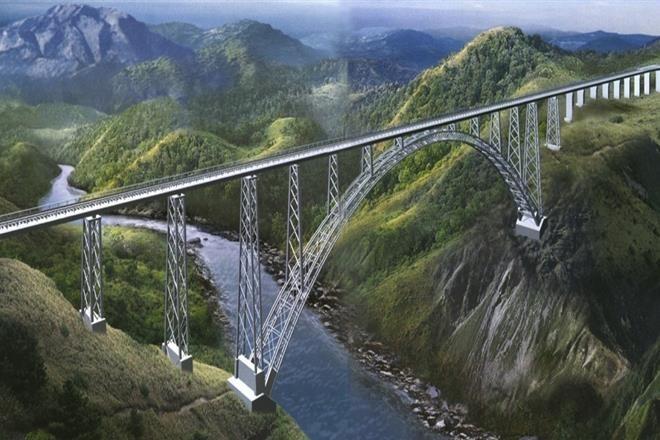
The Decade of Connectivity How Roads, Railways and Digital Networks Are Reshaping Kashmir
Yawar Yousef/Yasir Lone
For much of its modern history, Kashmir has been discussed through the language of conflict, diplomacy, security, and constitutional politics. Governments changed, policies evolved, and public debates shifted, yet the dominant narratives surrounding the region remained remarkably consistent.
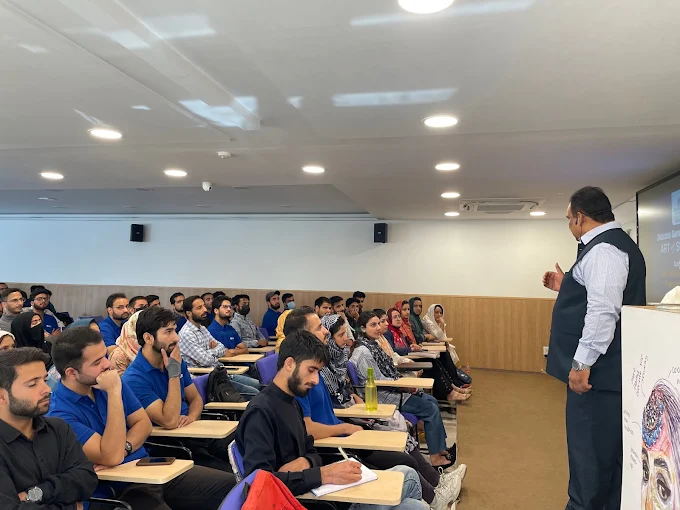
Waiting for a Vacancy Education, Aspiration and the Politics of Waiting in Kashmir
Suhail Bhat
At six o'clock on a cold winter morning, long before the markets of Srinagar begin to stir and before office-goers emerge onto the roads, hundreds of young men and women can already be seen standing outside examination centres.
Economics of Global Tariff War
Dr Mehraj Ud Din Shah
A significant tariff war was looming around the globe in late 2025 and early 2026. Its headwinds were sure to slip many nations into economic stagnation, including the US.
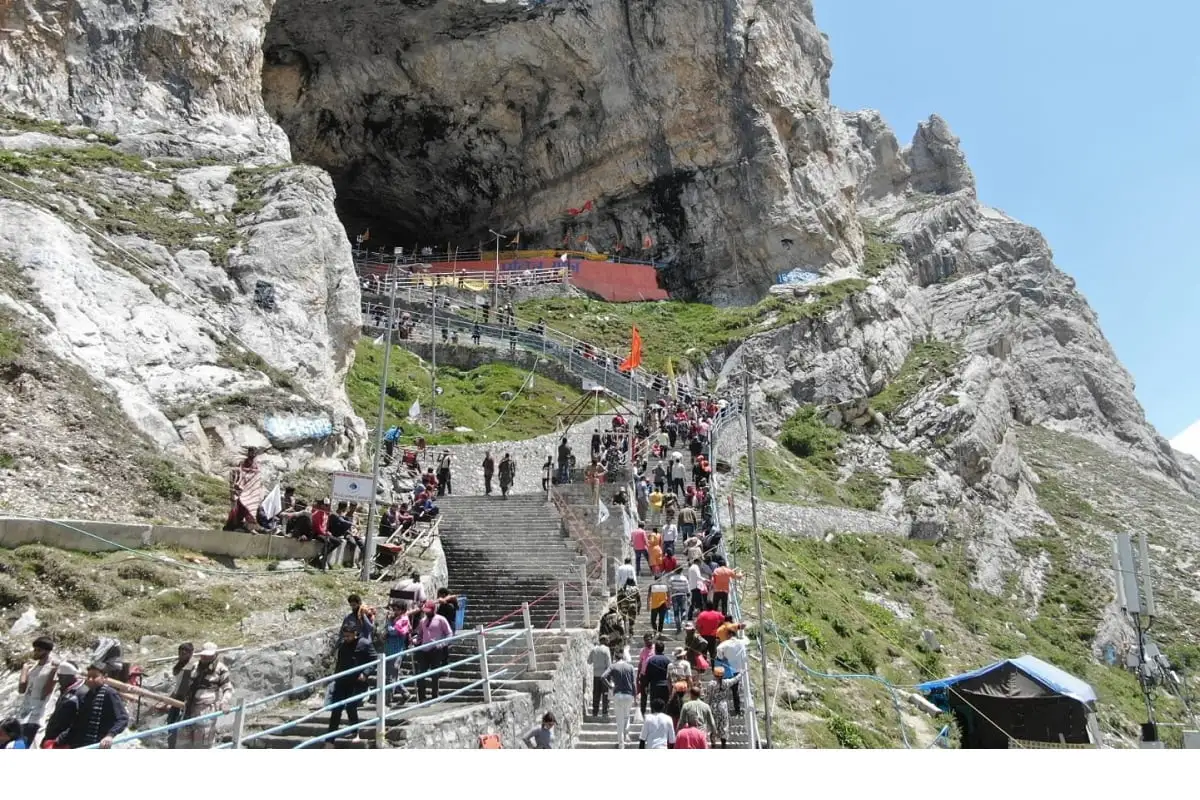
Shri Amarnath Ji Yatra: Where Faith Meets the Spirit of India
Mohammad Zaid Malik
Every summer, as the Himalayan winter loosens its grip and the snow begins to retreat from the high-altitude passes of Kashmir, a remarkable human movement begins to unfold. It is not driven by trade, tourism, or migration. It is driven by faith.

The Unheard Kashmir — Governance, Dependency and the Crisis of Representation in Pakistan Administered Kashmir
Bashir Assad
For nearly eight decades, the Himalayan region of Kashmir has occupied a unique place in international politics. It has generated wars, shaped national identities, influenced military doctrines, and drawn the sustained attention of diplomats, scholars, and policymakers across the world.
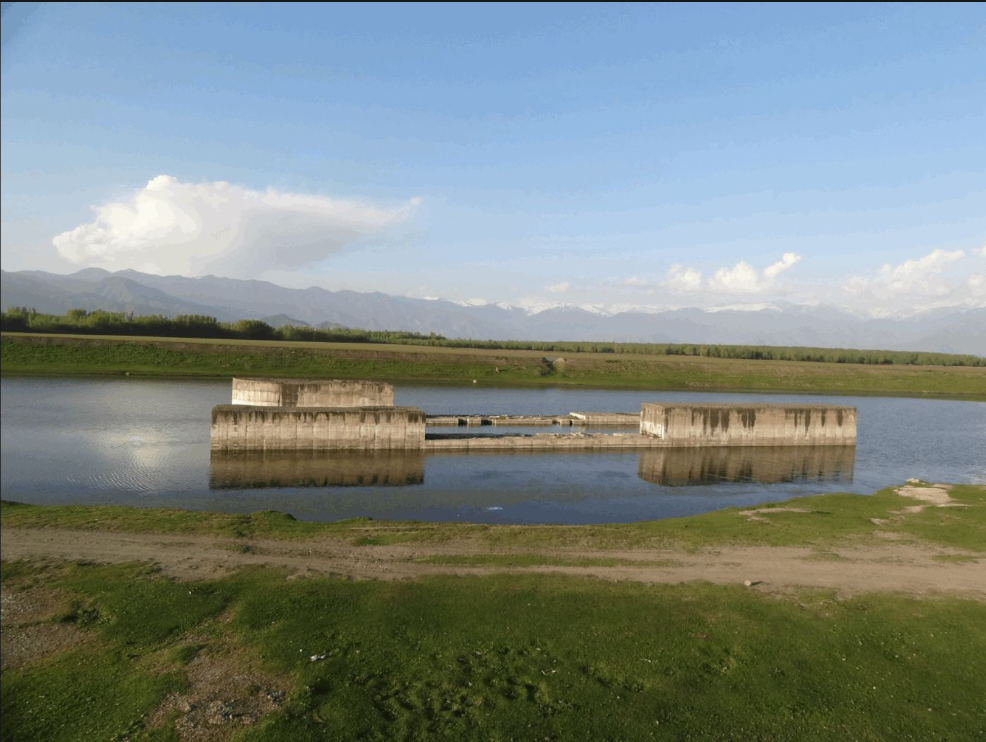
TULBUL NAVIGATION PROJECT: Four Decades of Deadlock and Kashmir’s Stunted Water Economy
Pradeep Kumar Saxena
A partially built structure at the outlet of Wular Lake in north Kashmir has stood frozen since 1987, which is a mute testimony to the decades of restraint India exercised in the name of goodwill and friendship vis-a-vis Pak. The Tulbul Navigation Project, a modest navigation lock on the Jhelum at the lake’s outfall, was suspended when India halted construction in good faith following Pakistan’s objection.