culture
Shri Amarnath Ji Yatra: Where Faith Meets the Spirit of India
By Mohammad Zaid Malik | Sat Jul 04 2026
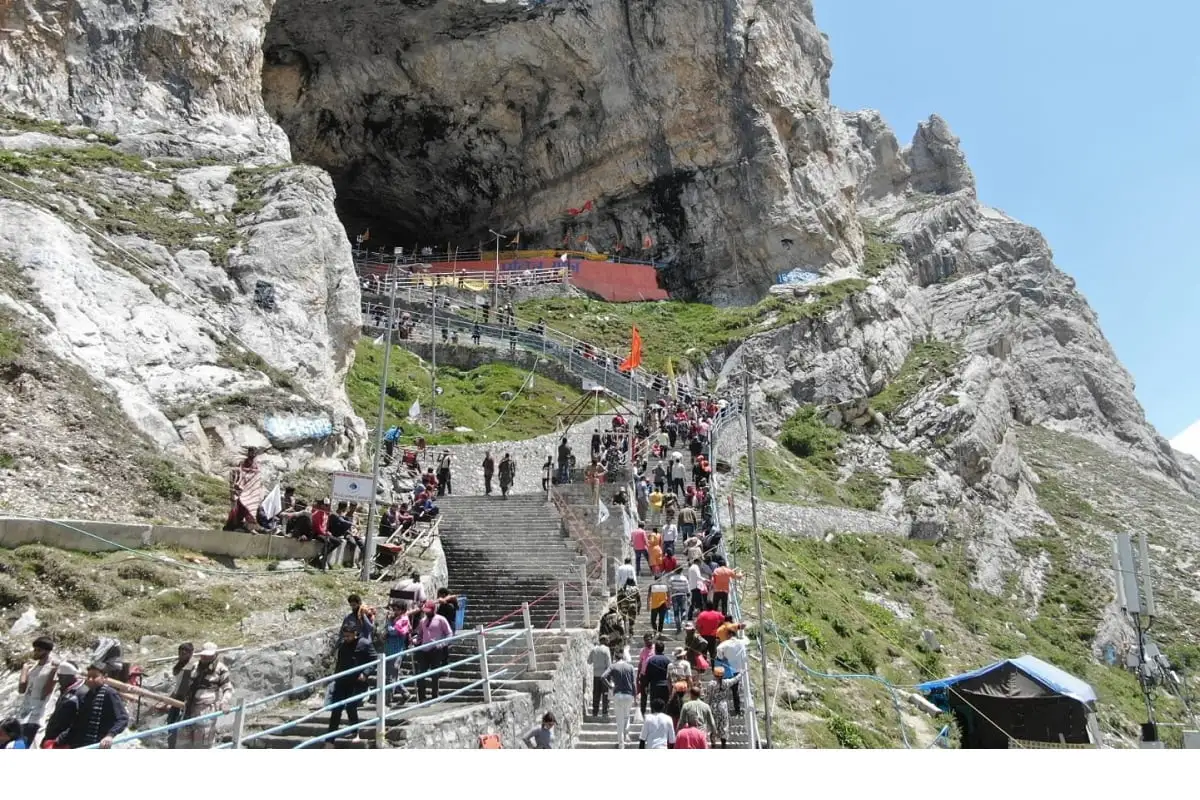
A Journey Carved in Ice and Belief
Every summer, as the Himalayan winter loosens its grip and the snow begins to retreat from the high-altitude passes of Kashmir, a remarkable human movement begins to unfold. It is not driven by trade, tourism, or migration. It is driven by faith.
To describe the Shri Amarnath Ji Yatra merely as a religious pilgrimage, however, is to miss its larger civilizational significance. It is also a vast annual convergence of India’s diversity. A temporary movement of people that transforms the high Himalayas into a space where geography, faith, language, and culture intersect in extraordinary ways. In this sense, the Yatra is not only a journey to a shrine. It is a journey into the idea of India itself.
From the plains of India, thousands of pilgrims begin their journey toward one of the most revered Hindu shrines-the sacred Amarnath Cave, located deep within the mountainous terrain of the Kashmir Himalayas. The journey is physically demanding, environmentally harsh, and logistically complex. Yet year after year, pilgrims undertake it with unwavering devotion, believing that within the icy depths of the cave resides the divine manifestation of Lord Shiva.
To describe the Shri Amarnath Ji Yatra merely as a religious pilgrimage, however, is to miss its larger civilizational significance. It is also a vast annual convergence of India’s diversity. A temporary movement of people that transforms the high Himalayas into a space where geography, faith, language, and culture intersect in extraordinary ways. In this sense, the Yatra is not only a journey to a shrine. It is a journey into the idea of India itself.
The Sacred Geography of Amarnath
The Amarnath Cave, situated at an altitude of over 3,800 metres, occupies a unique place in the religious imagination of Hindu devotees. Inside the cave, a naturally formed ice stalagmite is revered as a symbol of Lord Shiva. According to tradition, this formation waxes and wanes with the lunar cycle, reinforcing its sacred significance.
The shrine is accessible through two principal routes—Pahalgam in south Kashmir and Baltal in central Kashmir. Both routes traverse steep ascents, narrow paths, glacier-fed streams, and unpredictable mountain weather.
For pilgrims, the physical difficulty of the journey is an inseparable part of its spiritual meaning. The hardship is not incidental; it is integral. It is believed that devotion is deepened through endurance, and faith is strengthened through effort.
What essentially makes the Yatra particularly distinctive is not only the sacred geography of the destination, but the social geography of the journey itself. For several weeks every year, Kashmir becomes the meeting point of pilgrims from across India.
India Arrives in Kashmir
One of the most remarkable features of the Amarnath Yatra is the sheer diversity of its participants. Pilgrims arrive from every corner of India—Gujarat, Maharashtra, Uttar Pradesh, Madhya Pradesh, Rajasthan, Tamil Nadu, Karnataka, West Bengal, Bihar, Punjab, Odisha, and many other states and union territories. They speak different languages, follow different customs, and carry distinct cultural traditions. These differences do not divide them during the yatra. They coexist within a shared rhythm of movement, prayer, and endurance.
A group from southern India may find itself resting alongside pilgrims from Punjab. A family from Gujarat may share tea with devotees from Bengal. Conversations occur in fragmented Hindi, gestures, and shared understanding rather than linguistic uniformity. The Himalayas, in this brief seasonal window, become a space of compressed India-a living mosaic of the country’s cultural plurality. But this mosaic is not complete without the people who inhabit the region year-round.
The Unsung Architecture of the Yatra: Kashmir’s Role
While the spiritual dimension of the Yatra is widely acknowledged, its practical success rests significantly on the participation of local communities in Kashmir. As pilgrims enter the Valley and proceed toward the base camps, they encounter a vast network of support systems operated by local residents. Pony owners, locally known as Beej Pooniwalas, carry supplies and assist pilgrims along difficult stretches. Pithuwalas shoulder luggage across steep gradients. Palkiwalas provide transport for elderly or physically challenged pilgrims. Tent operators, shopkeepers, transporters, hoteliers, and volunteers create the essential infrastructure that sustains the pilgrimage economy. A significant proportion of these service providers are from Kashmiri Muslim communities.
This fact, often understated in broader narratives, is central to understanding the Yatra as a social institution rather than merely a religious event. The pilgrimage, in its functioning, becomes a shared enterprise. It is enabled not only by administrative arrangements and security frameworks, but also by everyday acts of cooperation, service, and hospitality extended by local residents.
Beyond Ritual: A Field of Human Interaction
These interactions are not structured by formal agreements or institutional programmes. They are spontaneous, situational, and deeply human. Collectively, they form a powerful social phenomenon.
The most enduring impressions of the Yatra often arise not at the shrine itself, but along the journey. A pilgrim from West Bengal receiving assistance from a young pony handler in Pahalgam. An elderly devotee from Maharashtra being carefully carried across difficult terrain by a local Palkiwala. A group from Gujarat sharing meals with Kashmiri workers after a long day’s climb. A conversation between strangers who share neither language nor background but are bound by a common purpose.
These interactions are not structured by formal agreements or institutional programmes. They are spontaneous, situational, and deeply human. Collectively, they form a powerful social phenomenon.
They reveal how, in moments of shared difficulty, distinctions of religion, region, and identity often recede into the background, replaced by cooperation and mutual dependence. In such moments, the Yatra becomes more than pilgrimage. It becomes a temporary social ecosystem in which strangers become collaborators in a shared journey.
The Economic Lifeline of the Mountains
Beyond its spiritual and social dimensions, the Shri Amarnath Ji Yatra carries substantial economic significance for the region. For thousands of households in Kashmir, the pilgrimage season represents one of the most important sources of annual income. The demand generated by the Yatra supports multiple layers of the local economy.
Transport operators provide services to pilgrims arriving from outside the region. Small and medium-scale hospitality establishments operate at full capacity. Tent owners, food vendors, porters, and guides find seasonal employment. Local artisans and shopkeepers benefit from increased commercial activity. Even informal workers find opportunities within the expanded economic ecosystem created by the pilgrimage.
In many areas along the Yatra routes, the seasonal economy linked to the pilgrimage becomes a stabilizing factor for rural livelihoods. It is not only a religious event passing through Kashmir. It is also a recurring economic cycle that sustains thousands of families.
In an era marked globally by identity politics, polarization, and cultural fragmentation, the Amarnath Yatra offers a contrasting image. It is a space where large-scale human interaction is structured not by division but by convergence.
Pilgrims of different languages walk together along difficult terrain. Local residents of different backgrounds collaborate in service roles. Administrative and security agencies coordinate logistics. Religious devotion becomes the shared emotional framework that connects participants.
The Yatra does not erase differences. But it temporarily reorders them. It demonstrates that collective human experience can be organised around shared purpose rather than separation. This is perhaps its most understated significance.
One of the most interesting sociological aspects of the Yatra is the gradual transformation of identity that occurs during the journey itself. At the beginning, participants arrive as distinct individuals—defined by region, language, occupation, and background. As the journey progresses, these distinctions begin to soften. A pilgrim becomes a “yatri.” A porter becomes a “helper.” A stranger becomes a companion. Identity becomes functional rather than categorical.
What matters is not where one comes from, but how one participates in the collective movement toward the shrine. This temporary reconfiguration of identity is one of the subtle but powerful features of the Yatra.
The spiritual meaning of the Amarnath Yatra is rooted in devotion. But its lived reality is also shaped by service. Devotees express faith through pilgrimage. Local residents express participation through facilitation. Both forms of engagement contribute to the continuity of the Yatra.
In this interplay, a deeper narrative emerges—one that extends beyond religious boundaries. It is a narrative of shared humanity expressed through cooperation under difficult conditions. In a world where differences are often emphasized, the Yatra quietly demonstrates the possibilities of coexistence grounded in mutual respect and necessity.
When the pilgrimage concludes, and devotees begin their return journey to their respective states, they carry with them more than religious fulfilment. They carry memories of the mountains, the physical challenge of the journey, and the experience of collective devotion.
But they also carry something less tangible. They carry encounters. Encounters with people from different backgrounds. Encounters with Kashmir’s hospitality. Encounters with moments of assistance, kindness, and cooperation that shaped their journey.
For many pilgrims, these memories become inseparable from the spiritual experience itself. The Yatra thus leaves behind a residue of human connection that extends beyond the duration of the pilgrimage.
The Shri Amarnath Ji Yatra is often described in religious terms, and rightly so. It is a sacred pilgrimage deeply embedded in Hindu belief and practice. But to view it solely through this lens is to overlook its broader significance. It is also a civilizational event. A recurring moment in which India’s diversity becomes visible in motion. A space where geography enables encounter. A process through which strangers become co-travelers. A system in which faith and service operate together to sustain a shared journey.
At a time when much of the world is marked by division, the Yatra offers a different image-one of temporary unity forged through purpose, hardship, and cooperation. It is not a solution to political or social challenges. But it is a reminder of what becomes possible when human beings move together toward something larger than themselves. That is why the Shri Amarnath Ji Yatra remains more than a pilgrimage.
It is one of the most enduring annual expressions of India’s plural ethos-where faith meets geography, and geography, for a brief moment each year, becomes a shared human space.
Related Articles
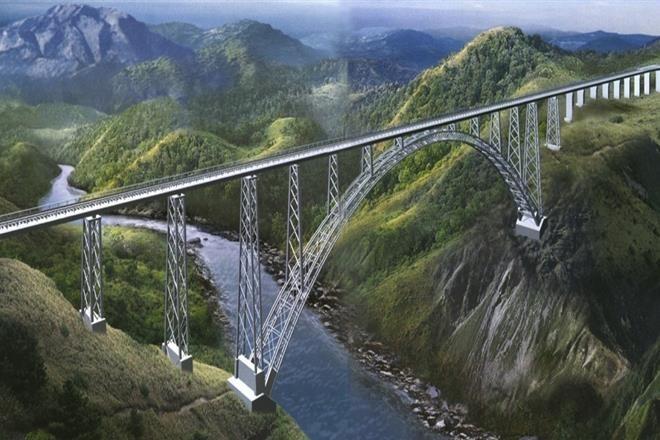
The Decade of Connectivity How Roads, Railways and Digital Networks Are Reshaping Kashmir
Yawar Yousef/Yasir Lone
For much of its modern history, Kashmir has been discussed through the language of conflict, diplomacy, security, and constitutional politics. Governments changed, policies evolved, and public debates shifted, yet the dominant narratives surrounding the region remained remarkably consistent.
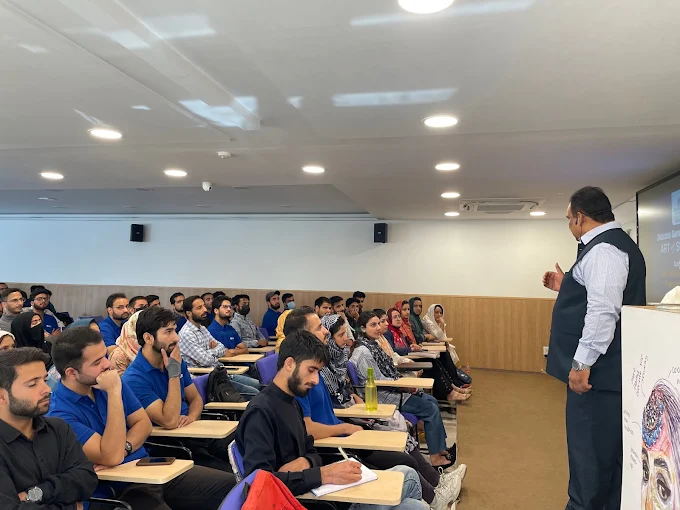
Waiting for a Vacancy Education, Aspiration and the Politics of Waiting in Kashmir
Suhail Bhat
At six o'clock on a cold winter morning, long before the markets of Srinagar begin to stir and before office-goers emerge onto the roads, hundreds of young men and women can already be seen standing outside examination centres.

Kashmir and the New Asian Geopolitics How China’s Rise is Reshaping the Strategic Environment
KC Desk
For much of the twentieth century, the Kashmir region was understood through a relatively stable analytical framework. It was a territorial and political conflict between India and Pakistan, shaped by Partition, sustained by competing claims of sovereignty, and periodically intensified by military confrontation.

Economics of Global Tariff War
Dr Mehraj Ud Din Shah
A significant tariff war was looming around the globe in late 2025 and early 2026. Its headwinds were sure to slip many nations into economic stagnation, including the US.

The Unheard Kashmir — Governance, Dependency and the Crisis of Representation in Pakistan Administered Kashmir
Bashir Assad
For nearly eight decades, the Himalayan region of Kashmir has occupied a unique place in international politics. It has generated wars, shaped national identities, influenced military doctrines, and drawn the sustained attention of diplomats, scholars, and policymakers across the world.
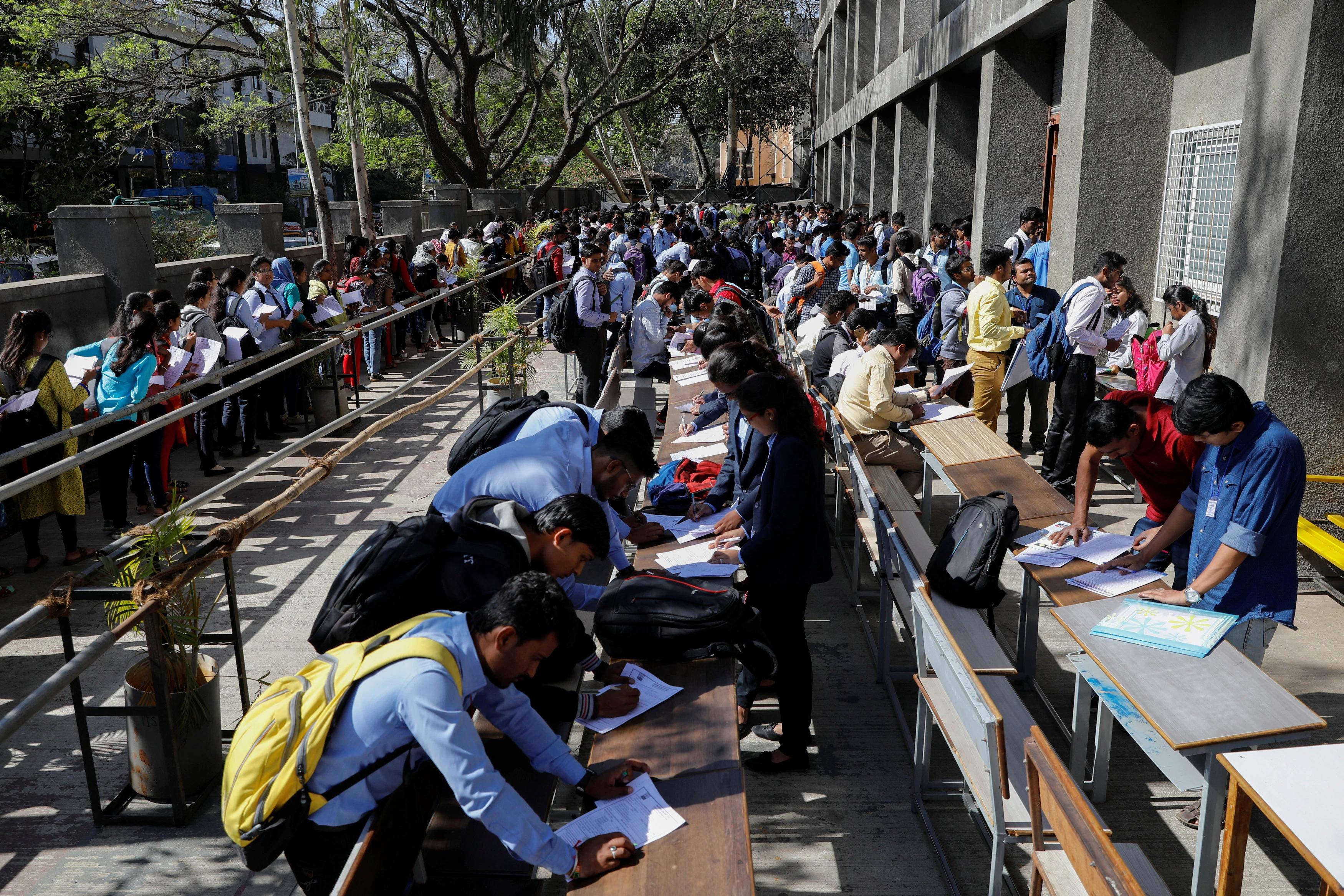
Economics of Jobless Growth in India
Dr Mehraj Ud din Shah
India's economic growth has been impressive, but growth alone is insufficient if it fails to create productive employment.