politics
The Unheard Kashmir — Governance, Dependency and the Crisis of Representation in Pakistan Administered Kashmir
By Bashir Assad | Sat Jul 04 2026
Introduction: The Forgotten Half of the Kashmir Conversation
For nearly eight decades, the Himalayan region of Kashmir has occupied a unique place in international politics. It has generated wars, shaped national identities, influenced military doctrines, and drawn the sustained attention of diplomats, scholars, and policymakers across the world. Yet despite this extensive body of literature, one part of the region has remained curiously under-examined in serious international scrutiny: Pakistan Administered Kashmir (PAK), officially referred to as Azad Jammu and Kashmir (AJK).
This relative invisibility is not merely an academic gap. It reflects the structure of the Kashmir discourse itself, which has largely evolved around the India–Pakistan strategic rivalry, developments in Indian-administered Jammu and Kashmir, and the broader geopolitical implications of South Asia’s most enduring territorial conflict. In comparison, Pakistan Administered Kashmir has often been treated as a politically settled and administratively stable space, whose internal dynamics require limited analytical attention.
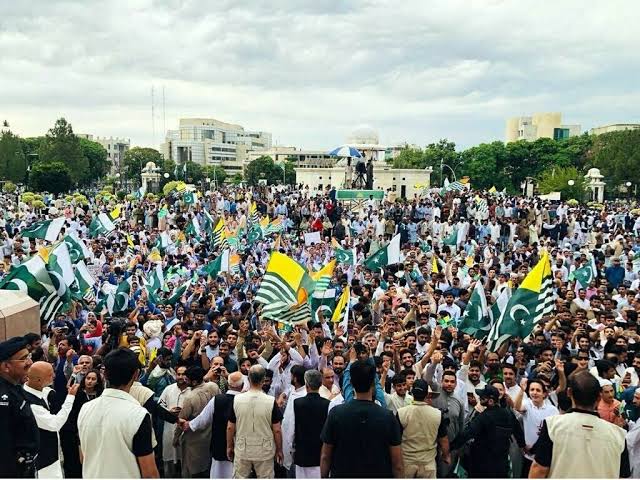
The waves of protests witnessed across Muzaffarabad, Rawalakot, Bagh, Mirpur, Kotli, and other urban centres during the period 2024–2026 have exposed tensions that extend far beyond immediate concerns such as inflation, electricity pricing, taxation, or administrative inefficiency. While economic grievances have undoubtedly acted as the immediate catalyst for mobilization, the scale and persistence of public dissatisfaction point toward deeper structural questions of governance and political representation.
Recent developments challenge this assumption. The waves of protests witnessed across Muzaffarabad, Rawalakot, Bagh, Mirpur, Kotli, and other urban centres during the period 2024–2026 have exposed tensions that extend far beyond immediate concerns such as inflation, electricity pricing, taxation, or administrative inefficiency. While economic grievances have undoubtedly acted as the immediate catalyst for mobilization, the scale and persistence of public dissatisfaction point toward deeper structural questions of governance and political representation.
The central argument of this essay is that the current unrest in Pakistan Administered Kashmir represents a crisis of political representation rather than merely a crisis of economic management. The protests reflect growing public unease regarding the relationship between authority and accountability, between constitutional autonomy and practical dependency, and between representative institutions and substantive political agency.
The significance of this development extends beyond Pakistan Administered Kashmir itself. Situated along a highly militarized frontiers and adjacent to critical geopolitical corridors in contemporary Asia, the region occupies a strategically sensitive position within the wider South Asian security landscape. Understanding its internal political evolution is therefore essential not only for assessing the governance and future trajectory of Pakistan Administered Kashmir, but also for understanding emerging patterns of state-society relations, legitimacy, and stability in conflict-affected border regions across South Asia.
From Liberation Narrative to Governance Question
Since 1947, Pakistan’s approach toward Pakistan Administered Kashmir has been shaped by a delicate balancing act. On one hand, Islamabad has consistently maintained that the entire former princely state of Jammu and Kashmir remains disputed and subject to final resolution. On the other, the territory has required functioning institutions capable of delivering governance, administration, public services, and political representation.
The result has been the creation of a distinctive constitutional arrangement that seeks to preserve the appearance of autonomy while maintaining strategic coherence with Pakistan’s broader Kashmir policy. For decades, this arrangement remained relatively stable. The liberation narrative served as a central source of political legitimacy, and public discourse was largely framed through questions of self-determination, identity, and the unresolved status of Kashmir. Within this framework, governance-related concerns often remained secondary.
As a result, political discourse is shifting from liberation-centered frameworks toward governance-centered concerns.
Today, however, the political environment is undergoing a gradual but meaningful transformation. A younger generation has emerged with little direct memory of the formative events that shaped earlier political consciousness. Instead, its expectations are shaped by education, migration, digital connectivity, and exposure to global governance standards. This generation evaluates institutions less by symbolic narratives and more by performance and delivery.
As a result, political discourse is shifting from liberation-centered frameworks toward governance-centered concerns. Citizens increasingly ask not only what institutions represent, but how effectively they function. Issues such as service delivery, employment, transparency, administrative responsiveness, energy costs, and public accountability have become central to political legitimacy.
This shift represents one of the most important political developments in Pakistan Administered Kashmir. The significance of the recent protest movement lies precisely in this transition. The demonstrations were not organized around abstract constitutional questions; they were rooted in everyday material concerns. Yet these concerns inevitably expanded into broader questions of governance and representation.
The issue was not simply the price of electricity. It was the question of who determines that price, who benefits from such decisions, and who can be held accountable when those decisions produce public hardship. Such questions directly engage the foundations of political legitimacy.
The May 2024–2026 Protest Cycle: Beyond Electricity Bills and Subsidies
Observers attempting to interpret the recent unrest in Pakistan Administered Kashmir often emphasize its immediate triggers: electricity tariffs, inflation, taxation policies, fuel prices, and wider economic pressures. These factors are undeniably important. However, reducing the movement to economic grievances alone risks obscuring its deeper political meaning.
Economic protests frequently function as expressions of broader political dissatisfaction. Historical experience offers multiple examples. The Arab Spring began with socioeconomic grievances but rapidly evolved into demands for accountability and political reform. Similar trajectories have been observed in parts of Latin America, Eastern Europe, and Africa. Material grievances often serve as the entry point for collective mobilization, but the underlying drivers frequently lie in governance structures themselves.
Pakistan Administered Kashmir appears to be experiencing a similar dynamic. The protest movement brought together constituencies that do not typically share unified political platforms: traders, transport operators, professionals, students, civil society activists, and ordinary citizens. This breadth of participation is politically significant. Narrowly focused movements tend to remain sector-specific, whereas broad coalitions often indicate more generalized systemic dissatisfaction.
The language of protest further underscores this evolution. While economic demands remained central, the discourse increasingly incorporated themes of accountability, transparency, responsiveness, and public participation. Citizens are not merely demanding financial relief; they are asserting claims to political recognition and agency.
This distinction is critical. Economic crises can often be addressed through fiscal adjustments, subsidies, or administrative reforms. Crises of representation, by contrast, are more complex, as they concern the perceived legitimacy of governance itself.
The central challenge, therefore, extends beyond economic management. It concerns whether existing institutions possess sufficient credibility and authority to effectively channel and respond to public demands.
This distinction is critical. Economic crises can often be addressed through fiscal adjustments, subsidies, or administrative reforms. Crises of representation, by contrast, are more complex, as they concern the perceived legitimacy of governance itself.
The Mirage of Autonomy: Constitutional Engineering and Managed Self-Government
Pakistan Administered Kashmir represents one of the most complex constitutional arrangements in South Asia. The territory possesses its own president, prime minister, legislative assembly, judiciary, and administrative structure. On the surface, these features suggest substantial self-government and institutional maturity.
However, political authority cannot be assessed solely through institutional design. Political science distinguishes between formal autonomy and substantive autonomy. Formal autonomy refers to constitutional structure and institutional appearance. Substantive autonomy refers to the actual capacity of institutions to independently shape political outcomes.
This distinction is essential in understanding the governance structure of Pakistan Administered Kashmir. Many systems around the world maintain extensive representative institutions while remaining dependent on external centres for critical decisions. The key issue lies in the gap between institutional form and effective authority.
In the case of Pakistan Administered Kashmir, this gap produces a recurring political dilemma. Citizens participate in elections and engage with representative institutions, yet simultaneously question whether these institutions possess sufficient authority to address major structural challenges independently.
Having observed the politics of Kashmir for several decades, I have repeatedly encountered a recurring pattern: elected governments are often judged by outcomes over which they appear to exercise only limited control. Over time, this disconnect carries profound consequences. Public expectations are directed toward institutions that possess formal authority but are widely perceived as lacking the capacity to shape critical decisions. As a result, confidence in the political process gradually erodes. Elections continue to be held, governments change, and constitutional procedures remain intact, yet public dissatisfaction persists. In my view, this enduring frustration stems not from the absence of democratic processes, but from the unresolved gap between authority, accountability, and the actual locus of power.
This dynamic contributes to what may be described as representative fatigue: a condition in which citizens continue to participate in democratic procedures while increasingly doubting their substantive effectiveness. Over time, this environment becomes conducive to periodic mobilization, protest, and political agitation.
The central issue, therefore, is not the absence of democratic institutions. It is the extent to which those institutions are perceived as capable of exercising meaningful control over the decisions that shape citizens’ everyday lives.
The Structure of Dependency: Fiscal, Administrative, and Political
Let’s now turn to the machinery that produces and sustains this gap: the layered structure of dependency that defines Pakistan Administered Kashmir (PAK).
At the centre of this structure lies fiscal dependency. Despite possessing an elected government and a defined constitutional framework, the region’s financial architecture remains heavily reliant on transfers, grants, and negotiated allocations from the Government of Pakistan. Revenue generation within PAK is structurally limited by geography, scale, industrial base, and the absence of large diversified taxation capacity.
This dependence is not merely technical. It has direct political consequences. When fiscal space is externally determined, policy space is correspondingly constrained. Budgets are negotiated rather than fully autonomous; development priorities are often aligned with broader federal frameworks; and long-term planning is frequently shaped by availability of externally routed funds rather than internally generated surplus.
The result is a governance model in which responsibility is decentralized, but decisive authority remains significantly externalized.
Administrative Duality and the Question of Decision-Making Power
Alongside fiscal dependency exists an administrative duality that further complicates governance. On paper, Pakistan Administered Kashmir possesses its own civil administration, secretariat, and executive hierarchy. In practice, however, key layers of bureaucratic influence remain closely integrated with federal systems and broader national administrative structures.
This produces a layered chain of decision-making in which authority is formally distributed but functionally concentrated. Local institutions are often responsible for implementation, while strategic direction, resource approval, and policy ceilings are influenced by external institutional actors.This duality is particularly politically sensitive because it exists within a contested territorial context. As a result, administrative procedures are frequently interpreted through a political lens, even if they originate from routine governance logic at certain occasions.
The consequence is a persistent ambiguity in public perception: who is ultimately responsible for outcomes-local institutions or external authorities?
Electoral Democracy within Structural Constraints
Elections in Pakistan Administered Kashmir provide a visible and functioning democratic process. Political parties compete, governments change, and electoral participation is relatively robust. However, the scope of electoral competition exists within boundaries that are structurally defined.
Certain foundational constitutional assumptions are not part of mainstream electoral contestation. Political discourse largely operates within a consensus framework regarding the territory’s overarching constitutional alignment. Within this framework, political debate tends to focus on governance efficiency, development priorities, and resource distribution rather than alternative constitutional futures.
This produces what may be described as bounded democracy: competitive in form, but circumscribed in scope.
Importantly, this boundedness does not negate the reality of democratic practice. Rather, it highlights the distinction between procedural democracy and expansive political sovereignty. Citizens vote, governments change, and public debate exists but the range of permissible systemic alternatives remains limited.
Over time, this structure contributes to a subtle but significant political effect: electoral outcomes are seen as meaningful but not transformative. This perception reinforces the sense that political change occurs within administration rather than through it.
The Economy of Development and the Politics of Infrastructure
Development occupies a central place in the governance narrative of Pakistan Administered Kashmir. Roads, bridges, hydropower projects, urban expansion, and connectivity initiatives are frequently presented as markers of progress and integration.
Yet development in the region also reflects a specific political economy. Large infrastructure projects are often shaped by strategic, energy, or regional connectivity priorities that extend beyond local developmental planning cycles. While these projects bring tangible benefits, they can also generate uneven outcomes across districts and social groups.
A recurring feature of this model is the concentration of development in specific corridors or nodes, often linked to broader national or trans-regional objectives. Peripheral areas, particularly those with difficult terrain or lower strategic visibility, may experience slower or more fragmented development outcomes.
This unevenness feeds directly into political perception. Development is not interpreted solely as economic improvement; it is also read as a distribution of attention, inclusion, and political relevance.
In this sense, infrastructure becomes not only a development tool but also a symbol of political positioning within a wider system of priorities.
Civil Society, Public Expression, and the Boundaries of Discourse
Despite structural constraints, Pakistan Administered Kashmir possesses an active and increasingly vocal civil society. Journalists, teachers, lawyers, traders, student groups, and local activists participate in public discourse on governance, rights, and development.
Digital platforms have further expanded the reach and speed of political communication, allowing grievances and debates to circulate rapidly across districts and communities.
This duality reinforces a pattern seen in other semi-autonomous contexts: robust debate on administration, combined with constrained debate on sovereignty.
The Protest as Political Translation, Not Disruption
The protest should therefore be understood not as an external disruption to the system, but as an internal translation of accumulated governance tensions into visible political form.
What makes the recent mobilization significant is not only its scale, but its communicative function. It translated diffuse grievances over electricity pricing, taxation, inflation, and public services into a more unified language of accountability and representation.
This translation matters because it indicates a shift in political consciousness. Economic grievances did not remain purely economic; they became vehicles for articulating questions about authority, responsibility, and institutional legitimacy.
In this sense, protest functions less as a breakdown of order and more as a diagnostic signal within the system: a way of expressing that existing institutional arrangements are not fully aligned with public expectations.
The Crisis of Representation Revisited
When viewed together, fiscal dependency, administrative duality, bounded electoral democracy, uneven development, and constrained discourse produce a structural condition that can be described as a crisis of effective representation.
This is not a crisis of democratic form. Institutions exist, elections occur, and governance structures function. Rather, it is a crisis of perceived political efficacy: the sense among citizens that formal mechanisms of representation do not fully translate into control over the most consequential decisions affecting their lives.
This gap between participation and power is the defining feature of the current political moment in Pakistan Administered Kashmir.
It explains why economic issues so quickly acquire political depth, why protests expand beyond their initial triggers, and why dissatisfaction persists even in the presence of functioning institutions.
Conclusion: Stability, Strain, and the Limits of Managed Equilibrium
The central paradox remains unresolved: a system designed to balance autonomy with alignment, representation with oversight, and local governance with external coordination.
Pakistan Administered Kashmir occupies a politically complex space shaped by history, geopolitics, and institutional design. Its governance model has generated structural tensions that periodically surface in the form of protest and political mobilization.
The central paradox remains unresolved: a system designed to balance autonomy with alignment, representation with oversight, and local governance with external coordination.
In recent years, this balance has come under increasing strain not because institutions have collapsed, but because public expectations have evolved faster than institutional adaptation.
The developments examined in this study suggest that Pakistan Administered Kashmir may be entering a new phase in its political evolution. The central issue is no longer confined to questions of administrative performance or economic management. Rather, it concerns the growing tension between expanding public expectations and institutional arrangements that many citizens increasingly perceive as insufficiently responsive to their political and economic aspirations.
Recent patterns of collective action indicate that public mobilization is becoming more organized, issue-based, and capable of transcending traditional political divisions. While these movements have thus far focused largely on economic grievances and governance concerns, they also reflect a broader transformation in political consciousness. Citizens are increasingly asserting claims not merely as recipients of state policy but as stakeholders seeking greater influence over decisions that affect their daily lives.
If these trends continue, Pakistan Administered Kashmir is likely to witness more frequent and more sophisticated forms of public mobilization in the years ahead. Periodic protests may evolve into sustained civic movements capable of exerting greater pressure on existing institutions. The region may therefore experience an intensification of contestation over questions of representation, accountability, and political agency. In this sense, the emerging challenge is not one of immediate instability, but of a gradually widening gap between rising societal expectations and the institutional mechanisms available for their expression. How this dynamic unfolds may well shape the next chapter of politics in Pakistan Administered Kashmir and influence the broader trajectory of the region's governance landscape.
Related Articles
The Decade of Connectivity How Roads, Railways and Digital Networks Are Reshaping Kashmir
Yawar Yousef/Yasir Lone
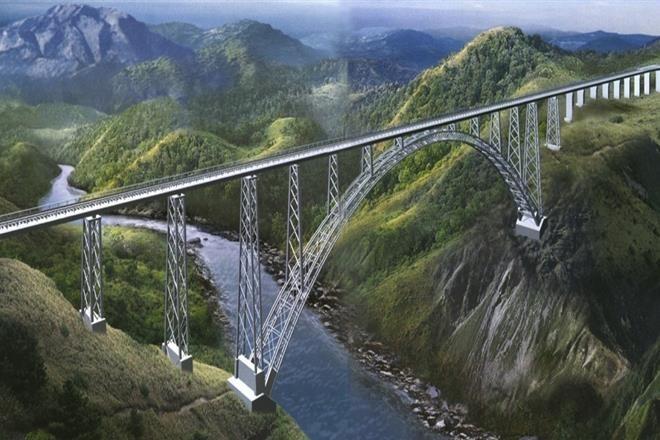
For much of its modern history, Kashmir has been discussed through the language of conflict, diplomacy, security, and constitutional politics. Governments changed, policies evolved, and public debates shifted, yet the dominant narratives surrounding the region remained remarkably consistent.
Waiting for a Vacancy Education, Aspiration and the Politics of Waiting in Kashmir
Suhail Bhat
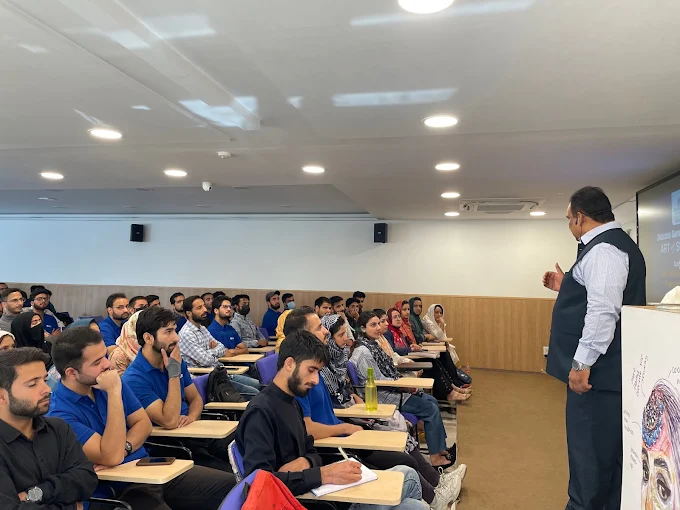
At six o'clock on a cold winter morning, long before the markets of Srinagar begin to stir and before office-goers emerge onto the roads, hundreds of young men and women can already be seen standing outside examination centres.
Kashmir and the New Asian Geopolitics How China’s Rise is Reshaping the Strategic Environment
KC Desk
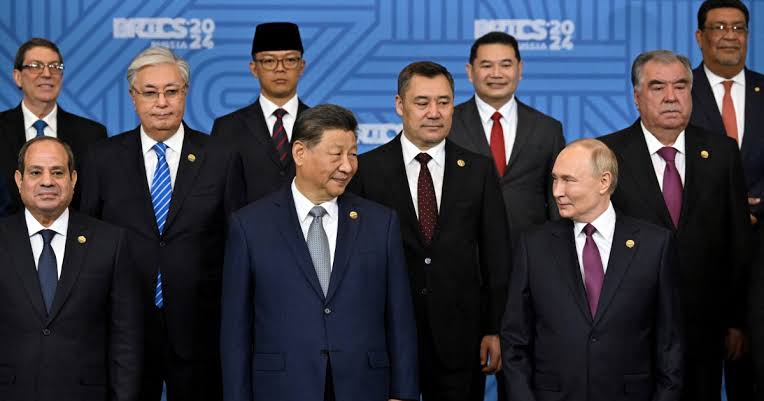
For much of the twentieth century, the Kashmir region was understood through a relatively stable analytical framework. It was a territorial and political conflict between India and Pakistan, shaped by Partition, sustained by competing claims of sovereignty, and periodically intensified by military confrontation.
Economics of Global Tariff War
Dr Mehraj Ud Din Shah
A significant tariff war was looming around the globe in late 2025 and early 2026. Its headwinds were sure to slip many nations into economic stagnation, including the US.
Shri Amarnath Ji Yatra: Where Faith Meets the Spirit of India
Mohammad Zaid Malik
Every summer, as the Himalayan winter loosens its grip and the snow begins to retreat from the high-altitude passes of Kashmir, a remarkable human movement begins to unfold. It is not driven by trade, tourism, or migration. It is driven by faith.
The Protest That Won’t Go Away
Rafi Ahmad Mir
Pakistan-administered Kashmir and the limits of political management