society
The Silicon Ravine: Global Capital, Remote Tech, and Kashmir’s Sovereign Digital Frontier
By Sohail Bhat | Thu Nov 05 2026

In the quiet, low-lit cafes lining the Bund in Srinagar and within the minimalist co-working spaces cropping up across Srinagar and Jammu, a quiet macro-economic transformation is unfolding. While traditional diplomatic dossiers on Jammu and Kashmir remain tethered to the familiar rhythms of agrarian cycles, high-altitude tourism, and geopolitical friction, a new class of economic actors is quietly reshaping the region's relationship with global capital. Armed with high-speed fiber connectivity, advanced degrees in machine learning, and borderless digital identities, a rapidly expanding cohort of software engineers, quantitative analysts, and tech freelancers are integrating the Valley into the global digital economy.
This is not the conventional story of state-sponsored technology parks or subsidized call centers. Instead, it is an organic, decentralized boom driven entirely by remote knowledge exports. For an international diplomatic audience accustomed to viewing the region through the lens of developmental aid or security gridlocks, this tech boom offers a compelling case study in structural economic resilience. It demonstrates how highly skilled human capital can bypass traditional geographic and physical trade bottlenecks, establishing direct, high-value economic linkages with financial hubs in San Francisco, London, Berlin, and Dubai.
Armed with high-speed fiber connectivity, advanced degrees in machine learning, and borderless digital identities, a rapidly expanding cohort of software engineers, quantitative analysts, and tech freelancers are integrating the Valley into the global digital economy.
The Borderless Knowledge Arbitrage
Historically, the economic narrative of the territory was constrained by its landlocked geography. The physical export of premium goods—whether saffron, hand-knotted silk carpets, or fresh horticulture—depended entirely on the highly volatile logistics of the Jammu–Srinagar National Highway. Landslides, seasonal closures, and transit checks acted as permanent, unpredictable tariffs on the region’s economic growth.
The remote technology boom completely neutralizes these physical constraints. For a senior data engineer operating out of an independent studio in Baramulla or a full-stack developer in Srinagar, the only infrastructure that matters is a reliable power grid and an uninterrupted broadband pipe. By exporting pure intellectual capital, these digital actors are participating in a highly lucrative global knowledge arbitrage. They command international dollar- and euro-denominated contract rates while living in a regional economy with significantly lower operational overheads, creating a powerful influx of untethered disposable wealth that is quietly transforming local real estate, banking sectors, and consumer markets.
This economic mobility has also triggered a profound cultural shift among the region’s educated youth. For decades, the ultimate aspirational goal for a university graduate in the Valley was the security of a government job—a dependency that created an overcrowded, fiscally strained public sector. Today, the elite stratum of local engineering talent is consciously turning away from administrative clerkships. They choose instead to design automated trading algorithms for European fintech firms, manage cloud infrastructure for American logistics giants, or build decentralized applications for global Web3 consortiums, asserting a high degree of economic independence from traditional state patronages.
To maintain international corporate trust and meet strict service-level agreements (SLAs), remote workers have developed redundant infrastructure systems
Navigating the Geopolitical Infrastructure Gap
For the international diplomatic observer, the most remarkable aspect of this digital economy is its ability to thrive within an inherently complex infrastructure landscape. Operating a global tech enterprise from the region requires navigating structural hurdles that would paralyze conventional corporate startups elsewhere.
The primary operational challenge remains the history of connectivity vulnerabilities. While the current stabilization has brought widespread 5G access and fiber-to-the-home (FTTH) networks, the memory of prolonged digital blackouts from the previous decade continues to shape the risk management strategies of local freelancers. To maintain international corporate trust and meet strict service-level agreements (SLAs), remote workers have developed redundant infrastructure systems.
It is common practice for a freelance collective to maintain multiple independent internet connections from competing service providers, backed up by dedicated satellite hot-spots and heavy industrial power banking units to survive winter grid collapses. This resilience has institutionalized a unique corporate subculture: an elite Kashmiri developer is defined not just by their coding proficiency, but by their logistical resourcefulness—their proven ability to deliver flawless deliverables to a Silicon Valley client while operating inside an unpredictable administrative environment.
Furthermore, international financial integration remains a complex puzzle. Due to strict national regulatory frameworks and intensive compliance checks on foreign inward remittances to Jammu and Kashmir, local remote workers must clear extensive bureaucratic hurdles just to receive their monthly contract payments. Platforms like PayPal, Stripe, and traditional international wire systems frequently trigger automatic compliance flags, forcing local engineers to navigate an intricate maze of tax filings, digital invoicing, and foreign exchange verifications to prove the legitimacy of their global earnings.
The Digital Diaspora and Decentralized Capital
The engine driving this remote tech boom is heavily fueled by a dynamic, reverse brain-drain phenomenon. Over the past decade, thousands of highly successful Kashmiri tech professionals migrated to global technology hubs, building influential careers within Fortune 500 corporations and elite academic institutions.
Today, this global digital diaspora is leveraging its structural privilege to pull local talent up into the international matrix. Rather than requiring young engineers to emigrate, diaspora members are acting as institutional bridges—founding remote-first startups, establishing decentralized development nodes, and consciously outsourcing high-value programming contracts back to specialized teams located in their home towns.
This flow of decentralized capital is creating a self-sustaining ecosystem. Young developers who cut their teeth on international contracts are gradually evolving into tech entrepreneurs themselves, establishing boutique digital agencies, UI/UX consultancies, and specialized data-annotation firms within the region. This organic growth model bypasses the need for massive, high-visibility corporate campuses, creating instead a resilient network of small, highly profitable micro-studios scattered across urban and semi-urban centers, completely immune to the conventional challenges of industrial land acquisition.
The Silicon Ravine represents a highly progressive, self directed economic vanguard that has successfully integrated itself into the high-tech supply chains of the developed world.
The Diplomatic and Economic Takeaway
The rise of this remote digital elite offers a fresh, sophisticated perspective on the region's contemporary reality. It proves that the territory can no longer be accurately analyzed solely through the historical framework of developmental stagnation or regional dependency.
The Silicon Ravine represents a highly progressive, self-directed economic vanguard that has successfully integrated itself into the high-tech supply chains of the developed world. As international embassies and global trade bodies monitor the strategic evolution of South Asia, recognizing the potential of this borderless knowledge economy is vital. The true stability of the region may ultimately be secured not by the traditional blueprints of industrial zoning, but by the fingers of its youth tapping away on keyboards, permanently wired into the global digital future.
Related Articles
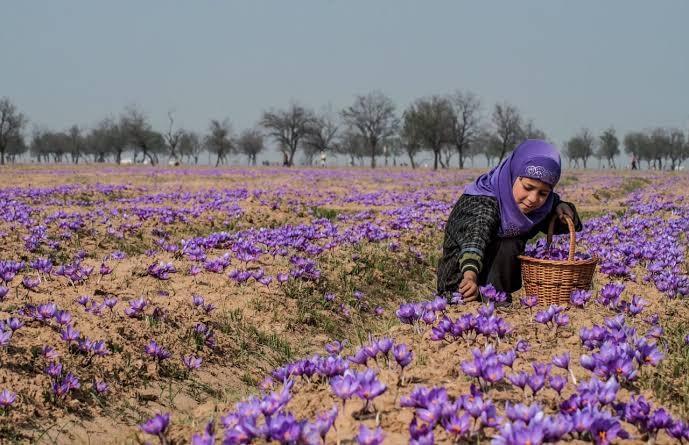
Economic Potential in Jammu and Kashmir- Part-I
Dr Mehraj Ud Din Shah
This anecdote attempts to uncover the economic potential of Jammu and Kashmir through a multidimensional analysis of its primary, secondary and tertiary sectors. It explores the prospects of agriculture, horticulture, tourism, handicrafts, food processing, renewable energy,

The Indus Waters Treaty in Abeyance: Separating Facts from Rhetoric
Devendra Kumar Sharma
The Indus Water Treaty (IWT), signed in Karachi on September 19, 1960, by the Indian Prime Minister Jawaharlal Nehru and Pakistani President Ayub Khan, was a historic water-sharing Agreement.

The Connectivity Conundrum: Hybrid Vulnerabilities in the Trans-Regional Grid
Insha Sofi
For generations, the primary objective of the security architecture in Jammu and Kashmir was defined by predictable paradigms. The state apparatus focused on securing urban population centers against street agitation, while simultaneously reinforcing the multi-layered counter-infiltration grids along the Line of Control.
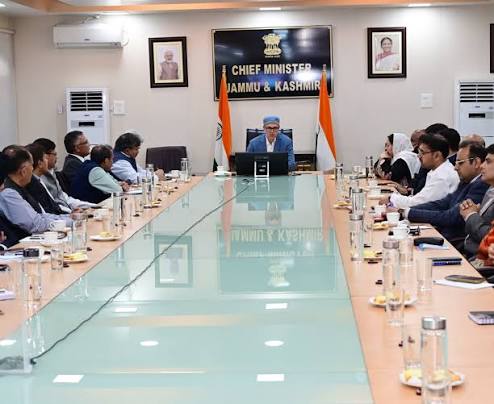
The Durbar Move Dilution and the Winter Secretariat Model
Kashmir Central Desk
For nearly a century and a half, the seasonal rhythm of governance in Jammu and Kashmir was dictated by a monumental administrative migration. Introduced in 1872 by Maharaja Gulab Singh, the bi-annual Darbar Move saw the entire government machinery-complete with thousands of employees, ministers, and truckloads of official files-pack up and travel across the treacherous Jammu–Srinagar National Highway.
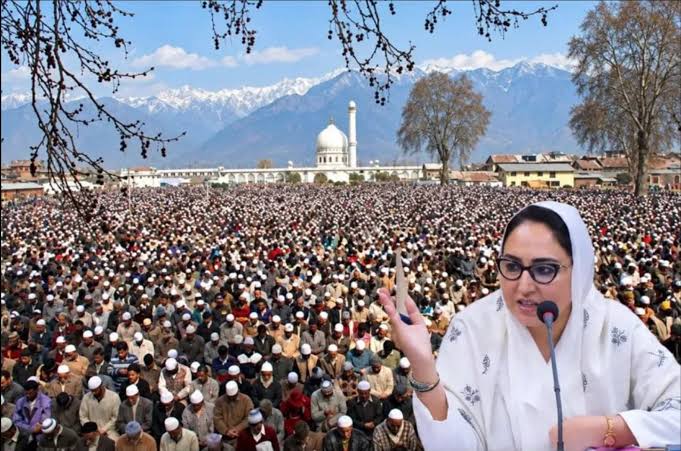
The Pulpit vs. The State: The Waqf Board Backlash
Intikhab Alam
For generations, the Friday congregational prayer across the Kashmir Valley has served as a profound spiritual anchor and a mirror to contemporary society. The Mimbar, or pulpit, has stood as a sacred yet highly contested space where the religious, social, and political currents of the territory converge.
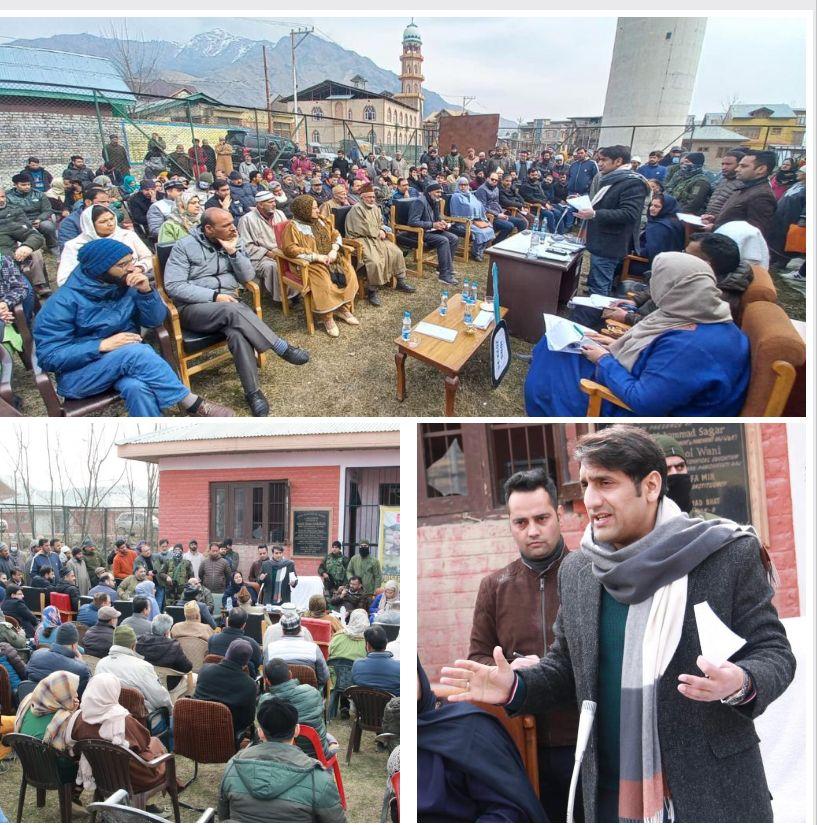
Beyond the Pomp: The Logistical Strain of the 3-Tier Local Governance Promise
Bashir Assad
For twenty-eight thousand former Panchayat members across the fractured valleys and rugged highlands of Jammu and Kashmir, democracy has long been an exercise in prolonged anticipation. Following the highly publicized Assembly elections that finally restored a regional legislative assembly, the focus has abruptly shifted from the grand statecraft of the civil secretariat to the unpaved alleys of rural development.