security
The Indus Waters Treaty in Abeyance: Separating Facts from Rhetoric
By Devendra Kumar Sharma | Thu Nov 05 2026
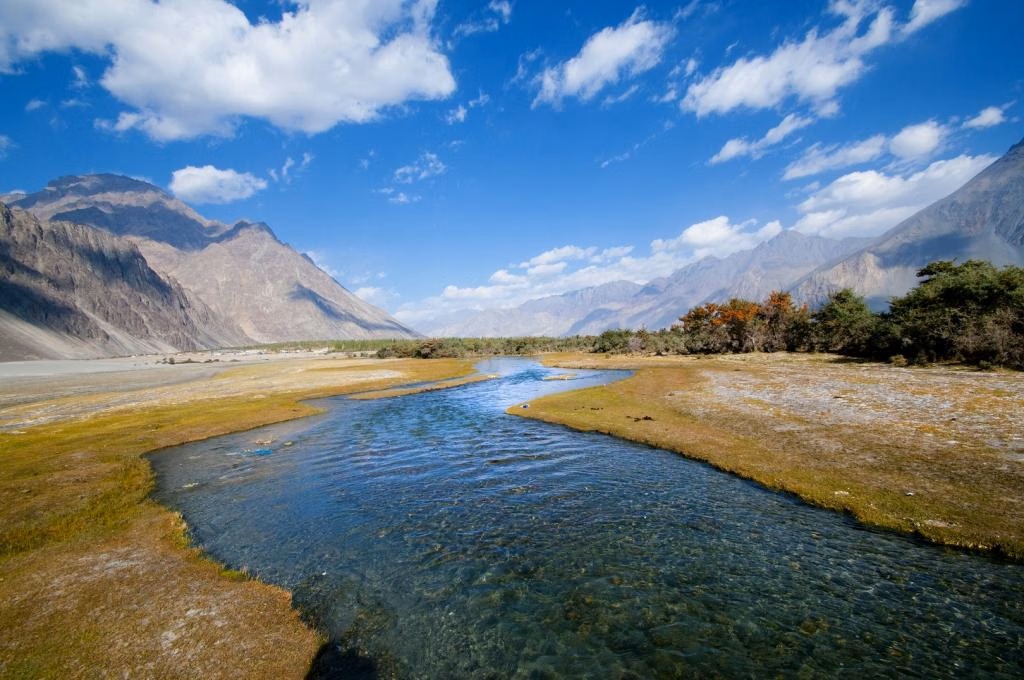
The Indus Water Treaty (IWT), signed in Karachi on September 19, 1960, by the Indian Prime Minister Jawaharlal Nehru and Pakistani President Ayub Khan, was a historic water-sharing Agreement. Negotiated under the auspices of the World Bank, the Treaty was originally expected to secure peace and stability for both emerging nations. Decades later, however, it has become clear that technological advancements have outpaced the original intent and spirit of the Treaty. Today, the Treaty’s technical parameters are widely considered outdated, leaving its framework rigid and 'frozen' in time.
The Indus River Basin
The Indus River (Vedic name: ‘Sindhu’) system is characterized by two major river systems, i.e., the Kabul River, a major right-bank tributary flowing from Afghanistan, which meets the Indus river just upstream of Attock in Pakistan and the Panjnad (‘Panchnad’) which represents the convergence of the Jhelum (‘Vitasta’), the Chenab (‘Asikni’), the Satluj and the Ravi with the Indus. The Beas River, also part of the Indus System, meets river Satluj upstream of the Harike barrage.
As per Indus Waters Treaty (IWT), the Indus, Jhelum and Chenab are classified as the ‘Western Rivers’ whereas the Ravi, Beas, and Satluj are designated as the ‘Eastern Rivers’. This Indus system ultimately discharges into the Arabian Sea south of Karachi.
On 22nd April, 2025, terrorists, rogue elements and groups supported by Pakistan segregated and killed 26 people based on religion at Pahalgam in Kashmir. Faced with credible evidence of Pakistan acting directly against supreme national security interests of India, the latter was forced to hold the Treaty in abeyance
Holding the IWT in Abeyance
Since its signing, the IWT survived three major wars inflicted by Pakistan on India in 1965, 1971 and 1999. It also survived several terrorist attacks, including 2001 Parliament attack, the 2008 Mumbai terror attack, the 2016 Uri terrorist attack, and the 2019 Pulwama terrorist attack on CRPF convoy.
However, on 22nd April, 2025, terrorists, rogue elements and groups supported by Pakistan segregated and killed 26 people based on religion at Pahalgam in Kashmir. Faced with credible evidence of Pakistan acting directly against supreme national security interests of India, the latter was forced to hold the Treaty in abeyance.
India’s position on the IWT remains consistent: the IWT stands in abeyance in response to Pakistan’s continued sponsorship of cross-border terrorism, and Pakistan must credibly and irrevocably abjure its support for cross-border terrorism.
Background of the Water Dispute
Water disputes in the undivided Punjab and Sindh provinces predate independence. However, with the emergence of India and Pakistan after Independence in 1947, these took the shape of an international dispute.
When the British Parliament passed the Indian Independence Act on July 18, 1947, the management of river waters was left to the future governments of the two dominions to decide.
Sir Cyril Radcliffe, Chairman of the Punjab Boundary Commission, could not proceed to lay down any arrangement of water sharing as it was not within his terms of reference. He stated in his award, “to preserve the undivided irrigation system of the Upper Bari Doab Canal”: he could only express a hope that “a solution may be found by the Agreement between the two States for some joint control of what has hitherto been a valuable common service”.
Deliberately or accidently, West Punjab (Pakistan) did not take any steps utill 31st March, 1948 to negotiate any Agreement with East Punjab regarding supply of water to Central Bari Doab Canal and Dipalpur canal
Water Distribution Immediately After Independence
The partition left a stark infrastructural imbalance. Out of 143 canals in the undivided Punjab, only 12 canals came to East Punjab (India) and 131 canals went to West Punjab (Pakistan). Most profitable schemes and those technically feasible had been in West Punjab (Pakistan) and the East Punjab (India) was completely deprived of development with many areas distant from the rivers.
Most of the large canals lay entirely in Pakistan and a few entirely in India. Complicating matters, Upper Bari Doab Canal (UBDC), which was the only canal system with its origin from Madhopur Headworks, had been severed by the new boundary at several places. Lower portions of the several channels of the UBDC which went to West Punjab (Pakistan) and are known as Central Bari Doab Canal (CBDC) had to receive water supply from upper portion of those channels in East Punjab (India). Dipalpur Canal, which exclusively served West Punjab (Pakistan), had its headworks at Ferozepur.
To manage this, at the instance of West Punjab (Pakistan), the Chief Engineers of East Punjab and West Punjab entered into an Agreement on 20th December, 1947 to continue the status quo ante on the UBDC and Ferozepur Headworks till 31st March, 1948. Deliberately or accidently, West Punjab (Pakistan) did not take any steps utill 31st March, 1948 to negotiate any Agreement with East Punjab regarding supply of water to Central Bari Doab Canal and Dipalpur canal. Consequently, in the absence of any Agreement, East Punjab on 1st April, 1948 discontinued use of its installations for the benefit of CBDC in West Punjab.
Acknowledging this administrative failure, Chaudhuri Muhammed Ali, the then Secretary-General of Pakistan and later the Prime Minister, said, “On part of the West Punjab there was neglect of duty, complacency and lack of common prudence, which had disastrous consequences for Pakistan”.
Despite its internal admissions of negligence, Pakistan created false narrative that India turned off water of all the six rivers on 1st April, 1948. On 16th December, 1952, M. Zafrulla Khan, Pakistan’s Representative in Security Council debate stated “… On 1 April, 1948, … India turned off the waters of these rivers which used to flow into Pakistan”. Ironically, the record of the meeting does not show any doubt having been cast on the accuracy of this statement by any of the permanent or temporary members of the Security Council.
Another important statement in this regard is, “The economy of West Pakistan is Agriculture… The flow of water in rivers and canals is the life-blood of the country.”
This narrative was factually unfounded. It is evident that after independence in August, 1947, India had not constructed any structure on any of these six rivers during 9 months till 31st March, 1948 which could control water of all the six rivers. Even today, 74 years after issuance of this statement by Pakistan in 1952, India does not have structure to control water of the Indus, Chenab and Jhelum.
Imbalance in Water Distribution in Indus Waters Treaty
After signing of IWT, India was allowed exclusive use of the waters of the Eastern rivers which was estimated at 40.7 BCM (billion cubic meter) or 33 MAF (millions acre feet). Pakistan was allowed to utilize the whole of the Western rivers which was estimated at 168 to 170 BCM or around 135 to 140 MAF. Ironically, India is allowed only around 19.6% of the water share of the Indus river system through the Eastern rivers though it has almost double the catchment area of this percentage. On the other hand, Pakistan receives around 81% of the water share of the Indus system, having around half of the catchment area of this percentage falling in Pakistan.
This allocation also ignored demographic realities. Population depending on the waters of the Indus systems, according to 1941 census was 25 million (54%) in Pakistan and 21 million (46%) in India. Forty six percent of the population on the Indian side received only 19.6% of water whereas 54% of population on Pakistan received around 80% of water. Out of 26 million acres of irrigated land by the Indus canals, 21 million acre feet went to Pakistan and only 5 million acre feet came to India. The newly imposed political environment after partition not only disrupted the food supply line but also suddenly severed the hydrologic unity of the Indus system. It posed serious threat to development of several million acres of highly arid but otherwise fertile land in the Indian part of the Indus Basin.
In 2019, Pakistani officials reported that they received 168.6 BCM in the Western rivers and an additional 6.04 BCM in the Eastern rivers. Pakistan receives 19 to 28 MAF of water from Kabul river in Afghanistan. Out of total water in the Indus system around 40 MAF flows to the Arabian Sea due to inefficiencies in Pakistan’s water system.
Pakistan was given disproportionate and excess share of water despite having lesser catchment area. On the other hand, on Indian side, there is acute shortage of water in the States of Punjab, Haryana, Rajasthan and the National Capital Region of Delhi.
Even today, 74 years after issuance of this statement by Pakistan in 1952, India does not have structure to control water of the Indus, Chenab and Jhelum
Water Crisis in Indian States
While Pakistan allows massive volumes of water to escape to the sea, Indian states face acute shortages. In Indian State of Punjab, net dynamic ground water resources are 21.44 MCM (million cubic meters), whereas net draft (pumping of ground water) is 31.16 MCM, leading to ground water deficit of 9.72 MCM each year. Thus, the stage of ground water development for Punjab state in India as a whole is 145% and the State falls under “over- exploited” category. Ground water table in most parts of Punjab is more than 200 m to 300 m below surface. Out of the State's area of 5.03 million hectares, 4.32 million hectares has a severe problem of falling ground water level. Similarly, the Indian State of Haryana (carved out of Punjab in 1966), having an area of 4.42 million hectares is suffering badly and is under severe water stress.
The State of Rajasthan having Thar desert, receives only 83 mm of annual rainfall in its Jaisalmer district. Large stretches of land in Rajasthan, a State having so many communities impacted with high temperature of more than 50 degree celcius, are covered under desert with sand dunes. Water availability for survival of growing population in the State is under severe stress.
In addition, the region is characterised by increasing population and decreasing per capita water availability. Indus basin has a strong strategic component from the overall food security angle and for socio-economic development of the country. The States of Punjab and Haryana accounting for 4% of total population in India, produce 25% of total wheat production. The State of Punjab, known as the breadbasket of India is facing water crisis. It is vital to meet water requirement of the States of Punjab, Haryana and Rajasthan, in the Indus basin in India, in order to support their financial and human advancement and to ensure food security to 1.4 billion people in India.
False Narrative Building by Pakistan
Much like in 1952, Pakistan continues to construct a misleading false narrative after the IWT has been held in abeyance. The core of these allegations is that India controls the river waters to engineer droughts in Pakistan, while conversely accusing India of causing floods during the monsoon season. By levelling these charges of upstream manipulation regarding flow fluctuations in the Chenab River, Pakistan overlooks both hydrological realities of water availability and the established operational and maintenance practices of run-of-river hydropower projects. This rhetoric has been amplified on international platforms by Pakistan.
The rhetoric by Pakistan is frequently accompanied by extreme threats. A Pakistani Cabinet Minister reportedly threatened to "chop off" the hands of anyone constructing diversion structures on the Western rivers. Similarly, during an address to the Pakistani diaspora in Tampa, Florida, General Asim Munir issued direct military and nuclear threats against India. Among these threats, he warned that Pakistan would launch missile strikes to destroy any future Indian dams built on the Indus River basin. Such statements significantly heighten tensions.
Conclusion
The Indus basin represents a unique global anomaly: an upper riparian state is restricted from meeting the basic water demands of its population, while the lower riparian state enjoys the luxury of systemic wastage nearly double the volume of the upper state's total allocation. It is well known that Pakistan receives around 81 percent of the water of the Indus river system, while India has been allocated only 33 MAF or 19 percent. Even out of this share of 33 MAF, around 6 to 7 MAF still flows to Pakistan due to local site constraints. Currently, Pakistan is using around 135 to 140 MAF of water. Out of this, approximately 30 to 40 MAF escapes unutilized into the Arabian Sea, while an additional around 30 MAF is lost due to operational inefficiencies and unlined irrigation canals.
At a time when Northern India faces severe drinking water shortages, modernizing the operational realities and allowing India to use its fair share of water serves the mutual interests of both nations
Consequently, Pakistan's system suffers an aggregate annual loss of more than 60 MAF. This luxury of systematic wastage of 60 MAF of water out of total available water of 135 to 140 MAF by Pakistan compared with India’s restricted usage of just around 27 MAF as the upper riparian state, starkly illustrates the current imbalance in the Indus basin. Even while accounting for mandatory ecological baseline of 8.6 MAF of water flow below Kotri barrage near Hyderabad/Jamshoro and upstream from Karachi, as recommended by the international Panel of Experts, there is wastage of around 52 MAF within Pakistan's water management system.
Furthermore, India should have the necessary operational flexibility to adopt best international sediment management practices on the Western rivers, such as hydraulic sluicing via low-level under-sluices, mirroring the exact technical standards Pakistan employs for its own dam projects.
Rather than propagating unsustainable rhetoric at domestic and international forums, Pakistan should focus on minimizing its internal water wastage and optimizing its resource management to foster regional peace and stability in South Asia. Attempts by Pakistan to create false narratives for its own public as well as at the international forums are not sustainable. At a time when Northern India faces severe drinking water shortages, modernizing the operational realities and allowing India to use its fair share of water serves the mutual interests of both nations.
The Indus basin, thus, has become a unique global anomaly where an upper riparian state is deprived of its natural rights in use of rivers which flow through its territory from meeting the basic water demands of its population, while the lower riparian state continuously is having the luxury of shedding nearly double that volume in systemic wastage.
Devendra Kumar Sharma is Member, National Security Advisory Board and Former Chairman, Bhakra Beas Management Board
Related Articles
Economic Potential in Jammu and Kashmir- Part-I
Dr Mehraj Ud Din Shah
This anecdote attempts to uncover the economic potential of Jammu and Kashmir through a multidimensional analysis of its primary, secondary and tertiary sectors. It explores the prospects of agriculture, horticulture, tourism, handicrafts, food processing, renewable energy,

The Connectivity Conundrum: Hybrid Vulnerabilities in the Trans-Regional Grid
Insha Sofi
For generations, the primary objective of the security architecture in Jammu and Kashmir was defined by predictable paradigms. The state apparatus focused on securing urban population centers against street agitation, while simultaneously reinforcing the multi-layered counter-infiltration grids along the Line of Control.

The Silicon Ravine: Global Capital, Remote Tech, and Kashmir’s Sovereign Digital Frontier
Sohail Bhat
In the quiet, low-lit cafes lining the Bund in Srinagar and within the minimalist co-working spaces cropping up across Srinagar and Jammu, a quiet macro-economic transformation is unfolding.
The Durbar Move Dilution and the Winter Secretariat Model
Kashmir Central Desk
For nearly a century and a half, the seasonal rhythm of governance in Jammu and Kashmir was dictated by a monumental administrative migration. Introduced in 1872 by Maharaja Gulab Singh, the bi-annual Darbar Move saw the entire government machinery-complete with thousands of employees, ministers, and truckloads of official files-pack up and travel across the treacherous Jammu–Srinagar National Highway.
The Pulpit vs. The State: The Waqf Board Backlash
Intikhab Alam
For generations, the Friday congregational prayer across the Kashmir Valley has served as a profound spiritual anchor and a mirror to contemporary society. The Mimbar, or pulpit, has stood as a sacred yet highly contested space where the religious, social, and political currents of the territory converge.
Beyond the Pomp: The Logistical Strain of the 3-Tier Local Governance Promise
Bashir Assad
For twenty-eight thousand former Panchayat members across the fractured valleys and rugged highlands of Jammu and Kashmir, democracy has long been an exercise in prolonged anticipation. Following the highly publicized Assembly elections that finally restored a regional legislative assembly, the focus has abruptly shifted from the grand statecraft of the civil secretariat to the unpaved alleys of rural development.