society
The Pulpit vs. The State: The Waqf Board Backlash
By Intikhab Alam | Thu Nov 05 2026
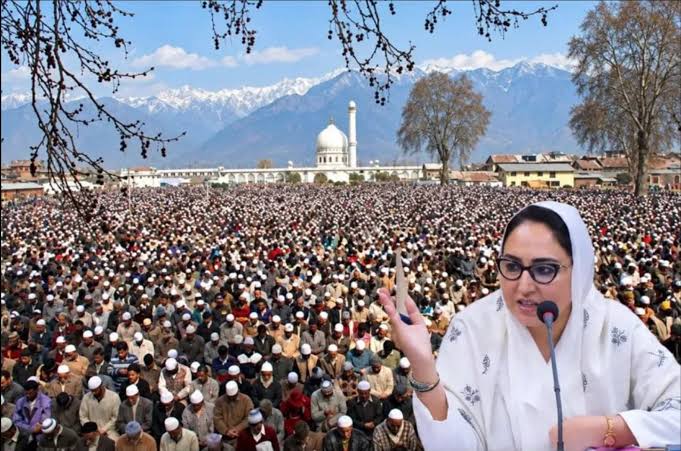
For generations, the Friday congregational prayer across the Kashmir Valley has served as a profound spiritual anchor and a mirror to contemporary society. The Mimbar, or pulpit, has stood as a sacred yet highly contested space where the religious, social, and political currents of the territory converge. However, a recent initiative by the Jammu and Kashmir Waqf Board threatened to redraw the historic boundaries between state oversight and religious independence, igniting a fierce confrontation that rippled through the region’s socio-religious and political landscapes.
The conflict erupted when the Jammu and Kashmir Waqf Board, a statutory body currently headed by a senior Bharatiya Janata Party leader, introduced a mechanism to pre-vet and standardize Friday sermons across all its affiliated shrines and mosques [J1]. The proposal aimed to establish a core committee of state-appointed Muftis, Imams, and Khateebs tasked with identifying and finalizing common sermon themes in advance. According to senior board administrators, the directive was designed to address pressing social issues, such as rampant drug abuse, late marriages, and youth suicide rates, by using a unified voice across hundreds of religious institutions. Yet, the announcement immediately triggered intense public anxiety, with critics viewing it as an unprecedented attempt by the state to prescribe religious discourse and police the historical autonomy of the Kashmiri pulpit.
The proposal aimed to establish a core committee of state-appointed Muftis, Imams, and Khateebs tasked with identifying and finalizing common sermon themes in advance
The Architecture of the Disputed Directive
The controversy took formal shape during a series of meetings convened at the Waqf Board’s central office in Sonwar, Srinagar. Over a thousand preachers and religious scholars participated, with representatives from the Jammu region joining via video conferencing to hear the new administrative framework [J2]. During these sessions, executive magistrates associated with the board disclosed that internal directives had been in motion for a month to push preachers toward a singular, pre-selected topic each week.
More provocatively, board officials began seeking feedback on strategies to eventually expand this uniform sermon model to encompass non-Waqf-affiliated mosques, which constitute the vast majority of local places of worship across the territory. Historically, shrines and mosques across the region have operated with absolute freedom regarding their sermonic themes. Preachers routinely divide the traditional Friday address into two distinct elements: the core recitation of the historic text and a fluid commentary that interprets contemporary local issues through a moral lens. By proposing a structural filter-where a central committee would dictate the permissible boundaries of speech-the administration sought a level of uniformity never before seen in the region.
The Double-Edged History of the Mimbar
To understand the visceral nature of the public and administrative friction over this directive, one must confront a bitter, uncomfortable truth that defines the modern history of the Valley: the Kashmiri pulpit has long been a site of severe vulnerability and political exploitation. In the earlier, bloodiest phases of armed militancy in the late 1980s and 1990s, the sacred independence of the Mimbar was routinely weaponized by extremist religious fanatics and separatist elements.
During those turbulent decades, independent religious discourse was frequently hijacked. In countless mosques across urban and rural J&K, moderate clerics were silenced or coerced as radical elements used the weekly congregational platforms to broadcast secessionist propaganda, stoke communal passions, and issue highly polarizing dictates that fueled local militancy. For the state, the pulpit became an unmonitored node of civil disruption; for the local population, it frequently transformed from a sanctuary of spiritual peace into a source of immense ideological pressure.
┌────────────────────────────────────────────────────────────────────────┐
│ THE HISTORICAL POLARIZATION OF THE PULPIT │
├───────────────────┬────────────────────────────────────────────────────┤
│ ERA / ACTOR │ OPERATIONAL STRATEGY ON THE MIMBAR │
├───────────────────┼────────────────────────────────────────────────────┤
│ 1990s Separatist │ Weaponized the sermon for political mobilization, │
│ Extremists │ ideological alignment, and anti-state agitation. │
├───────────────────┼────────────────────────────────────────────────────┤
│ 2020s BJP-Led │ Seeks top-down bureaucratic standardization and │
│ Waqf Board │ structural filtering under the guise of reform. │
└───────────────────┴────────────────────────────────────────────────────┘
The tragedy of the Kashmiri pulpit is that it now faces an ideological mirror image. Where separatist extremist elements once exploited the pulpit to advance their geopolitical goals, critics argue that the BJP-controlled Waqf Board is now attempting to lay its own heavy hand on the Mimbar to serve the state’s current political narrative. For many observers, both approaches represent a fundamental violation of the sacred space. The current administrative attempt to manage theology from above is seen not as a novel social intervention, but as the continuation of a long-standing, damaging cycle where whoever holds power-whether an armed militant group or a ruling political party-seeks to control the voice of the preacher.
The coalition argued that neither the government nor an unelected board possesses the constitutional authority to script religious speeches or regulate the spiritual guidance provided to congregants
The Ulema Coalition Responds
The backlash from Kashmir’s traditional religious leadership was swift and unyielding. The Muttahida Majlis-e-Ulema (MMU), a powerful umbrella organization representing leading socio-religious bodies and sects across the territory, moved decisively to reject the initiative. Headed by Kashmir’s chief cleric and Hurriyat chairman, Mirwaiz Umar Farooq, the MMU issued a stern public resolution declaring that the pulpit is a sacred trust that belongs exclusively to the faithful and their recognized scholars, rather than state-linked statutory bodies.
The MMU carefully distinguished between voluntary cooperation among scholars on pressing social issues-such as the regional fight against drug addiction-and the enforcement of an administrative command structure. The coalition argued that neither the government nor an unelected board possesses the constitutional authority to script religious speeches or regulate the spiritual guidance provided to congregants. In a sharp rhetorical counter-offensive, the Ulema urged the Waqf Board to withdraw from the realm of religious interpretation and instead confine its operations to its legal, foundational mandate: the physical maintenance, management, and protection of prime Waqf properties and endowments across the province.
The Legislative Uproar
The pulpit controversy quickly escalated from a religious dispute into a volatile political standoff, drawing fierce condemnation from the territory’s newly restored legislative apparatus. Chief Minister Omar Abdullah led the political charge, characterizing the uniform sermon proposal as an entirely unacceptable and misplaced attempt to please political masters in New Delhi. Abdullah demanded an immediate halt to the initiative, warning the administration against using statutory bodies to meddle in the internal religious practices of the Muslim community.
Opposition benches aligned closely with the government on the issue. People's Democratic Party President Mehbooba Mufti mounted a fierce defense of the pulpit's traditional autonomy, arguing that local imams and maulvis have protected and spread Islamic teachings for centuries without requiring administrative scripts from government officials. Mufti asserted that the move was a calculated attempt to test a wider ideological agenda in Jammu and Kashmir before rolling it out nationally, noting that since mosques are built entirely via local community donations, the state has no ownership over their internal discourse. From the halls of parliament to municipal councils, regional leaders argued that the pulpit would lose its fundamental purpose if it surrendered its independent voice to political authority. They insisted that the management of Waqf assets should be stripped from centrally appointed figures and placed back under the direct administrative purview of the elected provincial government.
From the halls of parliament to municipal councils, regional leaders argued that the pulpit would lose its fundamental purpose if it surrendered its independent voice to political authority
The Strategic Retreat
Faced with an absolute wall of opposition from the ruling coalition, religious bodies, and civil society, the Waqf Board executed a dramatic, public about-turn. In an urgent press conference called to defuse the growing crisis in Srinagar, Waqf Board Chairperson Dr. Darakhshan Andrabi vehemently denied that any mandatory order or official circular had been issued to enforce uniform sermons.
Andrabi sought to realign the narrative by asserting that the proposal for common themes had originated from suggestions within the clerical community itself during internal discussions on social reform. She maintained that the board's role was merely facilitative, intending to encourage preachers to speak with a collective voice against social evils like drug abuse and suicide. Reversing the executive magistrate's initial aggressive public stance, Andrabi explicitly stated that religious scholars and preachers remain entirely free to choose their weekly subjects independently, concluding that the traditional sermons would remain untouched by any state apparatus. While the board's U-turn successfully avoided an immediate street-level confrontation, the ease with which the initial directive was floated has left deep, lingering suspicions regarding the long-term protection of civil liberties in the territory.
The Enduring Boundary of Faith
For the editorial lens of Kashmir Central, the rapid escalation and subsequent retreat of the Waqf Board underscores a critical truth about the contemporary governance of the region: the traditional institutions of civil society possess a resilient autonomy that resists top-down bureaucratic control. The attempt to transform the Friday sermon into a centralized channel for state-approved messaging was a profound miscalculation of the pulpit's cultural weight.
Confronting the history of the Valley means acknowledging that the pulpit must be protected from all forms of political manipulation. Just as the exploitation of the Mimbar by separatist extremists in the past damaged the social and spiritual fabric of Kashmir, any current or future attempt by a state apparatus to control religious speech risks repeating those historical errors. The Waqf Board’s primary responsibility must remain the transparent, efficient administration of the vast public properties and educational trusts under its care. Moving forward, the stability of the region relies on acknowledging that certain spaces must remain outside the reach of political intervention, proving that the independence of the pulpit remains a non-negotiable boundary for the community.
Related Articles
Economic Potential in Jammu and Kashmir- Part-I
Dr Mehraj Ud Din Shah
This anecdote attempts to uncover the economic potential of Jammu and Kashmir through a multidimensional analysis of its primary, secondary and tertiary sectors. It explores the prospects of agriculture, horticulture, tourism, handicrafts, food processing, renewable energy,
The Indus Waters Treaty in Abeyance: Separating Facts from Rhetoric
Devendra Kumar Sharma
The Indus Water Treaty (IWT), signed in Karachi on September 19, 1960, by the Indian Prime Minister Jawaharlal Nehru and Pakistani President Ayub Khan, was a historic water-sharing Agreement.

The Connectivity Conundrum: Hybrid Vulnerabilities in the Trans-Regional Grid
Insha Sofi
For generations, the primary objective of the security architecture in Jammu and Kashmir was defined by predictable paradigms. The state apparatus focused on securing urban population centers against street agitation, while simultaneously reinforcing the multi-layered counter-infiltration grids along the Line of Control.
The Silicon Ravine: Global Capital, Remote Tech, and Kashmir’s Sovereign Digital Frontier
Sohail Bhat
In the quiet, low-lit cafes lining the Bund in Srinagar and within the minimalist co-working spaces cropping up across Srinagar and Jammu, a quiet macro-economic transformation is unfolding.
The Durbar Move Dilution and the Winter Secretariat Model
Kashmir Central Desk
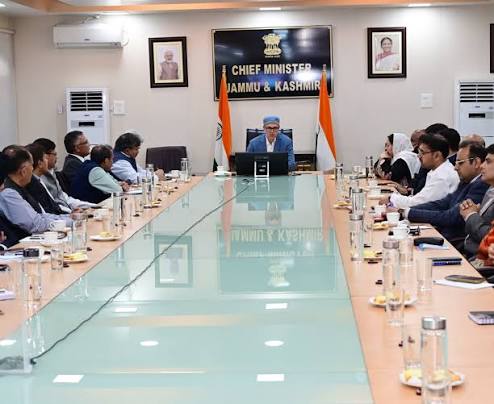
For nearly a century and a half, the seasonal rhythm of governance in Jammu and Kashmir was dictated by a monumental administrative migration. Introduced in 1872 by Maharaja Gulab Singh, the bi-annual Darbar Move saw the entire government machinery-complete with thousands of employees, ministers, and truckloads of official files-pack up and travel across the treacherous Jammu–Srinagar National Highway.
Beyond the Pomp: The Logistical Strain of the 3-Tier Local Governance Promise
Bashir Assad
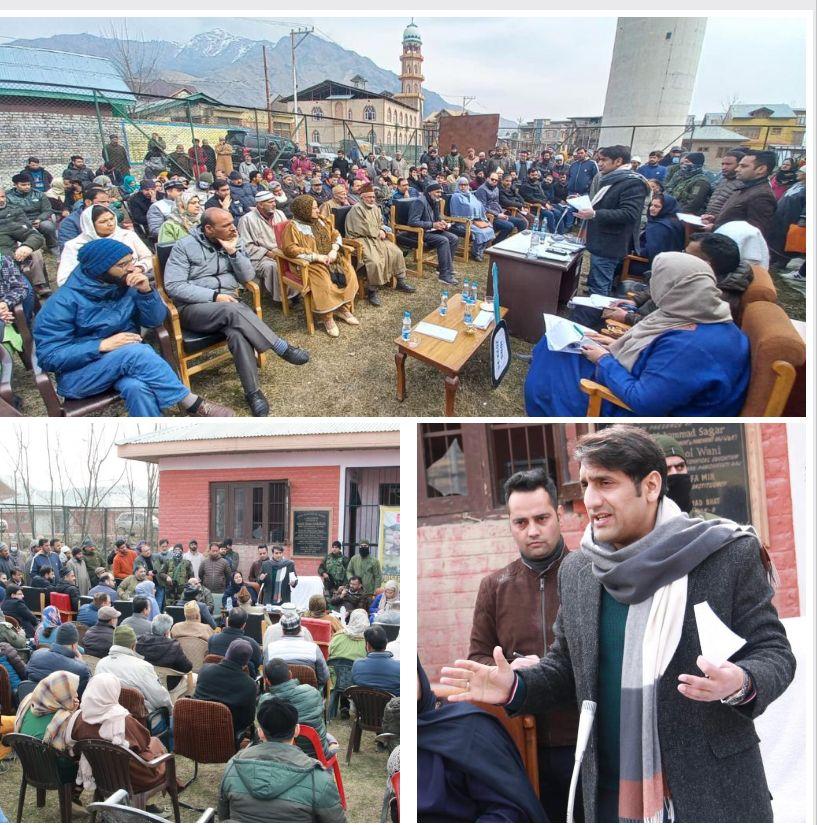
For twenty-eight thousand former Panchayat members across the fractured valleys and rugged highlands of Jammu and Kashmir, democracy has long been an exercise in prolonged anticipation. Following the highly publicized Assembly elections that finally restored a regional legislative assembly, the focus has abruptly shifted from the grand statecraft of the civil secretariat to the unpaved alleys of rural development.