society
WHEN FAITH BECOMES PERFORMANCE
By Mohammad Zaid Malik | Fri Apr 03 2026
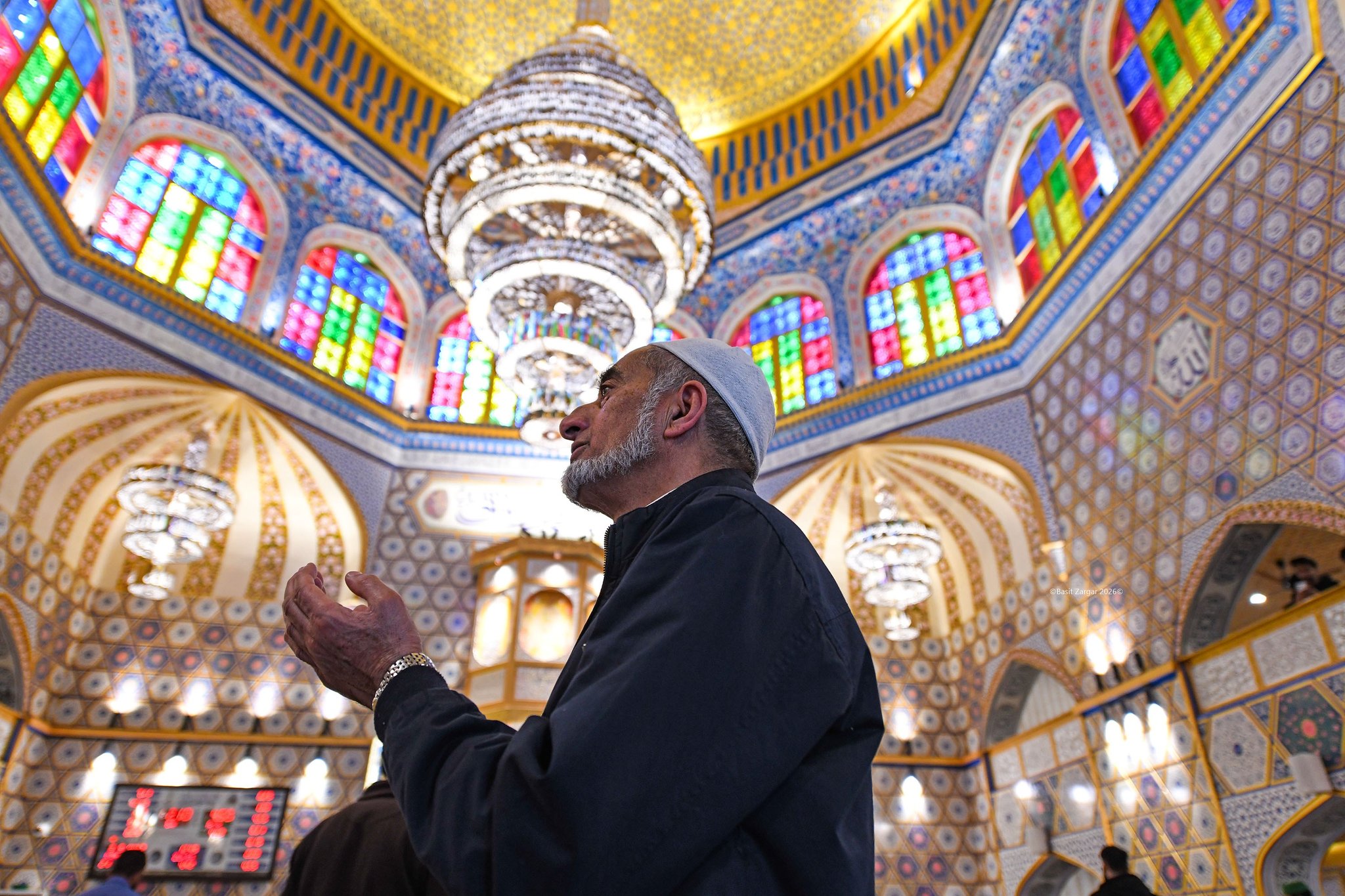
Mosques (Masaajid) have always occupied a sacred and central place in Islamic civilization. From the earliest days of Islam, they served not merely as spaces for prayer but as the living heart of Muslim society. The first mosque established in Islamic history, Masjid-e-Quba and later the Prophet’s Mosque in Madinah, were vibrant centres where faith intertwined with education, governance, social welfare and intellectual exchange.
Within the walls of these early mosques, knowledge flourished. Scholars debated theology and philosophy, disputes were resolved, the poor were cared for and the moral compass of society was shaped. A mosque was never merely an architectural structure; it was the nucleus of a civilization built upon faith, knowledge and community.
Rethinking Mosque culture, performative religiosity and the crisis of spirituality
Yet the contemporary reality in many Muslim societies tells a very different story.
Across large parts of the Muslim world, including Jammu & Kashmir, a quiet but significant transformation has taken place. The emphasis of religious life appears to have shifted from spiritual depth to symbolic display, from inner transformation to outward demonstration. In many places, religion is increasingly expressed through performative religiosity, visible markers of piety that often overshadow the deeper spiritual and intellectual essence of faith.
One of the most striking manifestations of this trend is the unprecedented surge in mosque construction.
The Mosque Boom
Over the past few decades, Jammu & Kashmir has witnessed a remarkable expansion in the number of mosques. Today, it is estimated that nearly 15,000 mosques exist across the region. In many neighbourhoods, multiple mosques stand within sight of each other, sometimes separated by only a few streets or even a single lane.
The mushrooming of mosques does not necessarily correspond to population density or practical need. In numerous localities, several mosques serve the same small population of worshippers. Sectarian affiliations, organisational influence or local prestige often drive the construction of new mosques rather than genuine necessity.
The statistics reveal a paradox. Jammu & Kashmir’s population stands at roughly 80-85 lakh, with approximately 45 lakh male Muslims forming the primary congregation for mosque prayers. On paper, this suggests a ratio of roughly 250 to 300 individuals per mosque.
Yet the reality on the ground is starkly different. In many neighbourhood mosques, daily congregational prayers attract only 10-20 worshippers. Even Friday prayers, the most important weekly congregation, often bring together only 20 to 50 people in smaller mosques.
In contrast, a handful of historic and central mosques, such as Jamia Masjid Srinagar, Hazratbal Dargah and the large congregational mosques in districts like Baramulla, Rajouri and Poonch draw thousands of worshippers.
This imbalance highlights a curious phenomenon: while the number of mosques has multiplied dramatically, the number of active congregants has not increased proportionately. The result is a landscape where mosques stand plentiful, yet communities remain fragmented.
Another troubling dimension of this phenomenon is the functional dormancy of many mosques.
Ideally, a mosque should be a vibrant centre of community life. Historically, mosques remained open throughout the day, serving as places where people gathered not only to pray but to learn, discuss, seek guidance and build social solidarity.
Today, however, many neighbourhood mosques follow a different pattern. They open briefly for prayer, close soon afterward and remain locked for most of the day. In many cases, the mosque stays closed for nearly twenty-two hours out of twenty-four.
The silence that descends after prayer reflects a deeper issue: the mosque’s role has gradually narrowed to a purely ritual function, rather than a holistic social institution. This shift reflects a broader transformation in religious culture.
Rise of Performative Religiosity
Religion, by its very nature, carries both inner and outer dimensions. The outward practices like, prayer, charity, fasting is meant to cultivate inner spiritual growth of humility, compassion, discipline and awareness of God.
However, when outward practices become detached from their spiritual purpose, they risk turning into performative acts.
In many contemporary Muslim societies, religiosity is increasingly expressed through visible symbols, architecture, rituals, clothing and public displays of piety. While these elements are not inherently problematic, they can become problematic when they replace deeper spiritual engagement.
Mosque construction has, in some contexts, become part of this culture of symbolic religiosity. Building a mosque is widely regarded as a noble act of charity and indeed Islamic tradition holds immense reward for those who contribute to houses of worship. Yet when mosque construction becomes competitive, excessive or driven by prestige, it risks drifting away from its spiritual purpose.
In some communities, constructing a new mosque becomes a way of demonstrating religious identity, organisational influence or social standing. Donations are mobilised enthusiastically for new structures even when nearby mosques already exist. The result is an architectural abundance that does not necessarily translate into spiritual vitality.
The Forgotten Command
This phenomenon also raises a deeper civilisational question.
Islam’s first revelation was a command: “Iqra” means to read.
It was an invitation to knowledge, reflection and intellectual growth. The Quran repeatedly emphasizes the virtues of learning, understanding and wisdom. The Prophet Muhammad (PBUH) declared the pursuit of knowledge obligatory for every Muslim, male and female.
For centuries, Muslim civilization responded to this call with remarkable intellectual achievements. Mosques and madrasas produced scholars who contributed to fields ranging from theology and law to mathematics, medicine, astronomy and philosophy.
But in many parts of the modern Muslim world, this intellectual tradition has weakened. While enormous sums of money are spent on constructing new mosques, far fewer resources are invested in educational institutions, research centres, libraries and skill development programmes.
This imbalance has tangible consequences. Communities struggle with low educational outcomes, unemployment, technological lag and limited professional opportunities for youth. Meanwhile, religious infrastructure continues to expand.
The contrast raises an uncomfortable question: have we prioritised structures over substance?
What Mosques Were Meant to Be
The issue is not the existence of mosques themselves. Mosques are essential to Islamic life and must always remain so. The question is how they are used and how they fit within the broader priorities of the community.
In their original form, mosques served as multi-dimensional institutions. They were places where education thrived, where social issues were addressed, where charity was organised and where community bonds were strengthened. Reviving this spirit could transform existing mosques into dynamic centers once again.
Instead of constructing new mosques in every neighbourhood, communities could invest in strengthening existing ones, equipping them with libraries, classrooms, youth programmes and social initiatives.
Mosques could host tutoring sessions, vocational training, public discussions and community welfare programmes. They could become spaces where spirituality and knowledge reinforce each other. Such an approach would restore the mosque to its historical role as the heart of Muslim society.
Imagine if even a fraction of the resources currently spent on constructing new mosques were directed towards high-quality schools combining religious and modern education, libraries and research centres, vocational training programmes, scholarships for talented but underprivileged students, innovation and entrepreneurship initiatives. Such investments would empower entire generations.
They would equip young people with the knowledge and skills needed to navigate the modern world while remaining rooted in their faith and identity. More importantly, they would align closely with Islam’s foundational emphasis on learning.
A Question for the Future
The proliferation of mosques across Jammu & Kashmir offers a moment for thoughtful reflection. Faith communities must ask themselves an important question: Are we strengthening the moral and intellectual foundations of society or merely multiplying physical symbols of religiosity?
Religion thrives not through architectural abundance but through spiritual depth, ethical conduct and intellectual vitality.
A single mosque that nurtures learning, unity and community engagement can achieve far more than multiple mosques standing silent and underused. The challenge before us is not to reduce religiosity but to restore its authenticity.
True faith lies not in the visibility of devotion but in its transformative power, the ability to elevate minds, uplift communities and inspire justice and compassion.
Mosques will always remain sacred symbols of Islam. Their call to prayer will continue to echo across cities and villages, reminding believers of their connection to the divine. But the renaissance of the Muslim community will not emerge from multiplying structures alone.
It will arise from reviving the spirit that once animated those structures, a spirit grounded in knowledge, unity and sincere spirituality. Minarets may rise toward the sky. Yet the true measure of faith lies in how high our minds and morals rise with them.
Related Articles
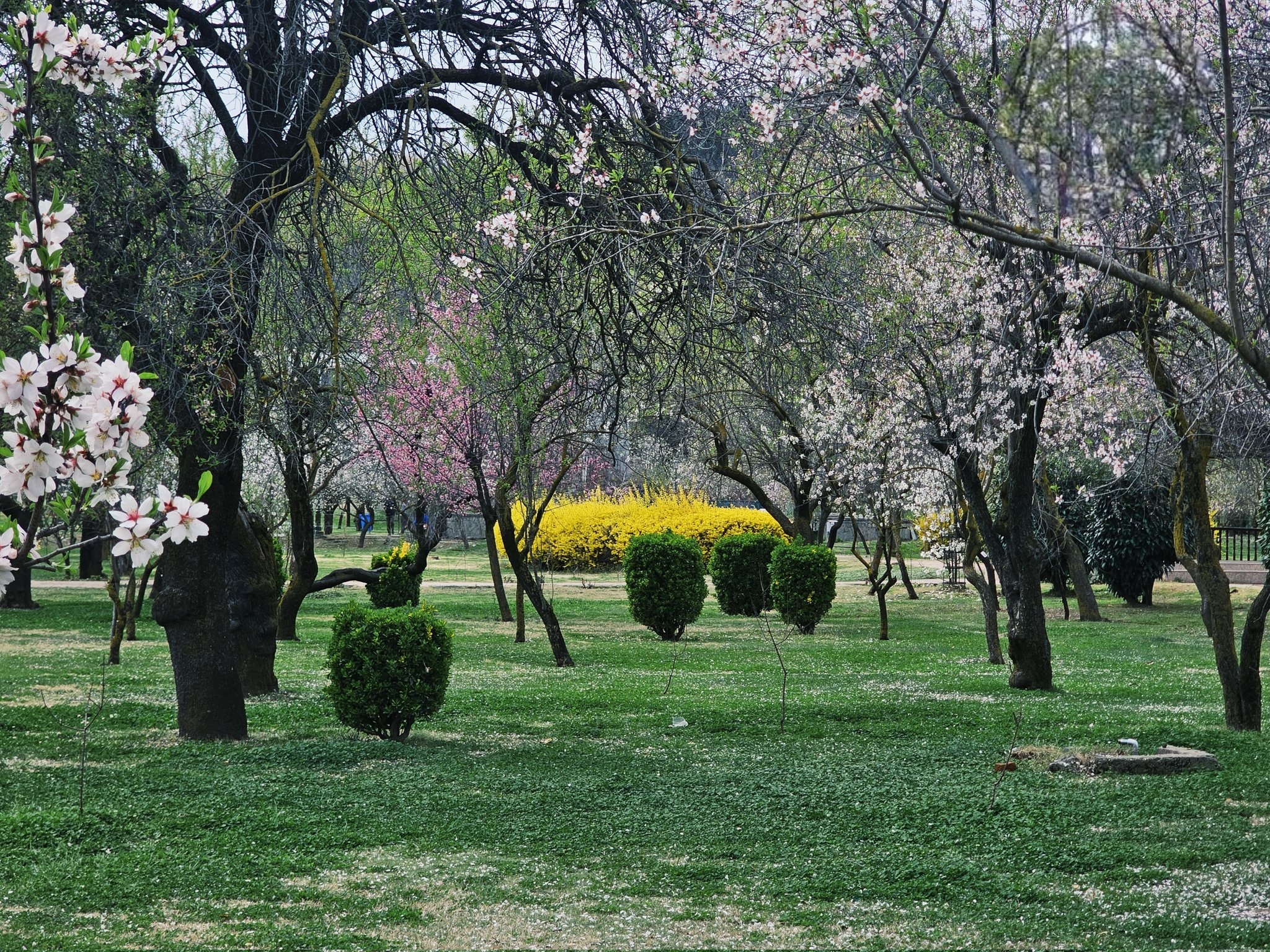
BADAMWARI IN BLOOM
Sohail Bashir
There is a moment in Kashmir that cannot be marked on a calendar. It arrives quietly, almost gently, when the bare branches of almond trees in Srinagar’s old city soften into pale pink and white and the long winter finally begins to loosen its hold. That moment lives in Badamwari.
THE COACHING CAPITAL
Mian Tufail
On winter mornings in Srinagar before the markets awaken and traffic gathers around the city centre, the narrow staircases above coaching centres, bookstores and stationery shops are already crowded. Young men and women climb these steps with backpacks, full of notebooks and borrowed hope.
THE POLITICS OF NORMALCY
Yawar Yousef
On a quiet evening, along the banks of the Jhelum river, the rhythm of life in Srinagar appears almost ordinary. Shops close at their usual hour. Families walk along the boulevard. Traffic moves through the intersections around Lal Chowk with the familiar impatience of any bustling city.
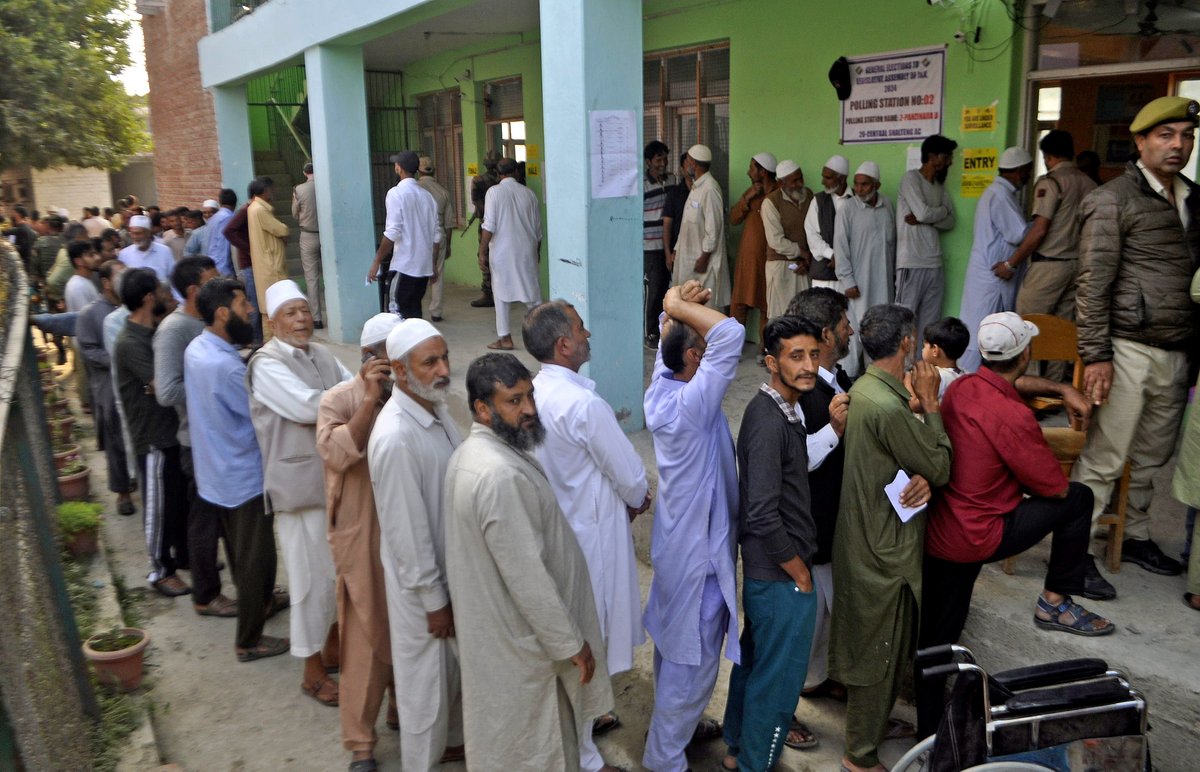
THE PAUSE IN JAMMU & KASHMIR’S DEMOCRATIC EXPERIMENT
Waseem Assad
As the term of Jammu and Kashmir’s District Development Councils quietly came to an end last month, the moment passed without spectacle but not without consequence. For the first time in recent years, the Jammu & Kashmir stands bereft of its entire three-tier Panchayati Raj structure.
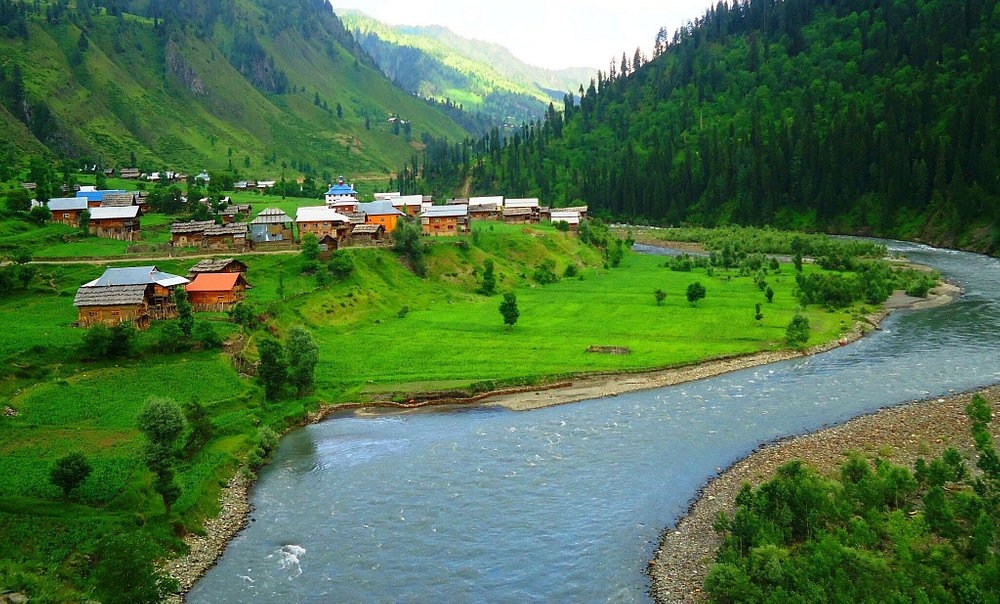
GUREZ FROM ISOLATION TO INSPIRATION
Mareaya Fayaz
In the high mountains of North Kashmir, where winter once dictated silence and separation, the sound of machines cutting through walls of snow now carries a different meaning. It signals return of roads, of movement, of life itself.
WEST ASIA’S WAR AND A QUIET REASSESSMENT OF PAKISTAN IN KASHMIR
Bashir Assad
The ongoing war involving Iran, Israel and the United States has stirred strong reactions across large parts of the Muslim world. From North Africa to South Asia, demonstrations, online campaigns and intense political discussions have emerged as communities react emotionally to the conflict and its wider implications.