The Unsettled Frontier
Sat Jul 04 2026
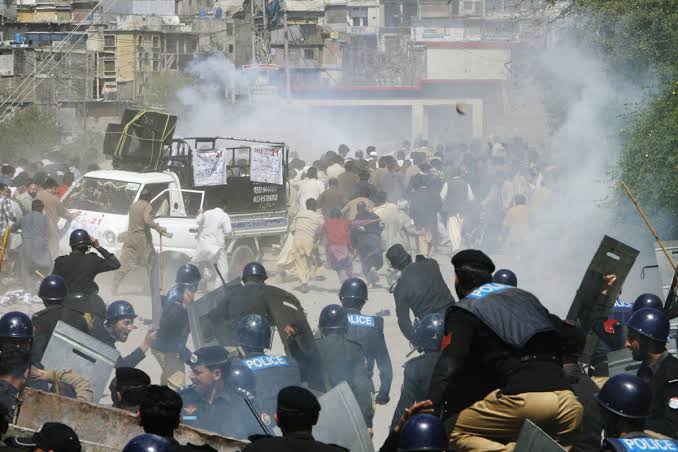
For much of the international community, Pakistan-administered Kashmir remains one of the least examined political spaces in South Asia. Overshadowed by developments elsewhere in the larger Kashmir conflict, the region rarely attracts sustained attention unless events escalate beyond the ordinary. Over the past two years, a series of developments suggest that important changes are underway across the Line of Control.
The most visible manifestation of this shift has been the growing frequency of public disturbances and episodes of unrest witnessed across different parts of the Pakistan Administered Kashmir.
What began as sporadic protests over electricity tariffs, inflation, taxation, and rising costs of living has gradually evolved into a broader pattern of mobilization. Demonstrations, road blockades, strikes, confrontations, and prolonged shutdowns have become increasingly common features of public life. The scale and persistence of these incidents distinguish them from routine expressions of dissatisfaction and point toward a deeper transformation in the political atmosphere of the region.
The significance of these disturbances lies not merely in their occurrence, but in their cumulative effect. For decades, Pakistan-administered Kashmir was often portrayed as politically quieter than many other parts of the wider Kashmir region. While grievances existed, they seldom translated into sustained mass mobilization capable of drawing widespread public participation. Recent events suggest that this assumption may no longer hold true.
A notable feature of the current phase is the diversity of those participating in public protests. Traders, transporters, students, employees, civil society groups, and ordinary citizens have increasingly found themselves represented within these mobilizations. The issues being raised are often economic in nature, however, the language of protest increasingly reflects wider concerns about governance, accountability, and public representation.
Equally striking is the emergence of a more organized culture of collective action. Social media networks, local advocacy groups, and community organizations have enabled grievances to travel rapidly across districts and communities, creating a degree of political interconnectedness not previously visible at this scale.
This trend is particularly significant because it reflects a changing public mood. The disturbances are no longer isolated local events confined to individual towns or districts. They are increasingly perceived as part of a larger regional conversation about public expectations and the relationship between citizens and institutions.
For observers of the Kashmir region, these developments deserve careful attention. The territory occupies a strategically sensitive location within one of the chronic conflicts. Changes in public sentiment, patterns of mobilization, and the frequency of unrest therefore carry implications that extend beyond the immediate events themselves.
Whether viewed through the lens of governance, public mobilization, or regional stability, the growing disturbances across the territory represent one of the most consequential yet underreported developments in contemporary Kashmir. The current unrest suggest that this silence is becoming increasingly difficult to sustain.